
Millet (Panicum miliaceum)
The composition of millet is presented in table 7.7.
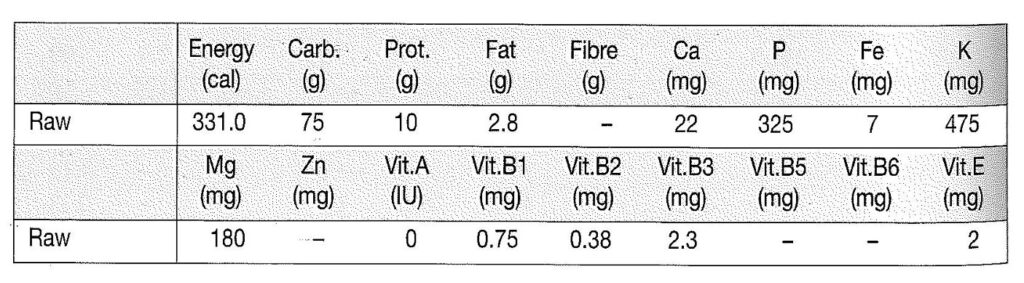
Table 7.7. The composition of millet. The figures are for 100g portions.(From ref.35,36,37)
There are many kinds of millet, but the common millet is known as Proso millet (Panicum miliacieum) which originated in Egypt or Arabia. The name Proso is the Russian name for millet. Millet is used extensively in Eastern countries, particularly India and China, and it is a must for the health conscious as it is not only highly nutritious, but is also one of the few alkaline grains. Millet belongs to the sorghum family of grains and is rich in magnesium and iron, the latter being one of the minerals that vegetarian diets can be low on. The mineral composition of millet is beneficial to the nervous system, and for arthritis sufferers this grain is highly recommended in view of its alkaline-forming properties.
Millet has a very hard outer casing and must be dehulled before it can be eaten. Many people are disappointed with millet because they buy the intact seed, which is suitable for birds, but provides quite a chewing experience for humans. Dehusking is normally done mechanically, and the dehusked product can be bought from health outlets. If millet is not available in the area in which one lives, then it is worthwhile ordering it by post. Millet is also a very versatile grain, and it can be prepared in a variety of ways. Prepare a millet porridge for breakfast or liquidize the cooked grain and use it to form the basis of delicious puddings. Millet flour can be used in conjunction with other flours in baking, and the high soluble fibre content gives the flour excellent binding qualities so that it can be used for binding patties, nut and legume roasts and can substitute for eggs in recipes that require eggs for binding.