
Antibiotics have had a profound effect on the agricultural sector, and today antibiotics are used extensively in animal husbandry. Antibiotics are not only administered to animals for the treatment of disease, but subtherapeutic doses of these antimicrobials are administered routinely for growth promotion in livestock and poultry production. Antibiotics are also used in wildlife and fish, and for the control of plant diseases and food spoilage. In the United States alone some 15 million pounds of antibiotics are administered to farm animals annually. The fact that animals grow faster when receiving subtherapeutic doses of antimicrobials serves as an incentive to farmers to administer these products, particularly since an added benefit is found in disease prevention. Although vehemently denied in some quarters, this practice is giving rise to a new generation of antibiotic-resistant microbes which can cause serious outbreaks of disease among humans. Infectious diseases account for millions of deaths annually, with respiratory infections, diarrhoeal diseases and tuberculosis accounting for the majority of these.
Drug-resistant bacteria have accounted for a steady increase in the incidence of human Salmonella infections,73 and in 1983 an outbreak of Salmonella infection in the Midwestern states of the USA was actually traced to the farmyard from which the disease spread.74 An epidemiologic investigation in Minnesota revealed that patients had eaten ground beef (hamburger) and that the meat had come from a farm lot where the cattle had been fed subtherapeutic quantities of chlortetracycline for growth promotion and disease prevention.
In outbreaks of gastrointestinal disease from drug-resistant bacteria, it is a common occurrence that infected patients had taken antibiotics for other diseases such as bronchitis, pharyngitis, otitis media (ear infection) or other non-diarrhoeal diseases prior to the onset of the gastrointestinal disease. This suggests that whilst patients are on antibiotics, and they consume foods infected with resistant bacteria, the destruction of the natural non-resistant intestinal bacteria offers some selective advantage to the drug-resistant varieties which then flourish and become pathogenic. The symptoms are normally diarrhoea, abdominal cramps, nausea and vomiting and in some cases chills, fever, and confusion. Furthermore, the disease is difficult to treat, as the bacteria will not respond to drugs in view of their antimicrobial resistance, and death can be the ultimate result, even in hospitals with all the necessary care
facilities.
The fact that antibiotics are widely used in hospitals, accounts for the fact that outbreaks of antimicrobial-resistant bacterial infections are largely recorded in these institutions. Bitter rows have developed over this issue between governments and trade organizations. In Germany and Denmark the antibiotic avoparcin, which farmers inject into their livestock, was banned because of concern that antibiotic resistance could spread from the farmyard to hospitals. Brussels, on the grounds that the ban could interfere with free trade, declared the ban illegal. Avoparcin is similar to other antibiotics such as vancomycin and teicoplanin which are the only drugs available that kill methicillin-resistant Staphylococcus aureus (MRSA), which is becoming more and more prevalent in hospitals. Microbiologists were dismayed that the German studies had not been able to uphold the ban.72 Sadly it is often the elderly or infants who succumb to the disease due to their weaker constitution.
In view of the widespread use of antibiotics in animal husbandry, the most common sources of contamination, by this new breed of antibiotic resistant bacteria, are poultry, cattle, calves, eggs and milk. In fact, in over two thirds of US outbreaks of multiple drug-resistant Salmonella infections with a definite source, the bacteria came from food animal populations, and the transmission of resistant bacteria to man, through the consumption of food animals, is thus not a rare event.75 The World Health Organization has reported that resistant strains of Salmonella typhimurium have increased dramatically in many countries, and there was hardly any medication that was effective against the DT 104 strain of this species. In some European countries the total number of Salmonella infections has increased 20 fold in the last decade and in Britain, where DT 104 was first isolated in 1988, the number of infections from this strain increase from 300 in 1990 to 3 500 in 1996. In Germany, the percentage of infections caused by this strain rose from ten to 18% within the year 1996 alone.76
Tetracyclines are the most commonly used antibiotics in feeding operations, and these drugs commonly occur in the animal products purchased from supermarkets and other stores. Contamination of foods with antibiotics may present various health hazards and can be strongly allergenic in sensitive individuals. A study on the occurrence of antibiotic residues and drug-resistant bacteria in beef and chicken tissues purchased from supermarkets in Hermisillo, Mexico, showed that 86% of beef samples were contaminated with streptomycin whilst other antibiotics were also prevalent. Chicken breasts sampled, likewise, showed high levels of contamination which exceeded FDA tolerance limits (Table 4.6).77
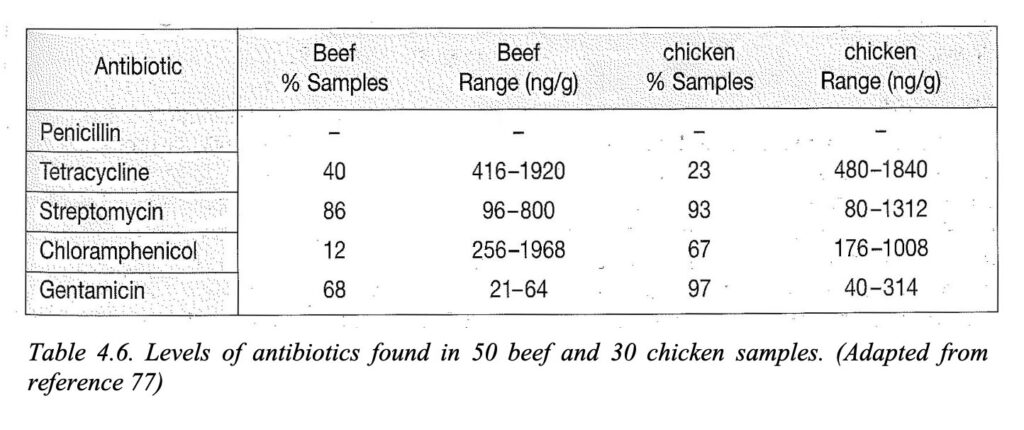
Table 4.6. Levels of antibiotics found in 50 beef and 30 chicken samples. (Adapted from reference 77)
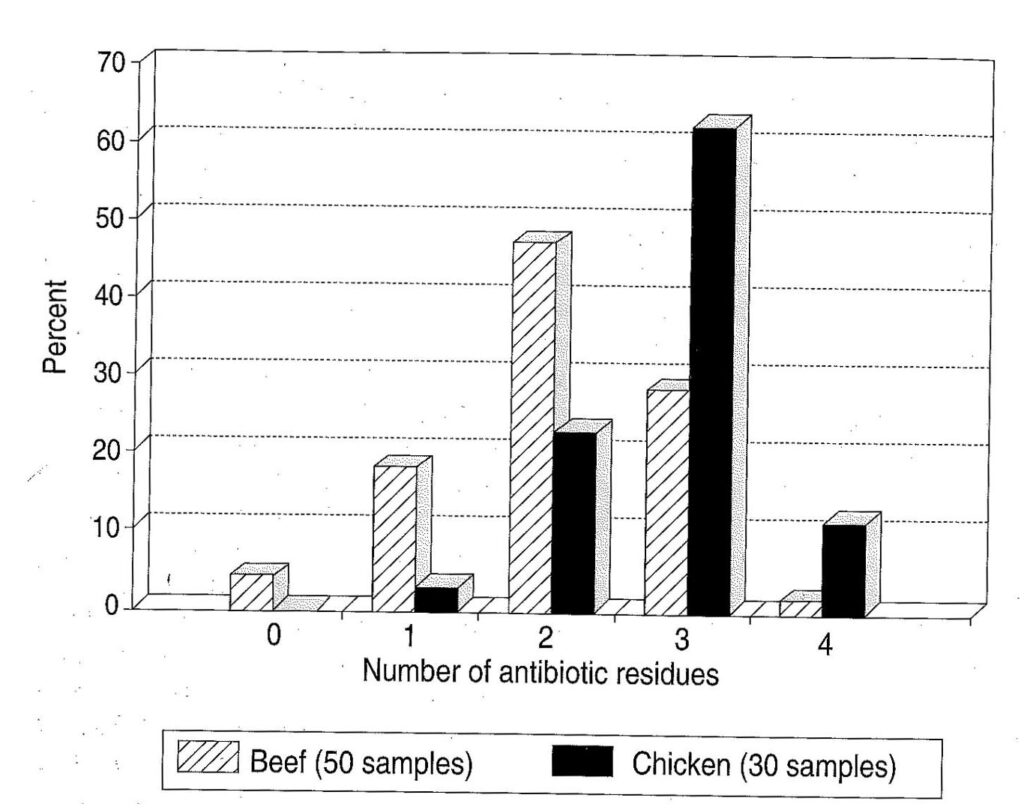
Figure 4.13. Number of antibiotics detected in beef and chicken samples. (Adapted from reference 77)
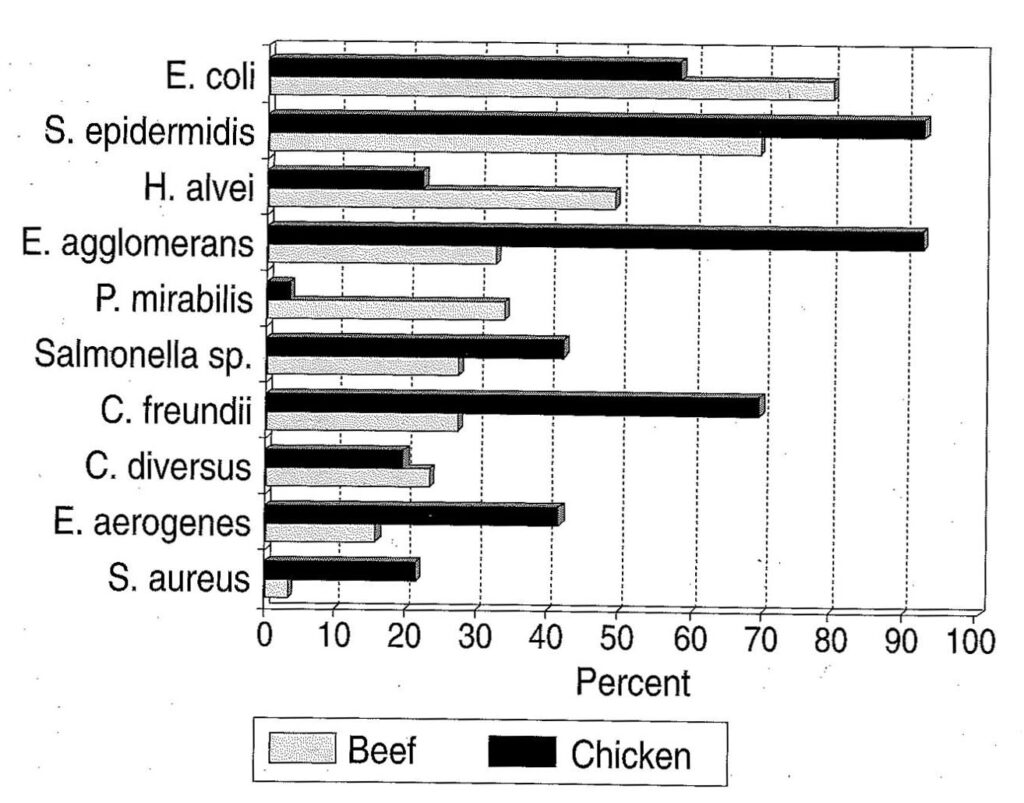
Figure 4.14. The frequency of microorganisms isolated from beef and chicken samples. (Adapted from reference 77)
In this study it was found that in more than 50% of the chicken and beef samples investigated, more than one antibiotic was present at the same time, and in some cases three or four different antibiotics had been administered to the animals simultaneously (Fig. 4.13). The frequency at which the different micro-organisms occurred in the samples varied, but a wide range of potentially pathogenic species was prevalent in both beef and chicken samples (Fig 4.14).
From table 4.7 it is evident that no penicillin was found in any of the samples investigated. The reason for this is that penicillin is no longer used subtherapeutically in these areas as it has become ineffective. Bacteria resistant to penicillin were however isolated from these tissues, showing that drug resistance persists beyond the time in which the drugs were used. Nearly all the bacteria isolated from the above mentioned tissues were resistant to penicillin, with high resistance to tetracycline and streptomycin also noted (Table 4.7).
In view of the current controversy surrounding the issue of antibiotic resistant bacterial strains, two questions seem vital at this stage:
- Is the use of subtherapeutic doses on farms responsible for the increase in resistant strains?
- What is the status regarding vancomycin resistance?
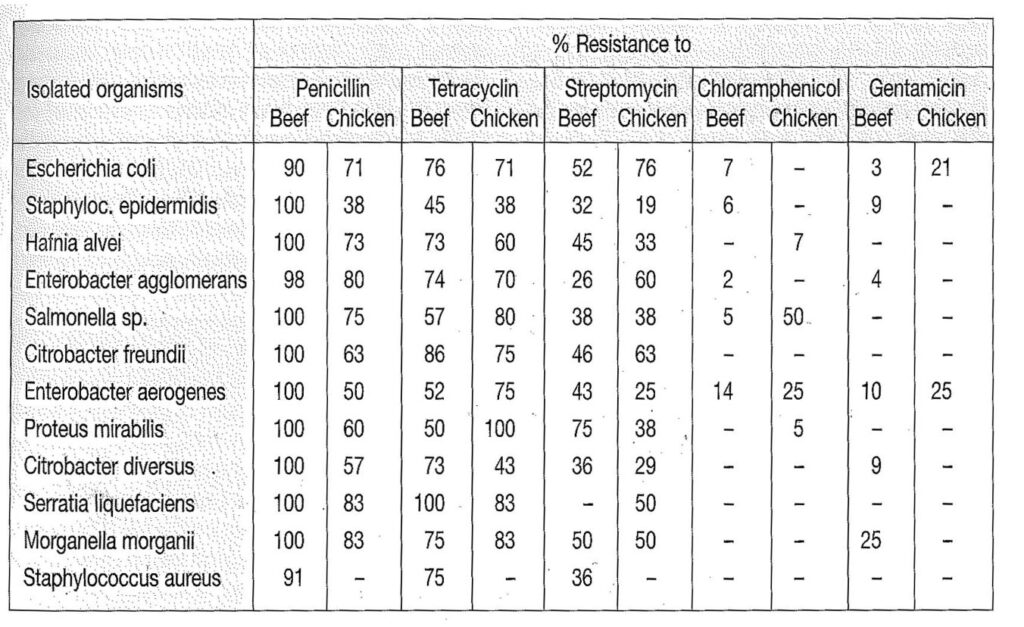
Table 4.7 Antibiotic resistance in bacteria isolated from 50 beef and 30 chicken samples. (Adapted from reference 77).
The argument by industry has been that subtherapeutic doses cannot enhance resistance, however, this does not seem logical as even low doses of antibiotics should provide a selective advantage to resistant strains. If indeed this is the case, then at least certain antibiotics should be banned for use in the animal husbandry industry. Vancomycin is a case in point, as vancomycin is the only drug that can kill methicillin-resistant Stapylococcus aureus which is causing hospital epidemics with alarming regularity.72 To examine this issue, a project was jointly undertaken by the Departments of Zoology and Microbiology at the University of the Western Cape, in which chicken, pork, beef and milk samples were tested for bacterial contamination and multiple antibiotic resistance in the greater Cape Town area. Animal bacterial samples were taken at abattoirs and at retail outlets, the rationale being that differences in resistance between the two groups of samples should pinpoint the source. Higher resistance levels in abattoir samples taken at the beginning of the slaughtering cycle would indicate that the resistance had emanated from the farm. The results for the chicken samples have thus far been evaluated, and are presented in table 4.8.
The results clearly show that a large proportion of the bacterial strains showed multiple antibiotic resistance, and in most cases the bacteria from the abattoir samples had a higher resistance to antibiotics than the retail samples thus indicating that the resistance route came via the farm. The very high resistance levels displayed by most of the bacteria is certainly unsettling. Staphylococci were resistant to tetracycline and oxacillin but the percentage of abattoir isolates that displayed simultaneous resistance to both tetracycline and oxacillin was nearly double that of retail samples (69.6% versus 39.4%).Gram positive bacteria (Staphylococcus) are susceptible to vancomycin, and although resistance of Staphylococcus to vancomycin as well as methicillin was not very high, even the 7% resistance recorded in retail samples is cause for concern, considering that this is the only drug that can kill methicillin-resistant Staphylococcus aureus.78
Producers are required to observe a withdrawal period after administering antibiotics, prior to marketing their product. It is, however, not feasible to monitor all the meat that goes to market, and studies on swine have shown that producers do not adhere to the specified withdrawal times.79 Antibiotic residues are even found in carcasses of cattle with no record of antibiotic treatment.80 Even if they should adhere to these withdrawal times, it is doubtful whether this will be of much benefit, considering the fact that resistance has been maintained over years to antibiotics that are no longer in use. Besides the antibiotic problem, contamination of carcasses with antimicrobial agents and other dangerous compounds such as heavy metals, organochlorine compounds, organophosphorous compounds and growth stimulants, is now so widespread that methods are being devised to routinely monitor these contaminants in the interest of human safety.81
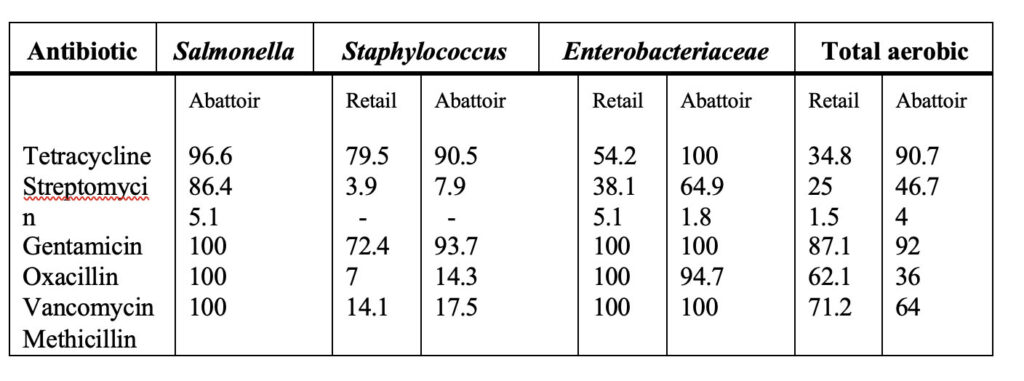
Table 4.8. Percentage resistance of various retail and abattoir chicken isolates to six antibiotics. (From reference 78)