
A further problem with milk is encountered in the digestion of the milk protein casein. In comparison to human milk, cow’s milk contains 300% more casein and more than double the amount of total protein. Casein and β-lactoglobulin are the two main proteins in milk and they are unique in that they contain a perfect blend of amino acids, which is precisely what is needed during early infant growth. Human infants, however, double their mass on average 180 days after birth, whereas cows achieve the same feat in only 47 days. Cow’s milk is therefore geared to meet the rapid growth requirements of cows, but is not suitable for humans. Casein also naturally stimulates normal thyroid function in infants, and as the thyroid is involved in many developmental processes, including the development of the nervous system, casein from other mammalian species could have adverse effects on metabolic processes of infants particularly since a portion of the dietary casein can be absorbed undigested and serve as antigen.
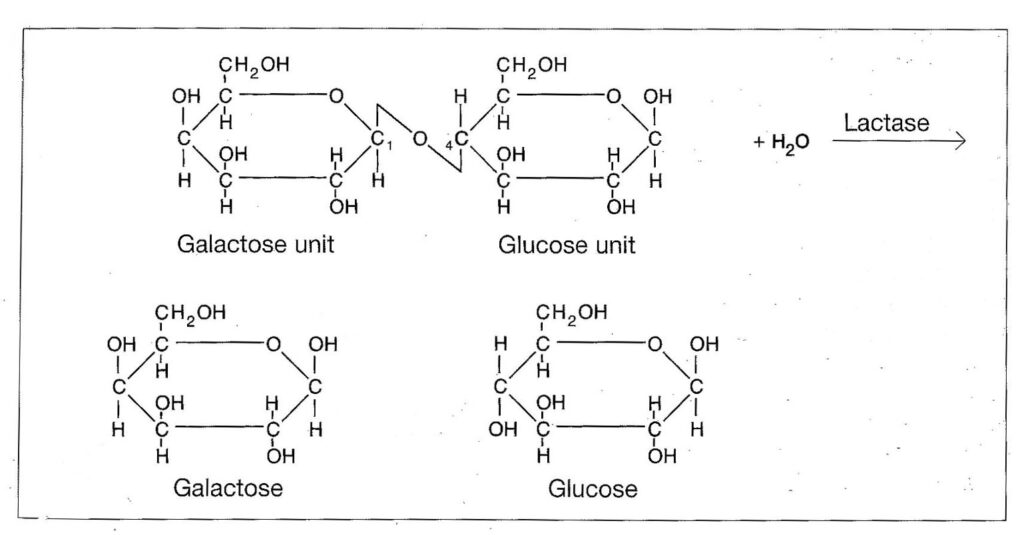
Figure 4.8. The digestion of lactose.
As is the case with the enzyme lactase that digests lactose, the concentration of the enzyme rennin, that breaks down the casein, also declines with age in all mammals, and by the time milk teeth develop it is virtually non-existent in the human digestive tract. Without rennin, the digestion of casein has to be carried out by the normal proteolytic enzymes which are not as efficient in breaking down casein. The presence of casein in the diet of mammals has also been linked to elevated cholesterol levels and various degenerative diseases such as arteriosclerosis. Rabbits fed casein developed arteriosclerosis, but the effect could be reduced if a plant protein source, such as soybean flour was introduced into the diet. This shows, that the amino acid pool produced by casein probably no longer meets the requirements of weaned or adult mammals. Casein also produced higher cholesterol levels than soy protein in a number of animal species, including rats, hamsters, guinea pigs, pigs, and monkeys. In humans, a reduction in cholesterol levels was also found if meat and dairy proteins were replaced by soy proteins.23,24 Casein also seems to have an adverse effect on insulin secretion, thyroxine levels, gastrointestinal hormones and it has an adverse effect on calcium metabolism.