
Carbohydrates are manufactured in plants by the process of photosynthesis using carbon dioxide and sunlight. As animal products contain virtually no carbohydrates, fruits, vegetables, grains and legumes are the main carbohydrate foods. Moreover, each of these plant foods supplies a different variety of carbohydrates, and it is therefore advisable that we know something about the structure and assimilation of carbohydrates in order to utilize these foods to our advantage. The carbohydrates in plants are largely constructed of various combinations of five simple sugars known as monosaccharides of which glucose forms the principle fuel of our bodies. The glucose molecule can have more than one configuration (Fig. 2.2), and when strung together to form polysaccharides, the properties of these macromolecules will be influenced by the type of glucose molecule incorporated.
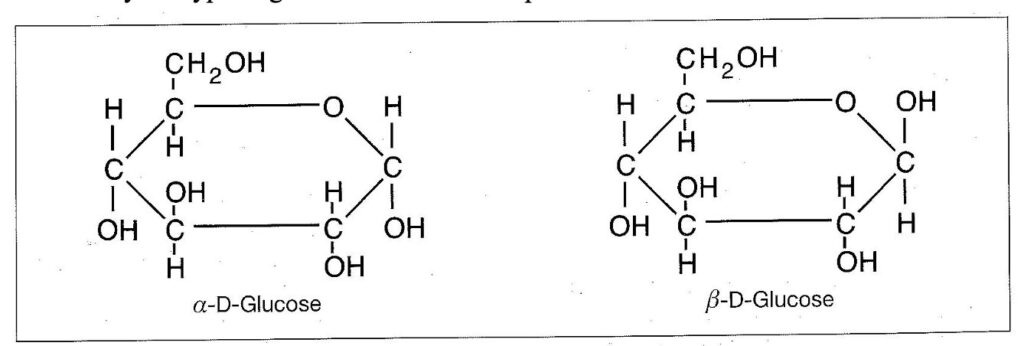
Figure 2.2 The structure of α- and β -D-Glucose
Although α- and β-D-glucose appear very similar in structure, they are different in their biochemical properties. Whereas β-D-glucose occurs in cellulose which is a non-soluble fibre, α-D-glucose occurs in starch which is the most common storage material of plants. Starches are polysaccharides made up by numerous glucose molecules linked together in chains and stored as granules in various plant tissues. Not all starches are equally digestible in view of differences in stereochemistry and, whilst readily digestible starches form the main energy supply for the body (or they should form the main energy supply), starches that are resistant to digestion play an important role in the maintenance of colonic bacteria. Humans cannot digest cellulose as we lack the enzyme cellulase, but these fibres also play an important part in digestion, as they add bulk and improve gut motility. The structure of starch and cellulose is presented in figure 2.3.

Figure 2.3. The structure of starch and cellulose.
Starch is broken down to glucose by digestive enzymes, and besides glucose, there are other important monosaccharides which play a significant role in human nutrition. Fructose is the monosaccharide found mainly in fruits and some other plant foods, and galactose is a component of lactose the disaccharide found in milk. Galactose is also found in some of the storage carbohydrates of legumes and other seeds. A disaccharide consists of two simple sugars bound together. Another disaccharide that plays a significant role in human nutrition is sucrose (common table sugar), which is a combination of fructose and glucose. The structures of these molecules are presented in figures 2.4 and 2.5.

Figure 2.4. The structure of fructose and galactose.

Figure 2.5. The structure of sucrose and lactose.
Digestion of carbohydrates
In natural foods the primary nutrients come prepacked with a variety of vitamins and minerals, which enhance the maximal utilization of these foods. Whole foods contain fibres which influence the rate at which food passes through the intestine, and also control the rate at which the digestive products are absorbed. Moreover, the vitamins and minerals found in whole foods play an essential role in metabolizing the nutrients we eat. Unfortunately today’s society chooses rather to eat refined foods which are poor in vitamins, and the lack must be supplied from the body’s reserves, thus robbing the body of these essential components. Eating carbohydrates only in the refined state can eventually lead to numerous deficiency diseases.
The enzymes which digest carbohydrates can be divided into two categories, the
polysaccharidases and glycosidases. The former hydrolyse the long chain carbohydrates such
as glycogen and starch, whilst the latter act on disaccharides such as sucrose, fructose, maltose and lactose thus breaking them down into their constituent monosaccharides for absorption. The most common polysaccharidases are the amylases (ptyalin and amylase) which are secreted by the salivary glands and the pancreas. Cellulase, is a polysaccharidase produced by symbiotic micro-organisms in the gut of cellulose-utilizing animals such as cattle, sheep, and termites but humans cannot digest cellulose. Cellulose is, however, a natural fibre which supplies bulk and ensures easy passage of ingested material through the digestive tract.
Carbohydrate digestion is first initiated in the mouth, and it is, therefore, essential that food be chewed adequately to allow this process to take its course. The enzyme ptyalin occurs in saliva and it converts the starch found mainly in vegetables, grains and legumes into the disaccharide maltose. Ptyalin is inactivated below pH4 so that starch digestion will cease in the stomach if the pH drops below this level. The digestion of starch will continue in the stomach as long as the pH does not drop below pH4. Concentrated protein foods such as animal products will quickly induce a pH drop and consequently prevent further digestion of starch in the stomach. Proteins found in grains and legumes do not, however, require an excessive acid medium for digestion and are thus ideal companions for fruits or vegetables. Nuts are also an excellent source of protein but should be eaten in moderation, because excessive intake will also lower the pH in the stomach.
When food passes from the stomach into the duodenum, the environment again becomes alkaline and favours the digestion of carbohydrates. In the duodenum the enzyme amylase, which is released by the pancreas, will continue with the break-down of starch to maltose which in turn is acted upon by the intestinal glycosidase maltase which breaks down maltose to glucose. The glucose is then absorbed and conveyed to the liver where it is stored in the form of glycogen. Glycogen is also stored in the muscles and thus acts as an energy reservoir, and when required it will be converted to glucose again. Resistant starches and soluble and insoluble fibres reach the large bowel undigested, and some of these components are then broken down by colonic bacteri