
Wheat (Triticum)
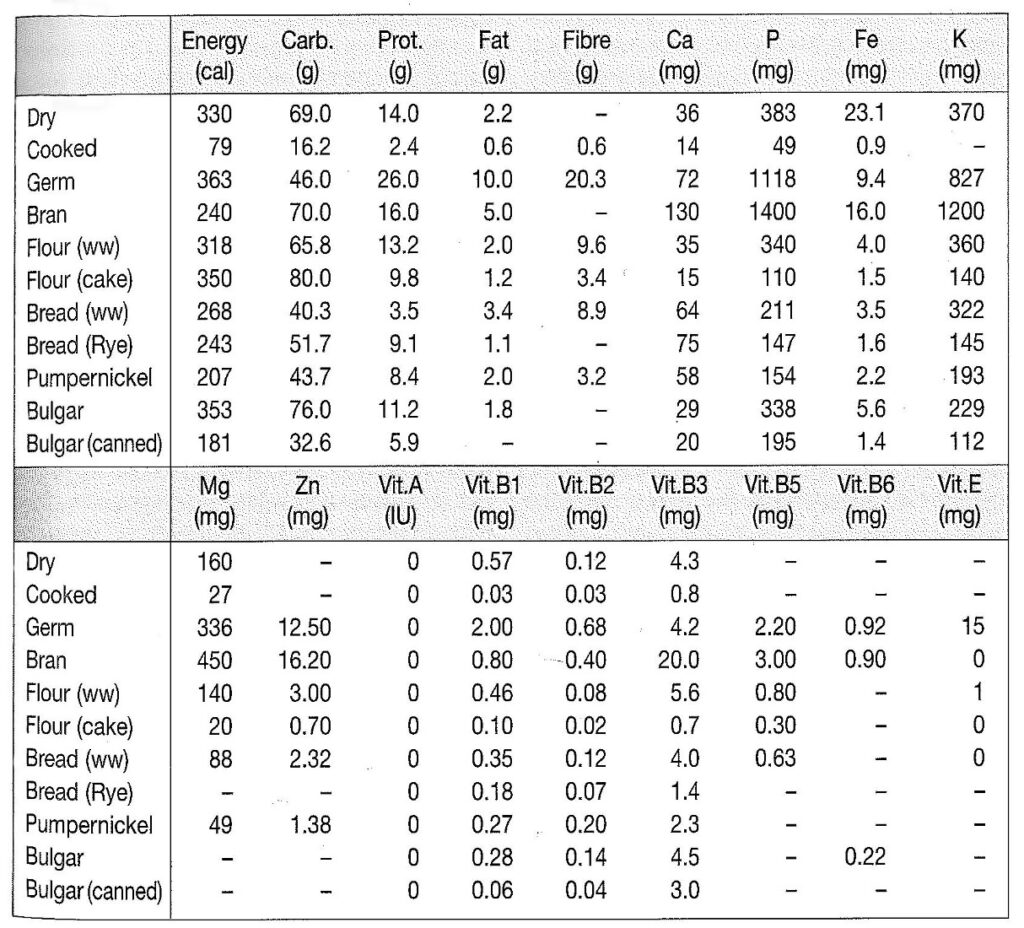
The composition of wheat and wheat products is presented in table 7.12.
Table 7.12. The composition of wheat and wheat products. The figures are for 100g portions. (From ref. 35,36,37).
Different varieties of wheat are grouped according to the number of chromosomes which their somatic cells contain. After rice, wheat is the most-used grain crop in the world. The world’s annual harvest of wheat exceeds 95 million metric tons per year (that of rice is 186 million tons) and for billions of people it is the staple grain. Wheat has been grown for thousands of years, and the rise and fall of nations has been determined by the success or failure of the wheat crop. Many strains of wheat have been developed, but the development of short-stemmed varieties, that are less prone to wind damage, has revolutionized the wheat industry. However, traditional wheat varieties still have their place in many areas of the world, because they are adapted to particular areas and are resistant to local diseases.
Whole-grain wheat is one of the best sources of primary protein, and also supplies essential minerals and vitamins in appreciable amounts. The components of wheat all have their own unique properties. The bran is very different from the rest of the seed in that it has a high-fibre content and also contains a fair amount of lipids. The germ, on the other hand has a high-lipid content, and although wheat contains only about 2% lipid in total, the separated germ contains approximately 12% lipid and is also rich in vitamin E. Finally, the endosperm consists of cells containing starch granules and protein, and the composition of these proteins is most important in determining the baking quality of the flour.
Another important product of wheat is Bulgur wheat, also known as lapsi or cracked wheat. bulgur is one of the staple grains of Middle Eastern countries, particularly Turkey. Traditionally, wheat is cooked in large tin-lined copper pots on an open wood fire, and then it is laid out on clean sheets to dry in the sun. Subsequently it is sent to the mills where it is cracked, and the recipes for its use depend on the final size of the cracked grains. Bulgur wheat is a very consumer-friendly wheat, as it is pre-cooked and thus takes very little preparation time. It also has a unique flavour and is very palatable. Bulgur is normally prepared like rice, and sautéd together with onions and green peppers it is particularly tasty. In some countries it is not readily available, but most health outlets should stock it.