
Numerous studies have shown that the daily consumption of fruits and vegetables is associated with decreased risk of a host of diseases, including many forms of cancer.14 Fruits and vegetables are rich in substances which offer protection against this disease which has become such a major killer in our century. The substances most associated with protection against cancer include: fibre, vitamins (particularly vitamins A, C and E), carotenoids, some minerals and some organic compounds known as secondary plant compounds (phytochemicals). Pytochemicals that play a protective role against cancer include substances such as phenols, polyphenols, β-sitosterol isothiocyanates, thiocyanates, dithiolthiones, flavones and indoles which occur in many plant foods, but are particularly abundant in cruciferous vegetables such as cabbage, broccoli, cauliflower and brussels sprouts.
Vitamin A or its precursor β-carotene, found in dark-green or yellow fruits and vegetables, has been found to be particularly effective in preventing epithelial, lung and oesophageal cancer,78,79 and has also been correlated with decreased incidence of bladder cancer. Vitamin C lowers the risk of stomach and oesophagus cancer, and probably affords this protection by acting as an antioxidant in much the same manner as would vitamins A and E. The flavonoids are plant pigments which are very common in plants, and also act as powerful antioxidants,80 and probably afford their protection against cancer in this way. It has also been found, that the consumption of vegetables in general, and cruciferous vegetables in particular, induces enzymes which rid the body of harmful metabolites, thus acting as powerful cleansers and reducing the risk of cancer.81
Approximately 14 classes of phytochemicals, which can block cancer development, have been identified, and it is even envisaged that these compounds could be routinely added to commercial foods to act as cancer preventers. The concentration of these phytochemicals is, however, relatively low in natural foods, and excessive intake in this way would probably do more harm than good. The best way to obtain maximum protection against disease, is to consume the foods as nature intended, by following a whole-food programme. In table 7.17 a list of foods with cancer-preventative properties is presented in the order of importance as currently understood, and in table 7.18 the distribution of the major phytochemicals in food plants, associated with cancer prevention, is presented. The precise mechanism of action of these phytochemicals is not yet fully understood, but current understanding of their impact on cancer initiation and promotion is summarised in figure 3.5.
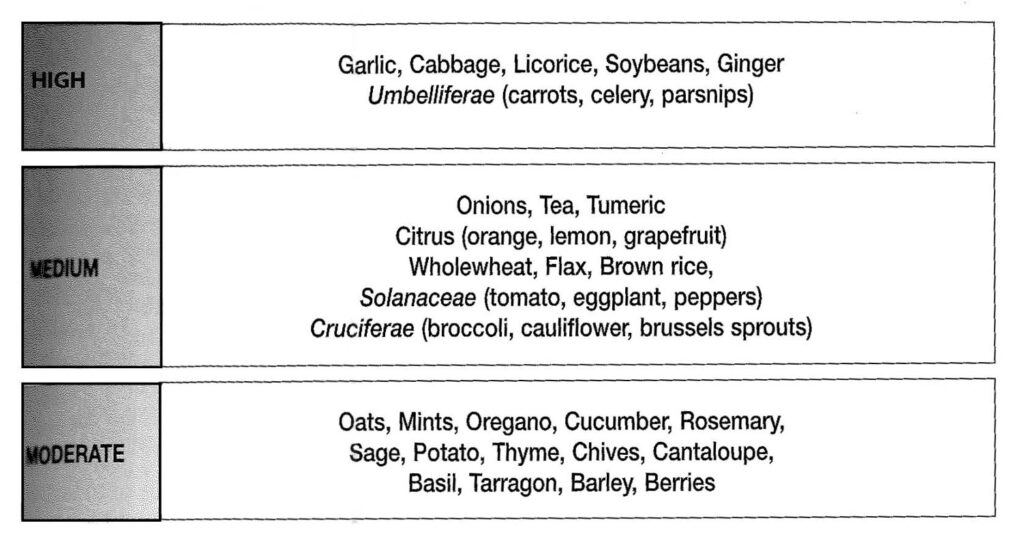
Table 7.17. Possible cancer-preventive foods and ingredients arranged in order of effectiveness. (Adapted from ref. 82).
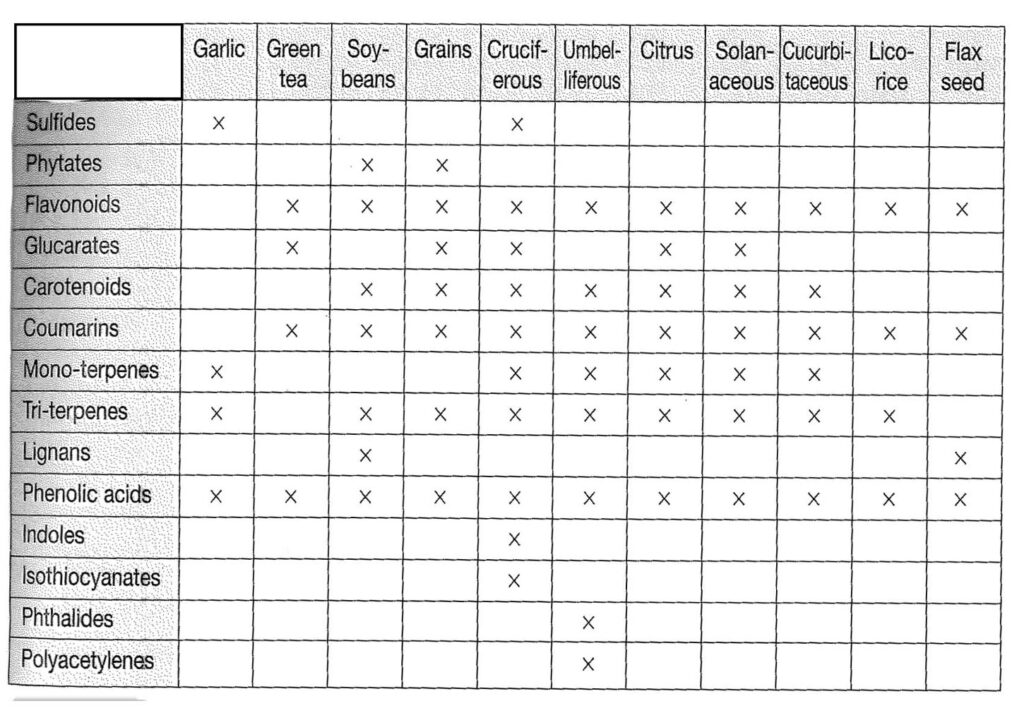
Table 7.18. Distribution of some of the major cancer-preventing phytochemical in food plants. (Adapted from ref. 82).
FRUITS
The benefits of fruit in the diet cannot be overemphasized, but the very wholesomeness of fruit has, unfortunately, led to many misconceptions and inappropriate diets. Just because something is good, does not mean that it is necessarily complete in all its attributes, or should be regarded as a sole source of nutrients. Man’s diet should be based on a variety of foods, of which fruit should be an important component. Moreover, it should be remembered that fruits contain a high percentage of water, and would not provide sufficient energy if this were the sole source of nutrients. This is particularly important in the case of young children who still have a limited stomach capacity, and the use of dried fruit can augment is their energy intake. Even a cursory look at the composition tables will show that energy content of dried fruit is approximately four times as high as that of fresh fruit. The composition of fresh and dried fruit is presented in tables 7.19 and 7.20
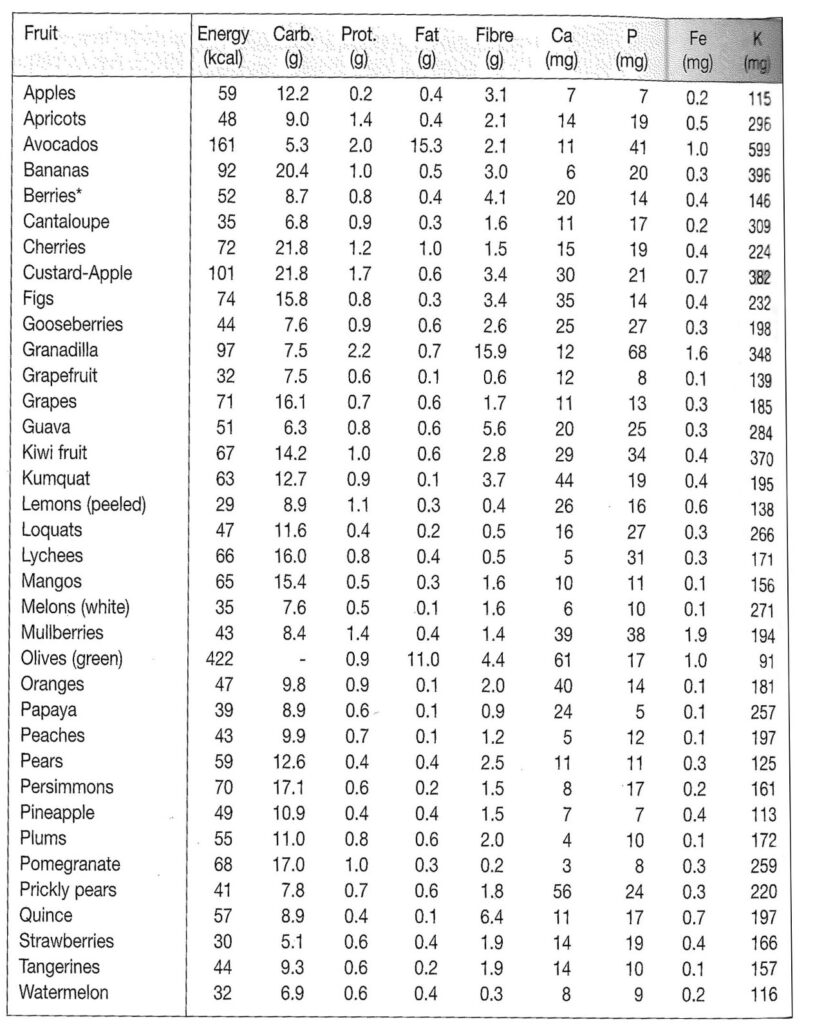
Table 7.19. The composition of selected fresh fruits. The figures are for 100g portions. (Adapted from ref. 37).
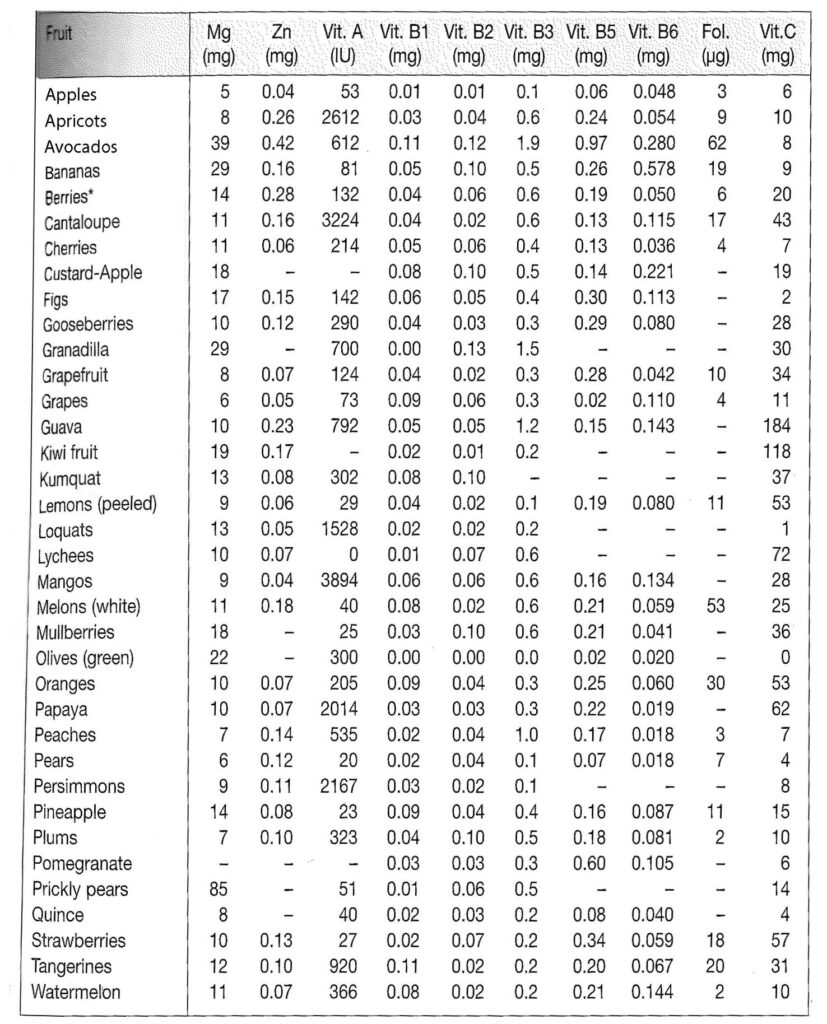
Table 7.19 (Part 2). The composition of selected fresh fruits. The figures are for 100g portions. (Adapted from ref. 37).
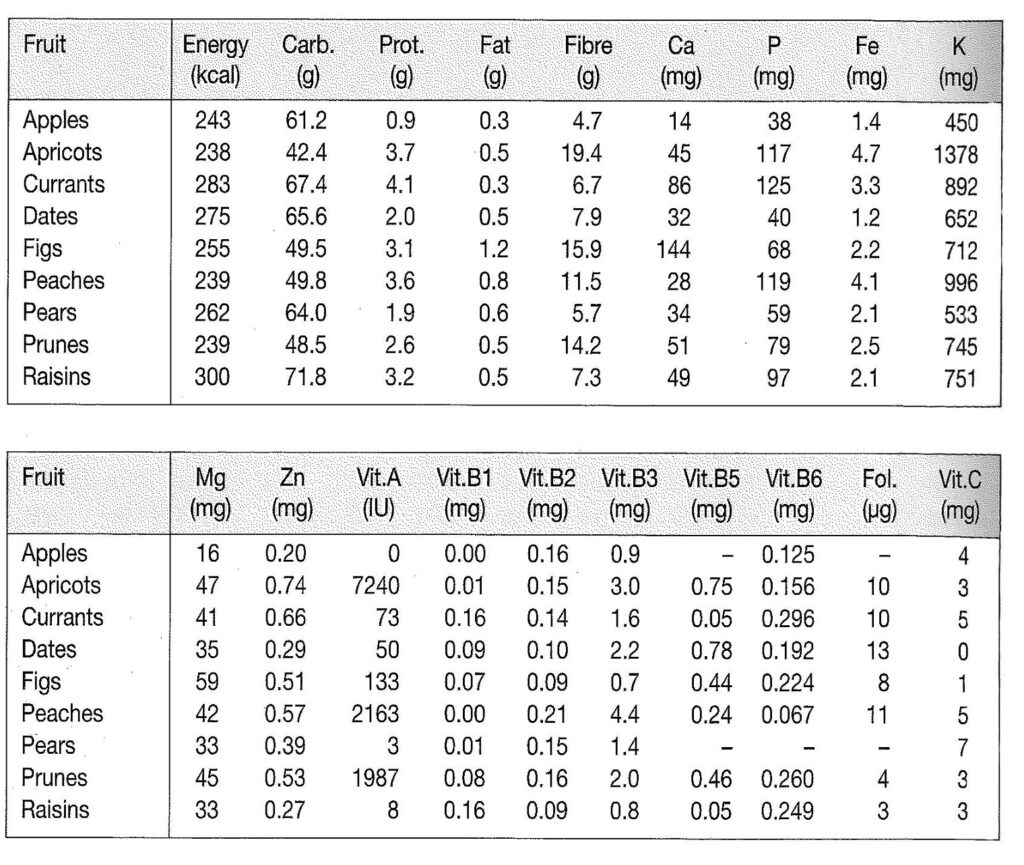
Table 7.20. The composition of selected dried fruits. The figures are for 100g portions. (Adapted from ref. 37).
Fruit contains one of the most readily utilizable forms of energy available to man, namely the simple carbohydrate fructose, or fruit sugar, which needs no digestion and is readily absorbed by the body. Fruit contains soluble fibres (such as pectin), which retard the uptake of fructose, so that the sugar enters the bloodstream at a controlled rate. This unique relationship between fructose and fibre is extremely important in preventing post-prandial (after meal) glucose surges which are associated with hypoglycaemia. This is significant, in view of the modern trend to substitute sugar (sucrose) with refined fructose. The ingestion of substantial amounts of fructose, also leads to hypoglycaemia, as it facilitates the conversion of glucose to glycogen,83 and can also lead to increased cholesterol levels.84 The best way to consume fructose is thus in the fruit, which once again underlines the fact that a whole-food programme should be the programme of choice. The isolation and regular consumption of refined foods in whatever form, will always prove to be detrimental to health in some form or other. The use of whole fruits such as dates and currants, which are high in natural sugars, will satisfy the sweet tooth without overburdening the system.
Because fruit is so readily digestible, some people are of the opinion that fruit should only be consumed by itself and never in combination with other foods, but the very composition of fruit
belies this theory. Fruits contain components which assist in the absorption and utilization of nutrients found in other foods such as grains and legumes, and the simultaneous ingestion of fruits, grains, legumes or other compatible foods can thus only be advantageous. Moreover, the soluble-fibre composition of fruit prevents over-rapid absorption of the natural fruit sugar found in fruit and the digestive products of the complex carbohydrates found in grains and legumes, thus ensuring a gradual, constant supply of these nutrients. Fruit can certainly be eaten on its own, but for a more sustained energy supply, combination with grains, nuts and legumes would be advantageous. Fruits combine well with any of the compatible neutral foods listed in table 7.4, but it should be remembered, that fruit should not be eaten together with vegetables, as discussed in the section on food compatibility.
Fruit is an excellent cleanser, and the rich supply of vitamins and minerals makes it an ideal food that should not only be regarded as a dessert or a snack, but together with grains nuts and legumes it can provide nutritious main meals. For example, hamburgers made with whole-grain bread, a legume/nut based patty served with sprouts and a delicious nut or tomato sauce together with a variety of fruit will satisfy even the most discerning of culinary experts. Fruit should be made a part of the everyday lifestyle, and the blessings that would flow from this habit would be too numerous to mention.
Each fruit is unique and supplies its own particular blend of vitamins, minerals and primary nutrients. In order to obtain the maximum benefit from the bounty of fruit, it is essential to concentrate on variety and to look beyond the handful of fruits that have become common household foods. There is a fruit for all occasions and a fruit for each season. Winter fruits such as citrus and guava have an exceptional vitamin C content, as if they were designed to meet the increased demands for this vitamin during the winter months, and the lipid content of winter varieties of avocados is also higher than that of summer varieties so as to supply extra energy during the cold months. It is as if a fruit in season is there to supply some or other specific need of the body essential for that time of year, and by including a variety of fruits and enjoying fruit in season, the attributes of each kind can be maximally exploited. With so many different fruits available, particularly in this age of transportation and international export, it is possible to enjoy a variety of fruits.
Fruits can be arbitrarily divided into categories according to their distinguishing characteristics or according to the regions in which they are most successful. There are stone fruits, pip fruits, grapes, berry fruits, citrus fruits, tropical and subtropical fruits. The families of plants from which we derive our fruits, have been exploited by man for thousands of years both for their fruits and for medicinal purposes, and many different cultivars with different tastes and characteristics have been developed. The following discussion of some of the more common fruits will hopefully encourage the reader to look beyond just apples and bananas to satisfy the fruit tooth.
STONE FRUITS
The stone fruits belong to the genus Prunus of the family Rosaceae which includes a wide variety of other fruits. The genus Prunus contains such varied forms as almonds, apricots, cherries, plums, peaches and nectarines, of which only a few will be discussed here.
Apricots (Prunus armeniaca)
Apricots are native to China and Siberia and they were introduced into the Mediterranean region about 100 BC. Apricots are an early summer fruit and they contain substantial quantities of vitamin A (over 2 600 IU per 100g) the anti-cancer, antioxidant vitamin. Vitamin C and the B-group vitamins are well supplied in apricots as are the minerals calcium and phosphorous. Each of these attributes are of course enhanced in dried apricots, so that a mere 100g of dried apricots will contain in excess of 7 000 IU of Vitamin A. Include dried apricots in muesli and other dishes or by soaking and blending they can be converted into spreads which can be enriched by mixing in some nut butter.
Cherries (Prunus avium)
Cherries are one of the earliest stone fruits to mature in the summer, but they are difficult to culture in home gardens, because of the climatic restrictions and the fact that birds love them. There are a number of varieties of sweet cherries, and then there is the sour cherry (Prunus cerasus) which is less restricted in its climatic requirements. Cherries contain fair amounts of vitamin A and C, and the minerals calcium, phosphorous and magnesium are also well supplied. Cherries are delightful as is, or in cakes, pastries and puddings. Cherry preserves are also a delight.
Peaches and nectarines (Prunus persica)
The peach originated from China, and not Persia as its scientific name suggests. Peaches and nectarines are plentiful in mid-summer and there are many varieties to choose from. In mid-season it is time to take advantage of the lower prices and to purchase them in bulk as this is the most economical way. Peaches are a good source of vitamin A, but the other vitamins and minerals are also well supplied. Dried peaches contain over 2 000 IU of vitamin A per 100g and are thus an excellent fruit to include in muesli, convert into spreads or preserves or to be eaten as is.
Plums and prunes
Plums and prunes comprise several species of the genus Prunus. The common plum (Prunus domestica), also called the European plum, probably originated from southwestern Asia and includes the blue plums and prunes. The red plums (Prunus salicina), or Japanese plums, are not as commercially significant as the European plum, and require warmer summers than the European plums. Plums are one of the few acid forming fruits, and in view of the body’s need for a greater proportion of alkaline foods than acid foods, some have advocated abstinence from plums. There is no reason whatsoever to abstain from plums. Plums are low acid forming, and a varied lifestyle should include sufficient alkaline foods to counteract the low acidity of plums. Of course, plums should not form the only item of diet over protracted periods, but they are certainly healthy and are a good source of vitamins and minerals, particularly vitamins A and C. People suffering from arthritis, gout or other ailments aggravated by an acid condition can be advised to restrict the consumption of plums.
Contrary to plums, prunes are an alkaline fruit rich in vitamins and minerals. Dried prunes contain substantial quantities of vitamin A, and the minerals calcium and magnesium are also well supplied. Prunes also have medicinal value, and have a mild, natural laxative effect which can be used to advantage particularly in the case of older people or young children.
PIP FRUITS
The common pip fruits are apples and pears which are also part of the family Rosaceae, which
also comprises a number of fruits of lesser economic significance.
Apples (Malus domestica)
Apples are of ancient and complex hybrid origin. They are the most important world fruit crop, and cultivars can be numbered in their thousands. Apples have long formed part of the Western diet, and they were probably cultivated in Greece as early as 600 BC, although their origin dates from the earliest of times. Apples are rich in minerals and vitamins, and contain fructose and soluble fibre in balanced proportions. Apples have a bit of everything, and the old maxim of the doctor and the apple contains more than a grain of truth. Apples, contain remedial phytochemicals and fair amounts of biotin and vitamin C . This balanced blend of nutrients is precisely what gives the apple its everyday appeal. Apples are versatile and can be prepared in a variety of ways so that one need not tire of apples.
Pears (Pyrus communis)
The European pear (Pyrus communis) is the most common pear in the Western world, and there are numerous varieties characterized by their juicy flesh and distinctive pear flavour. The Asian pears are derived from a different species, possibly Pyrus pyrifolia, they are more apple shaped and have a less distinct pear flavour. They tend to be crisp, but some varieties have a very juicy flesh. Like apples, pears contain a bit of everything, and dried pears in particular are an energy food which will supply useful quantities of vitamins and minerals.
Grapes
Grapes belong to the genus Vitis, which falls under the family Vitaceae. The genus includes many varieties of grapes from table grapes to wine grapes. The European grape (Vitis vinifera) probably originated in the region of the Caucasus mountains between the Caspian sea and the Black sea, and it is still widely cultivated as are many other species of grapes. Grapes have a higher carbohydrate content than most fruits, and thus supply fair amounts of energy. Moreover, they are a good source of the minerals manganese and silicon, and other vitamins and minerals are well supplied.
Some members of the genus are medicinal, especially those with a high quinine content, some are eaten fresh or used in juice and wine-making, whilst some are suitable for drying. The dried varieties are the sultanas and raisins. These dried varieties are excellent sources of vitamins and minerals, particularly calcium, phosphorous, iron, and the vitamins A, B-group and C. All the varieties have a high carbohydrate content and are exceptionally sweet, particularly if dried, and can thus be used as a substitute for sugar. Liquidized raisins in bread provide an excellent medium for yeast activity, and add a superb flavour to the bread whilst increasing the mineral and overall nutrient content.
Quinces (Cydonia oblonga)
The quince is another member of the Rosaceae family, and in antiquity the fruit was used as a love token associated with Venus. Quinces are cultivated mainly for their high pectin content which makes them ideally suited for the production of jellies. Because of this property they are often added to other fruits when preparing preserves or fruit jellies. Because the fruit is
unpalatable raw in view of its astringency, it is usually eaten cooked.
BERRY FRUIT
Particularly noteworthy berries are the blueberries and cranberries (Vaccinium), black, red and white currants as well as gooseberries (Ribes), raspberries and brambles (Rubus) and strawberries (Fragaria). A number of plant families contribute to the berry fruits of the world. Strawberries, boysenberries, blackberries, youngberries and raspberries belong to the family Rosaceae, blueberries are members of the Ericaceae, mulberries fall under the Moraceae and gooseberries and black- and redcurrants belong to the Grossulariaceae. Currants and gooseberries are hardy plants and cultured nearly up to the Arctic circle, though they fare best in cool humid climates.
Berries are a good source of minerals, particularly calcium, phosphorus, iron and silicon whilst they are rich in vitamins with the vitamin C-concentrations being particularly noteworthy. In this regard it can be mentioned that blackcurrants are the richest fruit source of this vitamin. Moreover, berries contain fair amounts of sulphur, the element that participates in several important detoxification reactions. Toxic materials in the body are conjugated with sulphate and converted to non-toxic forms which are excreted in the urine. Sulphur is more common in vegetables than in fruits, and that is why vegetables are good cleansers. Berries thus fall into the category of foods with excellent cleansing properties.
CITRUS FRUITS
Citrus fruits belong to the family Rutaceae, and the fruits belonging to the genera Citrus, Fortunella, Poncirus and their intergeneric hybrids are collectively known as citrus. The fruit of citrus is a type of berry, and the ripe skin contains two pigments, xanthophyll and carotene, which are responsible for their characteristic colour. The skins also contain oils which are often used in perfumes. The white pith of citrus fruits, known as albedo, is also a rich source of pectin, and that is why the skins readily form jams. Citrus comes from South East Asia, and has been cultivated in China for thousands of years. It is thought that Arab traders brought the fruit to the Middle East and Palestine and it reached Europe by the year 1480. Through colonization citrus spread to North America, the Caribbean and to Southern Africa. Citrus species hybridize easily, and some popular varieties such as grapefruit have only appeared in relatively recent times. The bitter taste of the grapefruit is due to the compound naringin, a flavone glycoside. Some common varieties of citrus include grapefruit, lemon, lime, orange, kumquat and mandarin, including tangerines.
Citrus fruit is known for its high vitamin C-content, but citrus also contains substantial amounts of vitamin A, and they are an excellent source of the mineral calcium. Most of the genera yield essential oils, and citrus has medicinal properties. Citrus is one of the few groups of fruits with established cancer-preventive properties, and the compounds associated with this phenomenon are the flavonoids, glucarates, carotenoids, coumarins, limolene, mono- and tri-terpenes and phenolic acids.82,85
Oranges (Citrus sinensis)
The sweet orange is native to China, and important cultivars include navels, blood oranges
and valencias. The sweet orange is used mainly for its juice, but it is delicious on its own.
Lemons (Citrus limon)
Lemons are used particularly for their juice and in food preparation. It is important to note that lemons and limes are alkaline forming fruits in spite of their acid taste, as citric acid is a weak organic acid that is readily broken down in the body. Lemons can be used in cooking and to replace vinegar in salad dressings and spicy preserves.
Mandarins and Tangerines
Mandarins probably originate from India, and are appealing because of their loose skin. Hybridization with pomelo has produced tangelos which are very aromatic and have a rich fruity taste.
Subtropical and tropical fruits
The range of fruits grown in tropical and subtropical areas is far greater than that found in the colder latitudes, but modern marketing strategies have made much of the tropical bounty available to all the regions of the world. The range of fruits found in the marketplaces of tropical areas, however, still exceeds that found in temperate areas in view of the logistical problems of transporting some of the delicate fruits, and the fact that some of the minor fruits are not produced in sufficient quantities to warrant export. Those fortunate enough to travel to the far-flung regions of the world should make a point of sampling exotic fruits of the area in order to fully appreciate nature’s bounty.
Avocado (Persia americana)
Avocados belong to the family Lauraceae, which is a family of aromatic evergreen trees to which cinnamon and camphor belong. Early Spanish explorers recorded the cultivation of avocado in Mexico and Peru, but today avocados are commercially significant crops throughout the tropics and subtropics. The main producing countries are Brazil, Mexico, The Dominican Republic and the USA. South Africa and Israel have also become major producers and they export large quantities to Europe. There are three distinct races of avocado, namely the Mexican, Guatemalan and West Indian races, and many different cultivars. The Mexican race is the least attractive, being small with a large pip, whereas fruits of the West Indian race are large and restricted in their distribution, as they are suited to low-altitude tropical areas. The Guatamalan race is the most common commercial race. There are many cultivars of avocado, and there is virtually a cultivar for each season, each producing fruit with distinctive flavours, ranging from a mild sweetish taste to a nutty rich flavour. The most common varieties are Hass, Zutano, Fuerto, Hayes, Hopkins and Reed.
Avocados are one of the few high-energy fruits, and they can be a meal unto themselves.
Unlike most other fruits, most of the energy in avocados is in the form of fat rather than carbohydrates, although they do also contain some carbohydrates. This has led to some misconceptions, as it is sometimes assumed that avocados will induce a cholesterol problem, and its use is, therefore, often discouraged in people suffering from hypercholesterolaemia. Avocados do not contain cholesterol, and 80% of the oil in avocados consists of mono-unsaturated fats, with the remaining 20% consisting of polyunsaturated and saturated fats. This combination of oils has been shown to decrease cholesterol levels, to benefit the cardiovascular system and to lead to a lower incidence of cancer.86 Avocados also contain a fair amount of vitamins A and E which act as natural antioxidants.
Avocados are an excellent source of the minerals magnesium, phosphorous and zinc, and the B-group vitamins. The concentrations of thiamin, Vitamin B6 and folic acid are particularly high, with folic acid reaching concentrations in excess of 60mg per 100g. Folic acid requirements are particularly high during pregnancy, and avocados can contribute substantially to this need. The high concentration of these B-group vitamins enables the body to maximally metabolize the fats in the avocados, making them an ideal substitute for butter or margarines. The high fat content of avocados makes them an ideal food for growing children and vegan vegetarians to ensure adequate fat intakes. Enjoy avocado as is, or eat them with a little salt and lemon juice, or use them as a natural butter substitute on fresh home-baked bread. Avocados can also produce exciting salad dressings that will prove to be a taste sensation.
Bananas (Musa)
Plantanes and bananas belong to the family Musaceae, and they have a complicated ancestry. The family Musaceae is not only useful for its fruits, but also produces fibre for textiles. Some varieties are ornamental. Bananas seldom produce seeds, and reproduction is by vegetative means. Plantains are typically thought of as cooking bananas, whilst the banana is the fruit that is eaten raw.
Bananas are nature’s convenience food. Vitamins and minerals are well supplied with phosphorous, magnesium, manganese and vitamins A, B6, folic acid and vitamin C deserving special mention. The energy content of bananas is also higher than that of most other fruits, thus making it the ideal lunch-box fruit. Bananas should be eaten ripe, as unripe bananas, like unripe mangoes, contain a protein inhibitor of salivary and pancreatic α-amylase, the enzyme that digests starch.34 The inhibitor is destroyed during the ripening process (a ripe banana is yellow and is covered by brown spots), and heating will also destroy most protein inhibitors. The African custom of cooking green bananas between leaves will thus render the inhibitor inactive. Bananas that are still slightly green contain higher concentrations of resistant starch which contributes to the maintenance of colonic bacteria, but this in itself is not a reason for eating green bananas, as the consumption of whole foods will supply more than enough resistant starch from grains and legumes to meet the demands of the colonic bacteria. Bananas can thus be eaten as is, or they can be fried for a special treat. The texture of bananas also makes them ideally suitable for making home-made ice-cream, free of the additives of commercial varieties.
Dates (Phoenix dactylifera)
Date palms have been cultivated since ancient times in the arid regions of the Old World, principally northern Africa. Dates are one of the wonder foods of the Mediterranean region. They supply an abundance of vitamins and minerals, with the levels of calcium, magnesium, vitamin B1, B5 and folic acid being particularly noteworthy. Dates are exceptionally sweet, and can be used to substitute for sugar in many dishes. Liquidized dates are an excellent natural
sweetener for porridges and breakfast foods such as granola. The sugar in dates comes pre-packed with soluble fibre, which prevents the rapid uptake of the sugar so that it will not lead to hypoglycaemia. Dates are thus a good source of natural energy which will provide maximum lift without subsequent let-down.
Figs (Ficus carica)
The common cultivated fig originated from western Asia and today most of the world’s production occurs in the Mediterranean region, with Greece, Italy, Portugal, Spain and Turkey being the main producers. There are two main types, namely the Adriatic type, which is the most abundant type, and the Smyrna type. Figs are an excellent food known also for their remedial qualities. Dried figs supply in excess of 140mg of calcium per 100g and the minerals magnesium, manganese, copper and iron are also well supplied. Figs also contain a balanced vitamin composition, and the ratio of primary nutrients makes them one of the top energy fruits. It is no wonder that the rations of armies in ancient times consisted largely of dried figs. Dried figs are thus a priority fruit for people who enjoy hiking.
Guava (Psidium guajava)
Guavas belong to the family Myrtaceae, and they are the fruits of evergreen shrubs and trees. They grow in tropical and subtropical regions where two species in particular are cultivated. These are the common guava Psidium guajava and the strawberry guava Psidium littorale. Guavas come in many shapes and sizes, ranging from very small to fruits weighing in excess of 200g. The number of seeds per fruit also varies, and the flesh colour ranges from white to yellow and salmon red. Guavas are one of the richest sources of vitamin C, supplying 184mg per 100g of this vital vitamin. Vitamin A and calcium is also well supplied, and the guava is thus an excellent fruit for the winter to help prevent winter ailments. Guavas can be processed into juice, jam, chutney and jelly and will thus add variety on the table.
Kiwifruit (Actinidia deliciosa)
There are some 36 species of kiwifruit native to Asia, and Chinese records refer to their use as far back as AD 770. It is , however, only in the twentieth century that kiwifruit has become a significant commercial crop. The main commercial cultivar to date is the Hayward cultivar, and New Zealand is the main producing country, although other countries are quickly following suit. As the scientific name indicates, kiwifruit is a delicious fruit, and it is also rich in nutrients. Kiwifruit is rich in calcium, phosphorous and magnesium, and it is a rich source of vitamin C, containing some 118mg of this vitamin per 100g.
Litchi (Litchi)
The genus Litchi is native to China, the Philippines and India, and it is particularly prized in China for its fruit. Litchis are a delicious fruit which will add flavour to fruit salads. Litchis are eaten fresh or dried, but canned litchis have become very popular. Vitamin C is present in high concentrations, the amount being approximately double that found in citrus.
Loquats (Eriobotrya japonica)
Loquats also belong to the family Rosaceae and are native to China and Japan. In Japan loquats are used to manufacture jellies, pies, jams and preserves, or they are eaten as is. Loquats are now cultivated in many regions of the world, including the Mediterranean regions, and they are easy to cultivate in the home garden. Loquats supply very useful quantities of vitamin A, the concentration being in excess of 1500 IU per 100g.
Mangoes (Mangifera indica)
Mangoes are extensively used in India and Asia, and they belong to the family Anacardiaceae, to which also the cashew nuts belong. Two races in particular are produced worldwide, the Indian and Philippine races, and some varieties have an exquisite taste and texture. It is not for nothing that mangoes are known as the peach of the tropics. Many cultivars are free of the annoying fibre and turpentiny flavour often found in seedling mangoes, and some varieties can be peeled like a banana. The fibreless varieties can be kept in the refrigerator, and then scooped out with a spoon on a hot summer day for a really refreshing treat. Mangoes are one of the richest fruit sources of vitamin A, and the vitamin C content is also very high. A mere 100g of mangoes contain 3 894 IU of vitamin A. It is, however, important to eat mangoes when they are ripe, because, like bananas, they contain amylase-inhibitors when they are green.
Melons and watermelons
Melons belong to the family Curcurbitaceae and they have been cultivated since ancient times. This family includes kinds, such as the cucumbers, which are more commonly used as vegetables. The dessert melons belong to the species Cucumis melo and include the netted summer melons and smooth-skinned winter melons. The netted variety is commonly (though incorrectly) referred to as cantaloupes. Watermelons belong to a different genus, and the typical watermelon (Citrullus lanatus) is native to tropical Africa. Watermelon cultivars vary in size, shape, colour and seed content, and it takes an expert to say when they are ripe, although a change in the ground spot colour, a slight bumpiness and a hollow sound when tapped, are good indications of ripeness.
Both winter and summer melons supply a superb array of vitamins and minerals, but the summer varieties have an exceptional vitamin A content. Over 3200 IU of vitamin A is present per 100g in cantaloupes and the vitamin C content is also very high. Watermelons, on the other hand, are virtually pure fruit juice with good quantities of mineral and vitamins and are a treat for the whole family.
Olives (Olea europae)
Olives have always occupied an important position in the diet and life of the Mediterranean and Middle Eastern cultures. In ancient times olive oil was much prized, and was used for lighting, and it also formed an important part of the rituals in the Hebrew sanctuary and temple service. The olive is one of the most nutritious fruits, and has the highest energy content of all fruits. Olives contain high concentrations of the minerals calcium, copper, magnesium, and zinc. Olives are an excellent source of essential oils, and the oil is rich in monounsaturated fats, with more than 70% of the natural oils consisting of this variety of fats. The remaining fats consist of
a mixture of saturated and unsaturated fats. This combination of oil is known to lower cholesterol levels and to promote cardiovascular health,86 and has also been associated with a reduced incidence of cancer as discussed in the chapter on fats. Of all the fats, the monounsaturated fats are least subject to autoxidation, but as all extracted oils are subject to this process, the best way to eat olive oil is in the olive.
The fruit of olives is bitter, because of the presence of certain glucosides, and olives thus have to go through an extensive preparation before they can be eaten. Olives are normally preserved in vinegar or brine, but they are best preserved in brine, as vinegar has detrimental effects. Olives can be eaten as is, or they can be used in cooking to add spice and nourishment to stews and pastas. Children (and adults) have to develop a palate for olives, but when they are used in cooking, their taste is not overwhelming. Olives can be eaten with every meal, as they are a neutral fruit, and once one has learnt the art of olive eating, they tend to become an indispensable component of the diet.
Papayas (Carica papaya)
The papaya tree is a giant herb rather than a tree, because it lacks woody tissue. It is also known as a pawpaw or melon tree. Papayas are native to tropical America, but they are extensively cultivated worldwide. The fruit is large, weighing from 500g to 2 kilograms, and it may be round, cylindrical or pear-shaped, depending on the variety. The ripe fruit is normally eaten fresh, and latex is obtained from the unripe fruit from which the enzyme papain is extracted. Papain assists in protein digestion, and is also a stimulator of the appetite and has antibacterial properties. Papayas are a rich source of vitamins and minerals, with the levels of calcium and vitamins A and C being particularly noteworthy.
Passionfruit or Granadilla (Passiflora)
Passionfruit originated in the tropical highlands of South America, and a number of varieties with different tastes and colours are available. There are purple varieties (P. edulis), yellow varieties (P. laurifolia), sweet varieties (P. ligularis) as well as others such as the giant granadilla and the banana granadilla, and they are grown mainly for their pulp which is used as a flavourant, or for fruit juices.
Granadillas are a good source of magnesium and iron and they contain a high concentration of vitamin A and C. No fruit salad should be without some granadilla pulp to add that extra flavour.
Persimmons (Diospyros khaki)
Persimmons belong to the family Ebenaceae, of which the Ebony tree is also a member. The fruits are also known as date plums or velvet apples, and they are widely grown in Japan for the fruit and as a sugar source. Some varieties can be eaten firm like an apple (Fuya), whilst others are astringent and must be eaten when extremely ripe and soft (Hachiya). The trees are very attractive and are ideal for home cultivation. Persimmons contain large quantities of vitamin A (2 167 IU per 100g), and will add a healthy variety to fruit meals.
Pineapples (Ananas comosus)
The pineapple is a member of the family Bromeliaceae, native to tropical South America, and is cultivated extensively in Hawaii, Brazil, Thailand, the Philippines, Malaysia and Kenya. Some varieties are used for the production of fibres for fine embroidery, whilst others are cultivated for their fruit. The fruit is used for juice production, canning and as fresh fruits. The most common cultivars are the Cayenne, Queen and Spanish groups. Pineapples were first known to Europeans from Gaudeloupe when Columbus landed in 1493, and they were introduced in St. Helena in 1505. In Britain they are sometimes cultivated under glass in view of the climate. Pineapples contain average levels of nutrients, and they are a good source of the mineral manganese.
Pomegranates (Punica granatum)
Pomegranates belong to the family Puneaceae, and they are native to South West Asia. They have long been cultivated in the Mediterranean region, they grew in the hanging gardens of Babylon, and served as the inspiration for king Solomon’s crown. The fruit contains seeds covered in a juicy pink pulp, which is the edible portion. The pomegranate can add to that much sought after variety in the diet.
Prickly pears (Opuntia)
Prickly pears are members of the cactus family Cactaceae, and are grown in tropical and subtropical countries. They are also known as Indian figs and they are a very rich source of minerals. They have one of the highest fruit levels of the minerals calcium and magnesium, and can contribute substantially to the requirements for these minerals.
There are many more varieties of fruits that are not dealt with in this section because they are not readily available in most areas. The list should be comprehensive enough to provide ample variation in the diet, and it is hoped that aspirant fruit eaters will be inspired to go hunting for more varieties of fruit. Remember that the Roman armies were often more hailed for the new varieties of fruits which they brought back from their conquests than for their conquests themselves.
VEGETABLES
The vegetable kingdom supplies an abundance of vital nutrients, and is an essential contributor to human health. Vegetables do not only provide primary nutrients, but they contain an abundance of vitamins and minerals. Moreover, vegetables help to rid the body of toxins, and they contain disease-preventive components, which include anti-cancer phytochemicals. In the United States, cancer is the second leading cause of mortality, and it has been estimated that 35% of cancer deaths are diet related. Estimates for diet related diseases range from 10-70%.87 Statistics like these, and the fact that the consumption of fruits and vegetables has been linked to a reduced cancer risk, has led the National Cancer Institute (NCI) to recommend increased consumption of fruits and vegetables.14 Not only are vegetables good for the prevention of cancer, but they are also beneficial for the cardiovascular system, and it has been shown that leafy green vegetables and root vegetables reduce cholesterol levels.88,89
Vegetables are living food packed with enzymes, vitamins and minerals, and the consumption of raw vegetables or vegetable juices would ensure an abundant supply of these essential
nutrients. The introduction of raw vegetables into the diet would thus be most beneficial, and if prepared as crisp salads together with a tasty sauce, they can be very palatable. Another way to ensure a healthy intake of raw food, is by developing a taste for fresh sprouts which are easy to prepare and also supply an abundance of nutrients and enzymes. Raw vegetables also contain greater concentrations of cancer-preventing phytochemicals than cooked vegetables, as many of these compounds are destroyed by heat. The fact that raw vegetables should form a healthy component of the diet, does not, however, mean that one should go overboard and exclude all cooked vegetables from the diet. Neither should one assume that cooked vegetables are unhealthy and unfit for human consumption. The watchword is variety, and cooked vegetables certainly have their place, particularly in winter, when a plate of warm food is positively essential.
When preparing cooked vegetables, care should be taken not to overcook them, as this would lead to a loss of nutrients. Vegetables should still be crisp when cooked, and cooking them in large quantities of water is also not a good idea, as the vitamins and minerals will merely leach into the water and be discarded. A look at the composition tables will show that cooked vegetables contain lower concentrations of nutrients than do raw vegetables, and this is due to leaching. Baked vegetables, on the other hand, contain higher concentrations of nutrients, because baking is a dry process, and the evaporation of water from the vegetables will concentrate the nutrients. Preparing vegetables in waterless cookware, or through steaming will ensure minimal loss of nutrients.
Vegetables are easy to cultivate, and a home vegetable patch should be a priority for all who are in a position to possess one. Organically-grown vegetables will provide a better mix of essential nutrients than conventional vegetables that are cultivated with inorganic fertilizers. It is not always possible to obtain organically-grown vegetables, and they can also cost more than conventional ones. In a recent study it was found that organically-grown fruits and vegetables differ significantly from conventionally grown ones.90 The nutrient levels were also affected differently in different fruits and vegetables. In potatoes it was found, for example, that the vitamin C content and that of various other nutrients was higher in conventional than in organically grown potatoes, whereas the reverse was true in the case of tomatoes, where the levels of vitamin C and that of other vitamins and minerals were higher in the organically grown varieties than conventional ones.90 The levels of trace minerals, particularly zinc, would be higher in organically grown vegetables than in conventional kinds, but if a varied diet is followed, sufficient nutrients can be obtained from either conventional or organically grown vegetables, and there is therefore no need for advocating extreme viewpoints on the issue. The composition of some of the more common vegetables is presented in table 7.21.
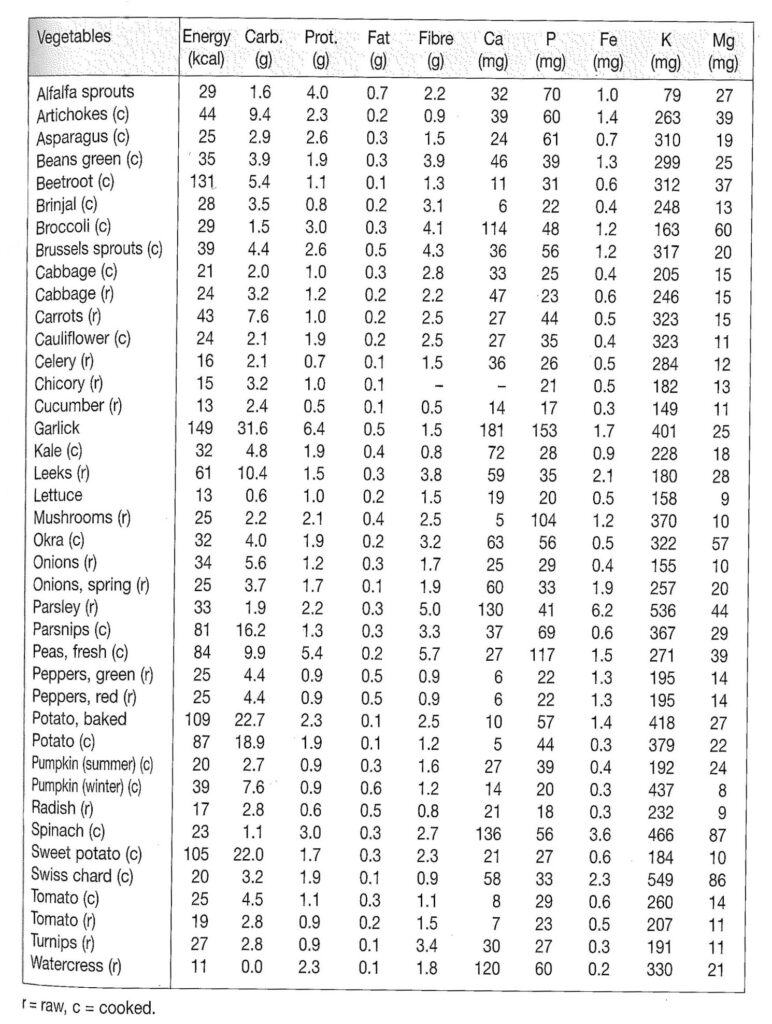
Table 7.21. The composition of selected vegetables. The figures are for 100g portions. (Adapted from ref. 37)
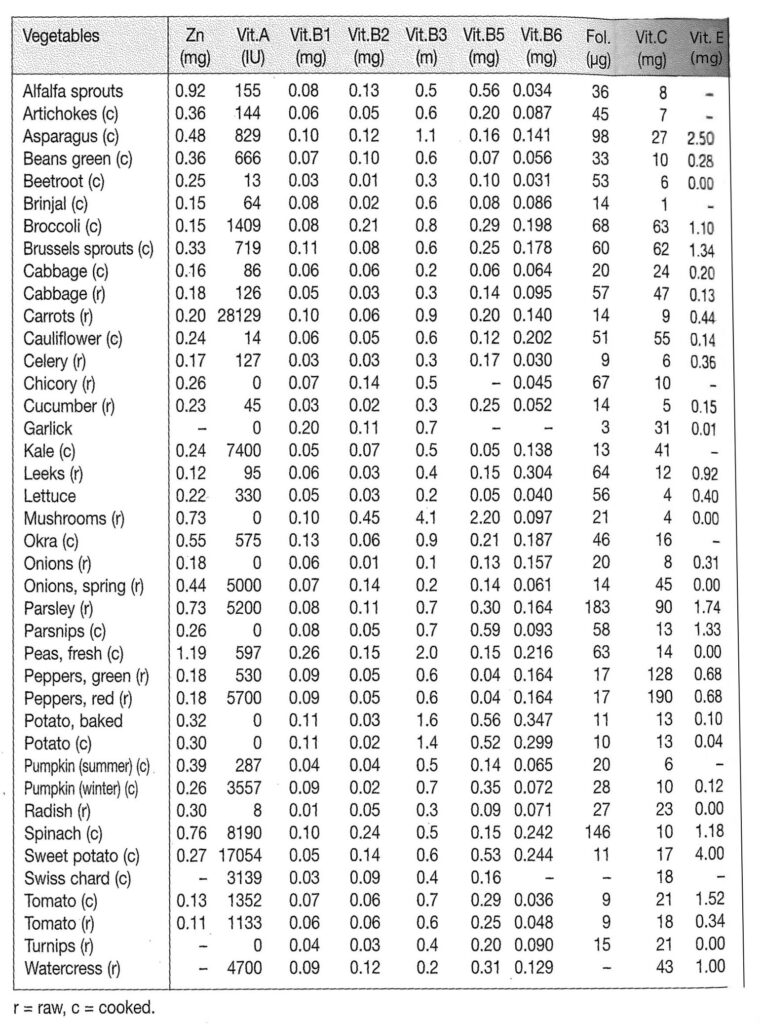
Table 7.21 (Part 2). The composition of selected vegetables. The figures are for 100g portions. (Adapted from ref. 37)
Types of vegetables
Vegetables are derived from most of the families of flowering plants and also from some algae and fungi. Many different parts of the plants are used as vegetables, and these include the roots, stems, leaves, buds, flowers, fruits, and in the case of sprouts, the whole plant. As definitions for vegetables are mostly based on usage and not scientific principles, it is very difficult to define a vegetable, particularly where vegetable fruits are concerned and there is no hard and fast rule for placing some of the seed-bearing fruits in either the fruit or vegetable category. In the case of the family Curcurbitaceae, for example, melons are considered to be fruits because they are sweet and similar in composition to fruits, whereas cucumbers, pumpkins and squashes are considered to be vegetables, but the final placing in one category or another remains arbitrary.
As the various plant families which contribute to the vegetable kingdom often share common features, the vegetables will be discussed by family, and as the listing could constitute a book of its own, only some of the more common vegetables will be discussed in order to highlight the diversity of qualities inherent in these foods. Hopefully the list will encourage variety on the table.
CHENOPODIACEAE (the goosefoot family)
The goosefoot family comprises numerous genera of herbs, shrubs and vegetables, of which some are medicinal. The main vegetables in this family are: beetroot, sugarbeet, Swiss chard and spinach. These vegetables supply an abundance of vitamins and minerals, but they also contain oxalic acid, and much of the calcium is bound in the form of calcium oxalate, which is associated with the formation of kidney stones. It has, however, been found that a vegetarian diet enables the body to cope with this situation,27 and it is not necessary for the vegetarian to eliminate these vegetables from the diet. Should there, however, be a record of kidney stones, then it would be wise to limit the use of vegetables belonging to this family.
Beetroot and Swiss chard (Beta vulgaris)
Beetroot is native to Europe, Africa and Asia and was used as a vegetable from as early as 300 BC. The crimson root of the beetroot owes its colour to the presence of a glucoside called betanin, which belongs to a group of chemicals known as betacyanins. Because of its red colour, many people are mistakenly under the impression that beetroot is a cure for iron deficiency, but beetroot contains only an average amount of iron. Beetroot contains large amounts of sugar, and some varieties are cultivated solely for sugar production. The high sugar content ( up to 8%) accounts for the high energy content of beetroot, but beetroot is also a rich source of the minerals magnesium and manganese, and it also contains a fair amount of vitamin
C. Beetroot can be grated and eaten raw in a salad or it can be cooked and served with a little lemon juice rather than vinegar. In Russia, beetroot forms the basis of the popular soup called borsch.
Another variety of Beta vulgaris produces Swiss chard, which is cultivated for its leaves and is easy to digest. Swiss chard is very nutritious and supplies good quantities of potassium, calcium, phosphorous and iron. It is one of the richest sources of magnesium. Moreover, this vegetable is very rich in vitamin A, supplying in excess of 3 000 IU per 100g.
Spinach (Spinacia oleracea)
Spinach is native to Asia and was introduced into Europe in the late Middle Ages. Like Swiss chard, it is rich in magnesium, calcium, potassium, phosphorous, iron, copper and manganese. The vitamin A-content is exceptionally high (8 190 IU). Spinach is also a good source of vitamins B6 and C. Spinach can be eaten cooked, and creamed with a little nut sauce it is particularly delicious. Raw spinach can be eaten in salads without fear of oxalic acid build-up,
as the blend of nutrients in spinach will prevent oxalic acid accumulation, particularly in the vegetarian. People already suffering from gall and kidney stones, should, however, avoid all foods rich in oxalic acid.
COMPOSITAE (Sunflower family)
The family compositae is a huge family of plants, better known for the flowers and oilseeds which are derived from it. One important vegetable from this family is chicory, and what would our salad bars look like without the all important lettuce, which is also a member of this family.
Chicory (Cichorium intybus)
Chicory is native to Europe and Asia, but has only been used as a vegetable since the thirteenth century. Chicory is cultivated mainly for its large taproot which is used as a coffee substitute, but its leaves are also used as a vegetable. The leaves of chicory have a bitter taste and Pliny, in fact, mentions chicory as one of the bitter herbs used by the Jews during the Passover. Chicory is cultivated from harvested roots which are replanted in spring and covered with soil or sawdust. This blanches the leaves and reduces the bitter taste. Chicory is a good source of folic acid and it can be eaten like lettuce in a salad.
Lettuce (Lactuca sativa)
The leaves of lettuce can be cooked, but they are most commonly used for salads, and have been used in this way for thousands of years. Wild species have a bitter taste because they have higher concentrations of the triterpenoid alcohols sesquiterpene, lactone, lactucin and lactupicrin than do cultivated varieties. These compounds occur in the white milky fluid, latex, and are also known to have sedative properties, and are frequently used as a remedy for coughs. Varieties of lettuce which are characterized by overlapping leaves are known as cabbage or head lettuce, and these are the most popular varieties. Lettuce with oblong leaves are known as cos lettuce and others do not form a head, but merely a loose rosette of leaves. Lettuce contains only 1% protein, very little complex carbohydrate and consists mainly of water, which is why it is compatible with fruits. Lettuce also contain reasonable quantities of minerals and vitamins, particularly silicon, vitamin A and folic acid.
CONVOLVULACEAE (Morning glory family)
The family consists mainly of twining herbs that are often classed as weeds. Some members of this family are used medicinally or as hallucinogens but one species, the sweet potato is an important food source.
Sweet potato (Ipomoea batatas)
Sweet potatoes are not related to potatoes, and they are cultivated for their root tubers. The tubers of sweet potatoes contain free sugar as well as starch, and this gives them their sweet
taste. The plant is native to tropical America and was introduced to Europe by Columbus. Sweet potatoes can be eaten boiled or baked, and they are a very nutritious food, very rich in vitamin A (17 054 IU per 100g). Vitamin C is also well supplied.
CURCURBITACEAE (Gourd family)
The gourd family includes plants that are utilized as a source of fruits such as the melons and watermelons, but also includes varieties such as pumpkins, squashes, gherkins and cucumbers that are regarded as vegetables. Gourds, on the other hand, are mainly ornamental.
Pumpkins and Squashes (Curcurbita)
Pumpkins and squashes are of American origin, and there are a number of species. In America, the terms winter and summer squash are used to differentiate between different varieties. The summer squash (C. pepo) is eaten in the immature stage whilst the other varieties of the same species, such as pumpkins and winter squash, are harvested when fully mature. These can be stored for use during winter, and are thus also known as winter squash. In Britain, summer squashes are called marrows and the term winter squash is not used.
Pumpkins and squashes are good sources of vitamin A, and the yellow varieties supply in excess of 3 500 IU of this vitamin per 100g. Pumpkins are also a good source of the minerals calcium, potassium and silicon. Pumpkins can be eaten raw if grated into a salad, or they can be steamed or baked. Baked winter pumpkin is very nutritious and satisfying and supplies a high nutrient density.
Cucumber (Cucumis sativa)
Cucumbers have been used for thousands of years, and they were known to the ancient Egyptians. Today there are many different varieties that are cultivated for human consumption. They consist largely of water, minerals and vitamins, and are thus compatible with either fruits or vegetables, and can be used as a refreshing addition to salads or snacks. Cucumbers are mainly eaten raw, but they are also delicious when briefly cooked and prepared in a sweet and sour sauce. Some cultivars are pickled and preserved in vinegar, but it would be better to use brands that are preserved in brine, or to prepare one’s own preserve substituting lemon juice for vinegar. Gherkins are also used for pickling, but they are derived from another species of Cucumis.
CRUCIFERAE (BRASSICACEAE) (Mustard family)
This family includes some 350 genera and well over a thousand species, of which a number are utilized as vegetables. Cruciferous vegetables are rich in essential nutrients. They are known to reduce the risk of cancer,81,82 and should therefore fill a prominent position in the diet. Because vegetables in general, and cruciferous vegetables in particular, contain substantial quantities of sulphur, the vitamin C-concentration does not decline as readily as it does in the case of fruits
or vegetables with a lower sulphur content,91 and this means that more of this vitamin is retained after storage and cooking.
Some of the common vegetables in this family are those which belong to genus Brassica, which includes broccoli, brussels sprouts, cabbage, Chinese cabbage, cauliflower, kale, kohlrabi, rutabaga and turnips. Some other important foods from this family include cress, watercress, and radish, which are eaten in salads, and Japanese horseradish and mustard which are used as condiments. The chemical components of the mustard family, to which its anti-cancer properties are attributed, are listed in table 7.18. One of these substances is mustard oil which also is responsible for the characteristic taste of the cabbage group, and the compounds attributed with anti-cancer activity are isothiocyanytes, thiocyanates and dithiolthiones.
Broccoli (Brassica oleracea)
Broccoli was developed in Italy and is well established as one of the major anti-cancer foods. It also stimulates the production of enzymes which rid the body of potentially harmful metabolites.81 Broccoli contains some 3% of protein and is one of the richest vegetable sources of calcium, iron and magnesium. Moreover, broccoli is very rich in vitamins A and C, exceeding even oranges in the concentration of the latter. Broccoli can be eaten raw in salads or with dips, or it can be steamed and eaten as is, or served with a light nut, or similar sauce.
Brussels sprouts (Brassica oleracea)
Brussels sprouts was first developed in Belgium from where it also gets its name. Brussels sprouts is quite popular in Europe and its nutrient composition is similar to that of broccoli, except that the concentrations of vitamins and minerals tend to be lower. Use brussels sprouts as an alternative to provide variety, but try to use fresh or frozen sprouts as they lose their flavour and texture when canned.
Cabbage (Brassica oleracea)
Cabbage is yet another variety of the species Brassica oleracea which is rich in cleansing minerals such as sulphur. It is native to the Mediterranean region, England and France, but the cultivated form was introduced to Britain by the Romans. Cabbage can be eaten raw, pickled or cooked and is used in a great variety of ways. There are many varieties of cabbages but the Savoy cabbage is considered to be the best in terms of its nutrient content. Savoy cabbage contains some 157mg of vitamin C per 100g and is rich in sulphur, a cleansing mineral, which helps to retain this vitamin.
Cabbage can be fermented to produce Sauerkraut, a process whereby the bacterium Lactobacillus converts the sugars into lactic acid, which accounts for the sour taste of Sauerkraut. Lactic acid is a weak acid, and in spite of its presence, Sauerkraut still remains an extremely alkaline-forming food which supplies an abundance of vitamins and minerals. The body copes well with lactic acid, and Sauerkraut can be eaten without fear of acid build up. Red cabbage is another variety of cabbage which can also be eaten raw in salads, or it can be cooked with a little lemon juice, rather than vinegar, to give it a sour flavour. Another popular cabbage variety, that can be used to provide variety, is the Chinese cabbage which is good for making salads or cooked as a green vegetable.
Cauliflower (Brassica oleracea)
Cauliflower is probably native to Asia Minor but was known in Europe by the sixteenth century. Its nutrient composition does not compare with that of broccoli, but it is an excellent source of biotin, and other vitamins and minerals are in good supply. Cauliflower provides that necessary variety on the table and it can be eaten raw, cooked and served with a sauce or as a soup, and it lends itself to being crumbed.
Kale and collard (Brassica oleracea)
Kale is similar to cabbage, but the leaves, which are green, silver-green or purple, do not form a head. The varieties that are used for human consumption are usually those with the curled leaves, and in the USA there is a variety that also forms a rosette of leaves similar to cabbage, but not compact. This variety is known as collard. Kale is the oldest variety of Brassica and it is very rich in nutrients. Kale is rich in calcium, magnesium, vitamin B6, and it contains over 7 400 IU of vitamin A per 100g.
Kohl-rabi (Brassica oleracea)
The name Kohl-rabi is a German name which means ‘cabbage turnip,’ and it is the swollen turnip-like stem which is used as a vegetable. The leaves are not usually eaten, but they are edible and do have considerable nutritive value. Kohl-rabi is normally cooked and can be served with a white nut, or similar sauce, and it is excellent in soups.
Turnip (Brassica rapa)
The turnip has been used for thousands of years, and is native to temperate parts of Europe and Asia. The swollen base can be cooked and eaten sliced and the leaves can be used like spinach. Turnips are not used extensively except in poorer areas, and they do not excel in any particular nutritional component, although they do contain reasonable amounts of calcium and vitamin C.
Radish (Raphanus sativus)
Radishes were used by the ancient Egyptians and they are probably native to Asia. Their pungent taste is due to the mustard oil. Radishes are eaten raw, and when they are peeled, most of the enzyme responsible for the production of mustard oil is removed, and they have a milder taste. The leaves of the radish should not be thrown away, as they can be used in salads, but as they are slightly prickly, they are best used in soups to create a pleasant, spicy taste. Radish-leaf soup is pleasant as a starter to meals, and is prepared by cooking the leaves and creaming them in a blender. Radishes contain fair amounts of vitamin C, and the mineral silicon is also in good supply.
Cress (Lepidium sativum)
Both garden cress and watercress (Nasturtium officinale) are members of the cruciferous family and their taste is due to mustard oil. They are used raw in salads or in soups and stews, and have a fresh spicy taste. Watercress was originally used as a medicine, and in view of its superb composition, it should become a part of every household’s menu. Watercress is an excellent source of calcium (120mg per 100g), magnesium and phosphorous, and it contains 4 700 IU of vitamin A per 100g. The B-group vitamins are well supplied and the concentrations of vitamins C and E are also above average.
LEGUMINOSAE (FABACEAE) (Pea or Pulse family)
The family Leguminosae is a large family which also includes some varieties that are used as spices or that can be eaten fresh as sprouts. The legumes can all be sprouted and eaten raw or cooked, and fenugreek can in addition be used as a spice. Another important plant belonging to this family is liquorice (Glycyrrhiza glabra), of which the underground portions are used as a flavouring agent in confectionery. Liquorice is recognized as having anti-cancer properties subscribed to the flavonoids, coumarins, tri-terpenes and phenolic acids which the roots contain. Most of the pea and bean varieties are discussed in the section on legumes, and the only ones that will be discussed here are those varieties that are eaten fresh as vegetables, namely the green or French beans and the fresh garden peas.
French beans (Phaseolus vulgaris)
There are two varieties of French beans that are eaten in the immature stage, and a further one where the beans are eaten in the dry form. Only those that are eaten in the immature stages will be discussed here. Cultivars where the entire pod is consumed, are normally called snap beans, and there are stringed and stringless varieties. In the other group the pods are not eaten, but the seeds are eaten in the immature stage. This last group is not of great commercial significance. Green beans contain good quantities of calcium, iron, magnesium, and the levels of vitamins A and C are also high.
Peas (Pisum sativum)
Garden peas probably originate from Asia, and they reached significance in Europe during the Middle Ages. Unripe peas can be served as a vegetable, and in the case of sugar peas, the whole pod can be consumed. Sugar peas are particularly attractive and tasty in Chinese dishes. Peas contain good quantities of phosphorous, but the other minerals are also present in adequate amounts. The vitamins A and C are also well supplied. Fresh garden peas are always an attractive addition to the menu.
LILIACEAE (Lily family)
The Liliaceae include a wide variety of edible, as well as medicinal and ornamental plants. From the genus Allium we obtain the onion, garlic, leeks, shallots and chives, and from the genus Asparagus we obtain, of course, asparagus. Besides their tremendous
flavour-enhancing capabilities, these foods have been categorized as having exceptional anti-cancer properties,82 and they also have cleansing and disinfectant qualities. The pungent smell of garlic, onions and the other members of the Allium genus is due to disulphide compounds known as allicins. The enzyme allinase starts to work on odourless compounds known as alliins when the plant is cut or damaged, and this produces the allicins. Allicins are powerful irritants, and that is why one tends to cry when one peals onions or other members of the Allium genus. Although garlic and chives are flavourants and are not strictly vegetables, they will be discussed here in view of their significance as disease preventers and flavour enhancers.
Chive (Allium schoenoprasum)
Chive is a herb native to Eurasia and is very popular in Europe, where it is finely chopped and eaten raw in salads, on boiled potatoes, as a garnish or as a flavourant for soups and stews. Chives have a fresh, mild onion flavour and are relatively easy to cultivate, even as a pot plant, so that no household need be without it.
Garlic (Allium sativum)
Garlic was already used by the ancient Egyptians and perhaps even contributed to the health of those individuals who helped to construct the pyramids. Garlic is rated as the number one anti-cancer food, and the sulphides, phenolic acids, and mono- and tri-terpenes present in garlic are attributed with this protective capacity. Moreover, garlic is much used as a medicine, as it also has bactericidal properties. Garlic can be added to many foods to enhance their flavour, and besides these virtues, garlic is one of the best sources of primary and secondary nutrients. Garlic contains over 6% high quality protein, is rich in carbohydrates and contains exceptional amounts of calcium, phosphorous, iron, magnesium, niacin and vitamin C. Prolonged slow cooking removes the pungency of garlic, but some nations find this quality of garlic endearing. To the novice, the taste of garlic may seem somewhat overwhelming, but once a palate for this flavourant has been developed, there will be no holding back, except perhaps in the romantic sphere.
Leeks (Allium ampeloprasum)
Leeks are native to the Mediterranean region and have been used as a vegetable since ancient times. Leeks can be eaten raw in salads, or they can be eaten cooked, and young leeks can substitute for asparagus. The green leaves at the top should not be discarded, as they contain most of the nutrients. If served with a nut sauce, tomato an olive oil dressing, or similar, it can provide a tasty variety to meals. Like all green vegetables, leeks are a good source of calcium, and the minerals iron and magnesium are also well supplied. Leeks are rich in folic acid and vitamin B6, and also contain a fair amount of vitamin C.
Onions (Allium cepa)
Onions have been used since ancient times, and their use is recorded by the Egyptians. Strictly speaking, the onion is a condiment but it is used so extensively that it will here be treated as a vegetable. The edible bulb of the onion is really the thickened stem, and the fleshy leaves are
the bases of normal leaves from the previous season. Onions are one of the plants listed by the NCI (National Cancer Institute) as having anti-cancer properties. Raw onions contain up to 2% protein, and useful amounts of calcium, vitamin B6 and folic acid. Spring onions are even more nutritious than mature onions, and they should be incorporated into the diet whenever possible. Make them a part of crisp green salads and use them in Chinese dishes. Spring onions contain twice as much calcium as mature onions (up to 60mg per 100g) and they are rich in vitamin C and contain up to 5 000 IU of vitamin A, whereas mature onions contain virtually no vitamin A. Onions can be used raw, cooked or fried, and the taste of virtually all vegetable meals can be improved by the addition of onions. Onions need not be fried in oil to obtain that rich fried onion taste, but they can be simmered over low heat in waterless cookware or in a little soy sauce or yeast extract together with a small quantity of water until they become golden brown. This enhances their taste and lends a rich flavour to stews and sauces.
Asparagus (Asparagus officinalis)
Asparagus is native to Eurasia and it was regarded as a delicacy by the Romans. The most renowned type of asparagus is the Argenteuil asparagus which is cultivated in France. The part used as a vegetable is the young shoot, and if white, blanched asparagus is required, then the earth must be mounded up around the young plant so that the stem is not exposed to the sunlight. The plant is harvested when the tip of the asparagus appears above the mound. Fresh asparagus can be peeled and cooked, and served together with a creamy mayonnaise-type sauce (see recipes), or it can be used on Pizzas. Asparagus contains useful amounts of calcium, magnesium and iodine and is an excellent source of folic acid. Moreover, vitamins A, C and E are also well supplied.
MALVACEAE (Mallow family)
The mallow family furnishes many ornamental plants as well as fibre, medicinal and food plants, but the family is most important as the source of cotton. Two frequently used food plants are okra and roselle, the latter being mainly used as a condiment. The edible calyces of the Roselle fruits are used to make jellies or a drink known as sorrel, or they are used as a flavourant in sauces.
Okra (Abelmoschus esculentus)
Okra is the large, green erect pod of Abelmoschus (Hibiscus) also known as gumbo or lady’s-fingers. The pods are used in the green state for stews, or they are dried for winter and they contribute substantially to human nutritional needs in some areas. The capsules can be sliced and fried, but because they are highly mucilaginous, they are also used to thicken and flavour soups. In the Southern United States, they are used to make the well known gumbo soup. Okra is rich in calcium and phosphorous, and is also an excellent source of magnesium. The vitamins A, B6, C and folic acid are also well supplied.
SOLANACEAE (Nightshade family)
This family abounds in ornamentals, plants with medicinal properties and a number of important food plants such as the potato, tomato, egg-plant (aubergine or brinjal) and red pepper (capsicum). The vegetables belonging to this family have also been recognized by the NCI as having anti-cancer properties.
Capsicum (capsicum annuum)
Green and red peppers, also known by their Hungarian name Paprika or the Spanish name Pimento, are native to South America from where they were introduced to most countries of the world. There are different varieties of peppers, ranging from the mild sweet pepper (C. annuum variety grossum) to the somewhat hotter Hungarian Paprika which was introduced to Hungary by the Turks. In Turkey, the pepper is a very important component of the everyday diet, and some of the best recipes for its use hail from that country. The fruits of this genus are not only used as vegetables, but are also used as condiments. Paprika powder is obtained by grinding the large, dried European variety of capsicum, and it is a tremendous flavour enhancer. The red pepper, known as chilli, is derived from another species (Capsicum frutescens) and the fruits of this species are more pungent than sweet peppers. The fruits of chillies can be ground after thorough drying, to produce cayenne or red pepper, and Tabasco sauce is obtained by pickling the pulp of chillies in vinegar or brine. The hot taste of these condiments is due to a compound known as capsaicin.
Red and green peppers are very nutritious and they are very rich in vitamin C. The composition of the unripe green pepper is very similar to that of the ripe red pepper, but the levels of vitamins A and C are far higher in the red than in the green pepper. Green peppers contain 530 IU of vitamin A per 100g as opposed to 5 700 IU in red peppers and the levels of vitamin C in the red pepper exceeds that in the green pepper by more than 60mg per 100g. Peppers can be eaten raw, stuffed, or as garnish and flavourant in a host of dishes. They are also used as stuffing for green olives.
Egg plant (Solanum melongena)
The egg plant, also known as aubergine or brinjal, probably originated in tropical Asia and is extensively used in India and the Far East. The edible part is the egg-shaped fruit, which is a berry. Different cultivars have different colours ranging from white to yellow, dark purple and black. The most common variety, however, is purple. The fruit is eaten boiled, stuffed or baked, and it can be used in stews or sauces. In Turkey, brinjals are roasted directly on a hot stove plate until the outer skin is burnt black. The fruit is frequently turned during this process to prevent too much burning, and the inner flesh is then scooped out and added to dishes such as rice salads. It imparts a unique, smoked flavour to the dish. Brinjals do not excel in any particular nutrient, but they do add variety to the table, and contain compounds that act as cleansers and prevents disease such as cancer.
Potato (Solanum tuberosum)
The potato is native to tropical America and it was the staple food of the Incas. When potatoes were first introduced to Europe, they were only used as ornaments, but today they are one of the most important vegetables which are used in virtually all the countries of the world. The
potato plant produces white, yellow or purple flowers, and the fruits, which are small berries, are very poisonous as they contain solanine, which is an alkaloidal sapotoxin. The edible part of the potato is the underground stem tuber which can have a whitish, yellow, brown or red skin, depending on the variety. Because the potato grows in the dark, it is not green, and it should be kept in the dark after harvesting to prevent it from going green. Green potatoes should never be eaten, as they also synthesize the toxin solanine.
Potatoes are rich in starch and contain some 2% protein. They contain fair amounts of potassium, B-group vitamins and vitamin C. Baked potatoes are more energy rich than boiled potatoes because of the lower water content. Potatoes can be prepared in so many different ways that one could fill a book just listing the recipes, but some dishes, such as French fries, have become international favourites. French fries are probably the unhealthiest way of consuming potatoes, as the impregnation with oil makes the potato very difficult to digest, and deep frying in oils, rich in polyunsaturated fats, has been linked to cancer. The use of free fats and oils should be avoided altogether, but if on occasion french fries are desired, then they can be prepared by giving the sliced potatoes a light coating of cold pressed olive oil (a monounsaturated oil) and baking them in the oven at 200°C (400°F) rather than deep frying them. The taste of this variety of fries is also superior to that of deep-fried French fries and will be less detrimental to health.
Tomatoes (Lycopersicon esculentum)
The tomato is also native to South America where it grows wild on the slopes of the Andes. Tomatoes were only brought to Europe in 1523 after the conquest of Mexico, and did not really become a part of the diet until the nineteenth century. The fruits of the tomato are used primarily as a vegetable, and they can be eaten raw or cooked. Like most vegetables, tomatoes contain a fair amount of sulphur compounds which act as cleansers, and the red colour of the tomato is due to the presence of the tetra-terpene lycopene.
Today, there are many varieties of tomatoes on the market and they are processed into pastes and sauces. Canned tomatoes and purees are also readily available. Tomatoes have become essential ingredients of salads, stews and sauces, and have a tremendous potential for enhancing the flavour of virtually any dish. Italians have become past masters in utilizing the tomato, and much can be learnt from their approach. Tomatoes contain about 1% protein and are a good source of vitamin A and C.
UMBELLIFERAE (APIACEAE), (parsley or carrot family)
The umbelliferae are an important family, comprising some 250 genera and 2 800 species, the flowers of which look like small umbrellas or umbels. The plants often have a pungent odour and they are used as food source, flavourants, scent or for their medicinal value, but some of them are poisonous. Depending on the type of plant, the roots, leaves or seeds can be utilized as foods and flavourants. The plants of this family are recognized by the NCI as having cancer-preventive properties as they produce anti-cancer phytochemicals such as flavonoids, carotenoids, coumarins, mono- and tri-terpens, phenolic acids, phathalides and polyacetylenes. Many members of this family are used as herbs to improve the flavour of foods, and, in the interest of good health, this practice can only be encouraged.
Some of the more common herbs and foods belonging to this family are: angelica, aniseed,
caraway, carrots, celery, chervil, coriander, cumin, dill, fennel, lovage, parsley and parsnip. Many of these are only used as flavourants, but carrots and parsnips are used as vegetables. As some of the flavourants, however, also enjoy extensive use, and in some cases are also consumed as vegetables, they will be briefly discussed here.
Angeliica (Angelica archangelica)
Angeliica is believed to be a good antidote for poison. Today it is used as a condiment and is often candied. In some areas it is, however, used as a vegetable.
Aniseed (Pimpinella anisum)
Aniseed is a fruit and is used as a spice in cakes and pastries.
Caraway (Carum carvi)
Caraway is not a seed, but a fruit, and is used as a spice in bread or to add flavour to vegetables such as potatoes and cabbage.
Carrots (Daucus carota)
Carrots are an important vegetable, and although they were known to the ancient Greeks and Romans, they were not introduced to Europe until the Middle Ages. The orange-coloured taproot of the carrot contains a high concentration of β-carotene, which is the precursor to vitamin A. carrots can be eaten raw or cooked, but to obtain maximum benefit it is best to eat them raw. Carrots contain cleansing sulphur compounds and the main minerals and vitamins are well supplied. However, in its potential to supply vitamin A, the carrot is unbeatable, supplying in excess of 28 000 IU of this important component. Different cultivars, as well as older and younger plants, vary in the amount of β-carotene which they contain, and the younger roots are also sweeter than the older ones.
Celery (Apium graveolens)
Celery is one of the most alkaline-forming foods as it is rich in alkaline minerals. Celery has remedial qualities, and extracts of celery are even used to combat arthritis. The variety of Apium graveolens known as celeriac is cultured mainly for its turnip-like swelling, which is fried or cooked as a vegetable and is very popular in Europe, where it also used to liven up potato salads. Celery is, however, grown mainly for its stalks and leaves. Blanched celery is formed by earthing up the stems, and is more delicate in its flavour and also has a higher nutritional value in that it contains more vitamin A than the green stalks. Celery can be used raw as a salad or together with dips, but it also imparts a unique flavour to stews and soups.
Chervil (Anththriscus cerefolium)
Chervil is similar to parsley and is used as garnish or flavourant.
Coriander (Coriandrum sativum)
Coriander, which is a fruit, is used whole or ground in pickles and other foods as a flavourant.
Cumin (Cuminum cymicum)
Cumin also produces a fruit that is used as a spice and its use is similar to that of caraway.
Dill (Anethum graveolens)
In the case of dill, either the leaves or the fruits can be used as a flavourant in pickles, sauces and green salads to impart a pleasant, refreshing flavour.
Fennel (Foeniculum vulgare)
Fennel is used to flavour sweets, sauces and soups. In some areas it is used as a vegetable. However, as a vegetable, it has a somewhat overpowering taste for which one must develop a palate.
Lovage (Levistium officinale)
Lovage is native to Southern Europe and is used as a spice to enhance the flavour of soups and stews. In Germany it is known as Maggi-Wurzel.
Parsley (Petroselinum crispum)
The ancient Greeks used parsley as medicine, but today it is extensively used as a condiment. Its distinctive flavour is due to apiol. Parsley should become a regular household commodity, as it is exceptionally rich in calcium (130mg per 100g), iron, potassium, magnesium and trace elements, although the other minerals are also present in useful amounts. Parsley is also an excellent source of vitamins, particularly vitamin A, vitamin B2, folic acid and vitamin C. Parsley can be included soups and stews, and finely chopped parsley on savoury sandwiches and in salads adds flavour and essential minerals..
Parsnip (Pastinaca sativa)
Parsnips are native to Eurasia, and the edible portion is the swollen taproot which is used as a vegetable or flavourant. Parsnips contain reasonable amounts of calcium, phosphorous, folic acid and vitamin C, and before the introduction of the potato to Europe it was quite an important vegetable.
There are many other varieties of vegetables that could be included here, but it is not the purpose of this book to supply an exhaustive list of edible vegetables. It is rather envisaged that the list supplied should encourage the readers to include a variety of foods in their diet and to point out why this variety is so essential to a healthy lifestyle.