
Barley (Hordeum vulgare or H. sativum)
The composition of barley is presented in table 7.5.
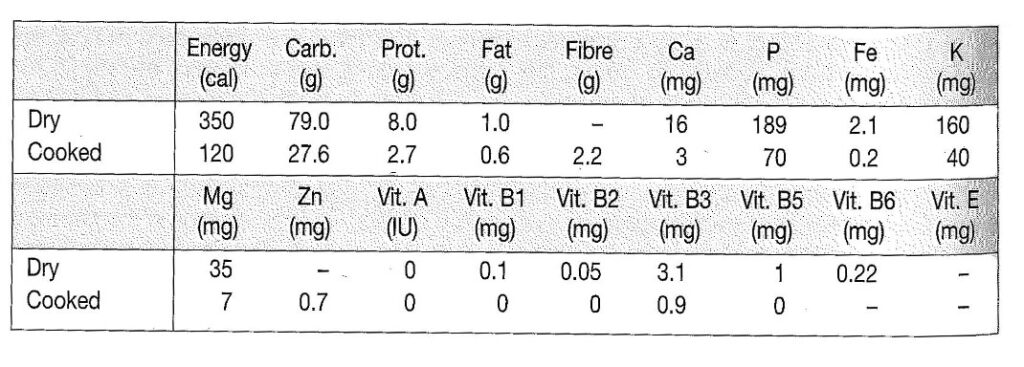
Table 7.5. The composition of barley. The figures are for 100g portions. (From ref. 35,36,37.)
There are many varieties of barley, and it has been cultivated for centuries, particularly for the preparation of beer which was already drunk by the ancient Egyptians.38 Besides being one of the major raw materials of beer, it was used as a food source by the ancient civilizations of China, Egypt, Greece and Rome, and in countries with cold climates it is still used extensively today. Barley is known for its heat-producing qualities and should become a regular component of soups, stew and breakfast cereals, particularly in winter. Barley can also be used in baking where it will add flavour and retain moisture, and if sprouted, it will add even greater nutritive value to the diet.
Barley is easy to digest and is rich in pantothenic acid (vitamin B5) which is essential for the intermediary metabolism of carbohydrates, fat and protein. Because vitamin B5 is