
No discussion on healthful living would be complete without reference to caffeine and alcohol. Both these compounds play a major role in human nutrition, and the sale of commodities containing either of these substances plays a major role in the economy of many nations. Tea, coffee and cocoa are important plant exports of many nations and in some cases they are the major, or only, earners of foreign exchange. The stimulating effects of tea, coffee and cocoa are due to their alkaloid content. Alkaloids are complex compounds containing carbon, hydrogen, nitrogen, and usually oxygen. The nitrogen often forms part of a heterocyclic ring system and as alkaloids are usually basic compounds, they normally form salts with acids.
The alkaloids found in tea, coffee and cocoa are caffeine, theobromine and theophylline. Caffeine is found in tea and coffee, whilst theobromine is found in cocoa. Tea also contains the alkaloid theophylline, but all of these compounds have a similar structure and are derived from purines (fig 6.1).
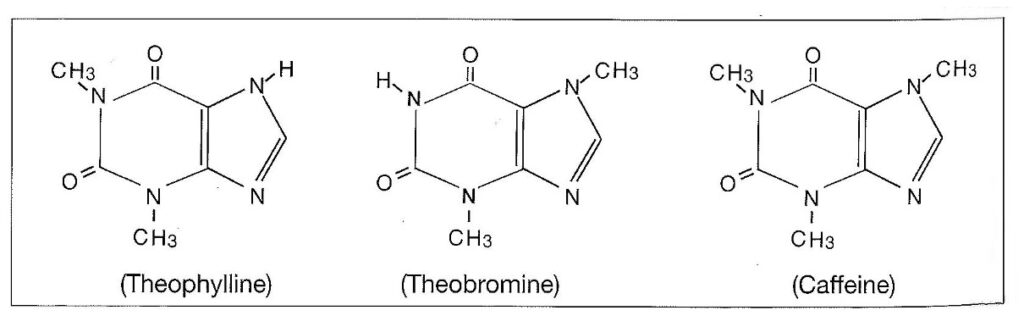
Figure 6.1 The structure of alkaloids found in tea, coffee and cocoa.
Tea (Camellia sinensis) has been used in China for thousands of years and it is cultivated extensively in Asian and African countries. Harvesting of tea takes place after flushing, which is the term used to describe the development of the new growth which occurs after pruning. For the “best” tea, only the two top leaves and the bud are used, but for coarse tea the bud and all four leaves of the flush are used. Plants protect their ephemeral (young) tissues from herbivory by concentrating secondary plant compounds, such as alkaloids, in these tissues, and it is therefore surprising that the ephemeral tissue is used to make tea. Green tea is produced by heating the harvested leaves to prevent fermentation, and black tea is produced by encouraging fermentation. After harvesting the leaves are spread out on nets to dry whilst hot air is blown over them. They are then crushed and polyphenols and enzymes are released and fermentation is initiated, which results in compounds that give tea its characteristic flavour. The “best” tea has high concentrations of polyphenols (called tannins, but are not the same as those used for tanning leather) which are also compounds that prevent herbivory in nature and affect the ability to digest, absorb and assimilate nutrients.
Coffee (Coffea spp) is grown largely in South America, the West Indies and Africa. The harvested berries are opened and allowed to ferment in water, and are subsequently dried in the sun to produce mild coffee. Hard coffee is prepared by first drying the beans and then removing the pulp. The beans are then roasted, which changes the sugars to caramel and gives the beans their dark colour. The cocoa plant (Theobroma cacao) is grown for its pods, which are also fermented, and the cocoa beans subsequently dried. The beans are roasted to drive off the acetic acid, which is formed during the fermentation process, they are then ground and can then be further separated into cocoa butter and cocoa powder. Cocoa powder contains approximately one per cent theobromine.
Caffeine
The consumption of caffeine begins at an early age for many people. Caffeine is a natural ingredient in tea, coffee and some soft drinks, and it is used as an additive in many baked goods, frozen dairy products, sweets, gelatins, puddings and soft drinks. The quantities of caffeine in some commonly used items are summarized in table 6.5.
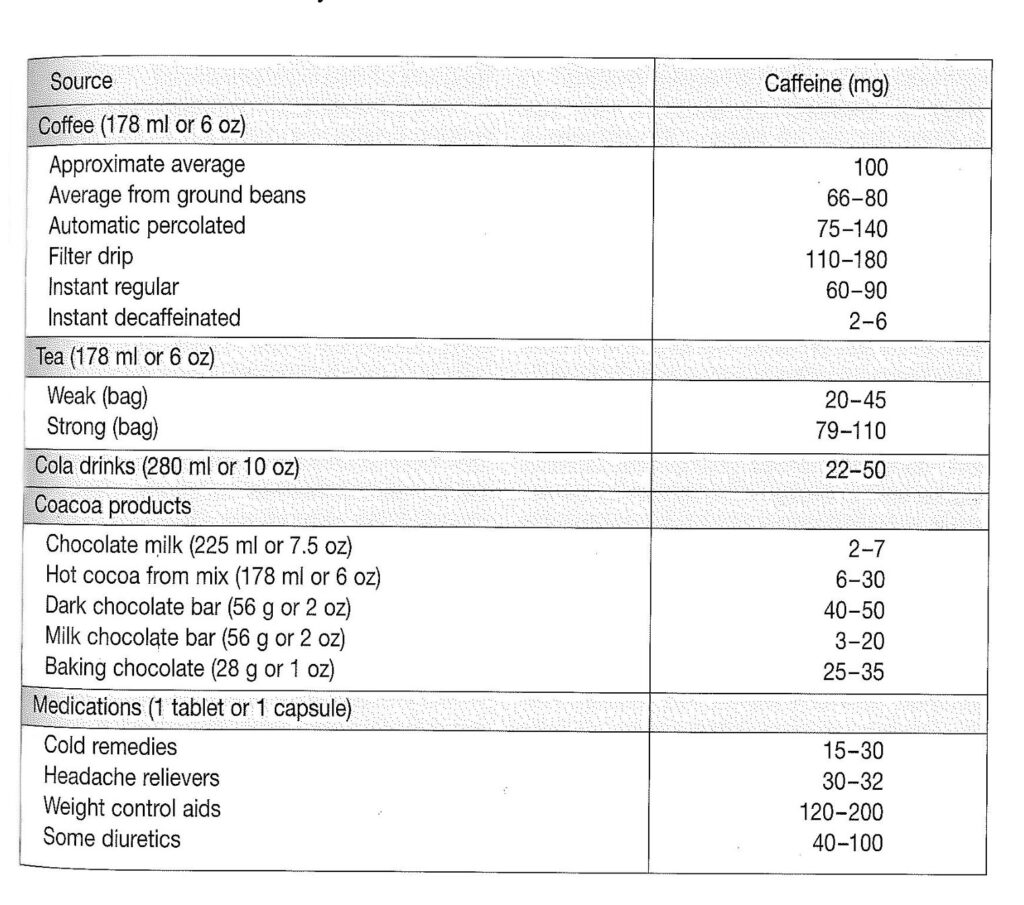
Table 6.5. Sources of caffeine. (From reference 48).
Based on these values the National Institute of Nutrition in Canada estimated that the average daily caffeine consumption of Canadians approximates 450mg per day. Children also consume large quantities of caffeine in the soft drinks and sweets which they consume, and this is a matter of some concern. Adults absorb 99% of the caffeine they consume, and peak blood levels are reached within 15-45 minutes, and the half-life of the caffeine (the time it takes to eliminate 50% of the caffeine from the system) varies from 3-7.5 hours. Caffeine is found in breast milk, and can cross the placenta and thus influence the unborn child. In newborn infants the rate of elimination of caffeine is much slower than in adults, and the half-life is 82 hours. In pre-term infants the half-life ranges from 62-102 hours.48 Some races also experience slower clearance rates than others, and Orientals have a much slower rate of elimination than Europeans. Pregnancy and the use of oral contraceptives also substantially increase the clearance rate.
The Federation of American Societies for Experimental Biology (FASEB) reported the mean consumption of caffeine to be 0.17 mg/kg per day for babies 0-11 months old, 0.49 mg/kg/day for age group 1-5 years, 0.31 mg/kg/day in the 6-11 year age group, 0.21 mg/kg/day in the 12-17 year age group and 0.18 mg/kg/day in the 18 year and older age group. In people with high consumption levels of soft drinks, levels can be significantly higher, and for children in the 1-5 year age group levels can reach 1.8mg/kg/day.49 In view of concerns about the safety of caffeine, and the relatively high concentrations to which children are exposed, the FDA has reviewed the use of caffeine as additives in soft drinks.
The effects of excessive caffeine intake, which in some individuals may be manifested at levels as low as 500 mg/day, include insomnia, headache, anxiety, irritability, and depression. When consumed on an empty stomach it can produce tremors, and at consumption rates of 1g (which is not unusual for some people) can produce symptoms such as fever, agitation, trembling, rapid breathing and heart rate, cardiac palpitations, diuresis, nausea and anorexia. Still higher intakes (5-100g or 50-100 cups of coffee) have caused tachycardia, convulsions, respiratory and heart failure and coma and death due to shock.48 People who stop drinking beverages containing caffeine may experience equally unpleasant withdrawal symptoms, the most common of which are muscle tension, nervousness, irritability and headaches. Caffeine also effects urinary calcium excretion, particularly in postmenopausal women.49 Rats fed instant coffee for 3 to 4 weeks also showed increased calcium loss via the urine and faeces.50 In one study carried out on a group of women (age 50-84), it was found that the consumption of more than two units of caffeinated beverages (one unit = one cup of coffee or two cups of tea), increased the risk of hip fracture by 69%.51 Metabolic studies have shown that the kidneys and intestinal system are directly affected by caffeine..
Of even greater concern than these immediate symptoms are the long-term dangers associated with caffeine, which can occur at lower levels and may be more subtle and difficult to detect. In studies on animals, caffeine was shown to affect the nervous system and influence such behaviours as learning, memory, motor performance, sensory function and emotional reactivity.52,53 These findings have prompted the FASEB to voice their concerns about behavioural effects of caffeine, and effects on the development of the nervous system in children who consume large amounts of cola-type beverages.
The administration of caffeine to pregnant mice indicates that caffeine has toxic effects on the unborn offspring and can possibly produce birth defects. Some of the birth defects noted after the administration of caffeine were: cleft palate, digital defects, muscular disorders, facial deformities, anophthalmia (absence of eyes) and exencephaly (the brain lying outside the skull). In rats the situation is similar, and incomplete ossification in the offspring was also reported.
As these studies suffered from lack of certain controls and low sample numbers the FDA undertook two new studies to resolve the issue of the teratogenic effects of caffeine. These studies revealed that high doses result in death and resorption of embryos, significant reductions in foetal weight, and skeletal abnormalities such as reduced pubis size, reduced dorsal arch and missing hind digits. In fact irreversible birth defects were noted at levels as low as 80 mg/kg and other defects at levels as low as 6 mg/kg.52 Much uncertainty still exists as to whether caffeine increases the risk of birth defects in humans, and it is premature to make such claims. Nevertheless, the studies on animals indicate that there are enough reasons for concern.
Alcohol and diet
It is an interesting phenomenon that many studies have shown that alcohol reduces the risk of coronary disease and may even have a positive influence on cholesterol levels.54 This phenomenon has received quite some attention and has given many an excuse for not curtailing their drinking habits. The negative aspects associated with alcohol, however, far outweigh any positive effects it may have on the cardiovascular system.55 Evidence is mounting that alcohol consumption increases the risk of cancer, particularly breast cancer, and although the relative risk is small (around 1.5), the alcohol habit is so widespread that it might account for a large proportion of breast cancers in Western countries.56,57
In a recent study, the effect of moderate intakes of alcohol on women 21 to 40 years old were assessed by measuring blood lipids at a time in the menstrual cycle when hormone levels were at their lowest. The subjects were given the typical US diet containing 36% fat and two 6-oz glasses of wine daily. Their total cholesterol levels remained unchanged, but there was an increase in HDL levels relative to LDL levels. This is indeed positive, but at the same time oestrogen levels rose from 7% to 37% during the menstrual cycle and this could be the reason why alcohol is associated with increased risk of breast cancer.58 Alcohol is probably not a direct carcinogen, but acetaldehyde, the main metabolic product in humans is a known carcinogen. Alcohol consumption is particularly linked with high risk of rectal cancer and the relative risks in individuals consuming three or more drinks per day were 3.17 (1.05-9.57).59 The IARC (International Agency for Research on Cancer) found that free extracts of some alcohol free beverages were also genotoxic, and the link between the consumption of alcoholic beverages, mainly beer, and rectal cancer was suggestive but not conclusive.59
Alcohol is known to impair the function of natural killer cells (NK) which destroy cancer cells.
Even small amounts of alcohol have a significant impact, and in one study it was found that just two cans of beer (3.5% alcohol) taken over a 30 minute interval during a meal significantly impaired the activity of lymphokine-activated killer cells (LAK) thus reducing the immune system’s capacity to clear virus infected cells or cell that have undergone neoplastic transformation. 60 It is sometimes claimed that alcohol contributes at least partially towards the overall nutrition, but alcoholic beverages provide little nutritive value apart from calories, and can not be equated with carbohydrates. Moreover, glucose homoeostasis is impaired by alcohol, and alcohol can affect insulin release and lead to glucose intolerance.61 Gout is also associated with alcohol, and short-term administration to patients, who have no disorders of renal function or uric acid metabolism, show significantly increased uric acid levels which persist, in some instances, for several days. Blood lipid levels are also raised by alcohol, and triglyceride levels can increase several-fold.62
It has been shown that alcohol is directly injurious to the small intestine and stomach. It can cause lesions in the duodenum and may impair the absorption of many nutrients.63 The liver is another organ that suffers from alcoholic intake and it has been shown that even daily alcohol consumption as low as 40g (± 3 drinks) in men and 20g (± 1½ drinks) in women resulted in a statistically significant increase in the incidence of cirrhosis in well-nourished persons.62 Vitamin metabolism is also impaired by alcohol, and reduction of liver stores of folacin, niacin, thiamin, vitamin B6 and vitamin B12 have been described. Fat-soluble vitamins are also negatively affected, and alcoholics have been found to have very low stores of vitamin A and vitamin D. Moreover, alcohol also results in greater renal losses of minerals, particularly zinc, calcium and magnesium, and the absorption of these minerals may also be impaired.62
A whole-food lifestyle, together with avoidance of harmful compounds, would circumvent many of the pitfalls associated with modern living. Whole foods will supply all the vitamins and minerals that the body requires to function normally, and at the same time most whole foods come prepacked in nature’s own wrappings. Many whole foods are naturally preserved, and fresh products allow one to largely avoid the many additives associated with processed foods. A diet consisting largely of fresh fruits, vegetables, grains, seeds, nuts and legumes can provide a whole new eating experience, and with a little bit of ingenuity will provide a satisfying alternative lifestyle.