
As mentioned previously, legumes form the perfect companions to grains in terms of providing balanced proteins. Moreover, they supply an abundance of essential fatty acids, complex carbohydrates, vitamins and minerals, and most of them are alkaline forming. Like the grains, legumes supply far more nutrients on a weight basis than do foods with a high water content, making them the ideal energy food particularly for young children.47 Legumes generally have a low-fat content, but some varieties have considerable concentrations of fat, thus greatly boosting the energy content of these varieties. Underweight people could benefit from a higher consumption of the fat- and energy-rich varieties such as chick peas and soya beans in particular. Peanuts also have a very high energy content and they also have the highest fat content (49.2g/100g), but in view of their acid-forming character and oxalic acid content their use is often discouraged. It is encouraging to know that vegetarians cope well with the oxalic acid in foods, a fact which has been coupled to the absence of animal proteins.29,30 Legumes with a high-fat content can also be used to make milk substitutes, and in this regard, the soya bean must rate supreme, however, most of the high-protein/high-fat varieties can be used to make highly nutritious milk substitutes.
Legumes have received some bad press, because their consumption is associated with flatulence and intestinal discomfort. If a few basic principles about their physiology and composition were understood, and the preparation adjusted accordingly, these side-effects could all be avoided. Dried legumes are dormant seeds that will only germinate under the right
conditions. The nutrients and enzymes required during germination and early growth of the plant are thus inactive, and will only become active once the conditions are right for germination. The activated enzymes will then liberate nutrients from the stored foods in the legume as required by the developing plant. The enzymes present in the seeds include lipases, proteases and carbohydrate-digesting enzymes such as amylase which are similar to the enzymes found in the digestive tracts of humans. These enzymes are dormant in the dry seeds, because specific enzyme suppressants present in the seeds inhibit their activity. These enzyme suppressants will also inhibit the activity of human digestive enzymes and reduce the availability of nutrients from legumes
Salivary and pancreatic amylase inhibitors have been found in grains and legumes, a trypsin inhibitor is present in black-eyed peas, kidney beans, lima beans, navy beans and soya beans,48 and lipase inhibitors have also been isolated from soya beans.49 Moreover, legumes contain tannin and phytic acid which render minerals unavailable for absorption, and in addition they contain carbohydrates such as raffinose and stachyose which are not broken down by human amylase. Raffinose is a trisaccharide consisting of glucose, fructose and galactose, and stachyose is a tetrasaccharide consisting of glucose, fructose and two molecules of galactose. These two oligosaccharides form additional storage carbohydrates, besides starch, and are only converted to a usable form when the seeds germinate. The list seems daunting indeed, and is enough to discourage anyone from eating legumes. If, however, we realize that these substances are rendered inactive during germination, then we merely have to simulate this process in order to eliminate the problem of suppressants.
Soaking, germination, fermentation, and cooking all reduce the effect of phytate and tannin in legumes,50 and germination and cooking will also destroy the enzyme inhibitors.34 Enzymes within the legume will then be activated, and raffinose and stachyose will be broken down, and the longer the germination process is allowed to continue, the lower the concentrations of the oligosaccharides will become. Sprouting legumes is thus the ideal way of improving their digestibility, and even if the sprouts are blanched before eating, it will not reduce the quality or the content of the proteins within the legume.51 The quality of the proteins in beans, will also be improved by cooking, particularly if moist, rather than dry heat is used to prepare the legume.52 Roasted legumes such as roasted peanuts or soya beans will, therefore, have poorer protein quality than the cooked product. The digestibility of legume proteins can also be increased by changing the method of processing. The proteins in legumes are only partially digested in the small intestine if they are eaten whole, but if they are liquidized before eating, then the protein can be 90% digested.53
It is essential to soak beans in plenty of water before using them (soak overnight or preferably longer) and discard the excess water as this will remove some of the tannin and will also activate the enzymes in the legume. It is not sufficient to soak the beans in just enough water so that all the water is soaked up into the beans, as this will not remove the suppressants. Soaking overnight in plenty of water is normally sufficient, but longer soaking periods are even more beneficial. Regular rising and discarding of the water will remove most of the suppressants and will eventually lead to sprouting, and once they have reached this stage they can be eaten raw without ill effect. Soaked beans can be placed in freezer bags and frozen for later use, thus eliminating the waiting period. If desirable, the husks of the beans can also be removed, and this will increase the protein content and lower the fibre content. Soaked legumes can then be cooked as is, or liquidized and used in a variety of recipes. Sprouting is one of the best ways of consuming legumes, but soaked and cooked legumes, particularly if properly prepared, are very nutritious, wholesome foods that can form a regular component of the diet.
Gas production will also be reduced if smaller portions of legumes are consumed during mealtimes as soaked, and even cooked legumes, will still contain some carbohydrates which cannot be broken down by human amylase and these resistant starches will pass through to the
colon where bacteria will break them down anaerobically. The products of this fermentation process will be short-chain fatty acids and gas, and the fatty acids will be absorbed by the mucosa of the colon, and form the nutrients of choice for these cells.54 The digestion-resistant carbohydrates are not digested in the small intestine, but they are fermented by the colonic bacteria and contribute to the increase in the number and bulk of the bacterial population. They also aid in the absorption of water, thus increasing the faecal bulk, they contribute to the production of anticarcinogenic compounds (see chapter 3), and thus offer protection against large bowel cancer.53,55,56 It has been argued, the presence of phytic acid residues in legumes can adversely affect the bio-availability of iron in legumes, but it is ironic that the ability of phytic acid to chelate iron is also responsible for its antioxidant and anticarcinogenic properties.57,58
As stated earlier, variety in the diet is what is required in order to gain the most benefit out of all types of foods, and fear of shortages of nutrients need not exist if this principle is followed. Fear of dietary protein shortages often prompts people to consume large quantities of legumes in a highly concentrated form, and the legume is then blamed for intestinal discomfort. Highly concentrated protein dishes of any kind, including high protein legumes, will increase the proportion of undigested protein entering the large intestine, which in turn will increase the concentration of potentially harmful substances derived from nitrogen.
If the above criteria are followed, legumes can form a trouble free component of the diet that provides numerous benefits including protection against degenerative diseases. Use raw sprouted legumes in salads, or enjoy them together with bread and fruits. Use soaked or sprouted beans in stews, roasts or patties and eat them in combination with grains to provide high quality protein and variety on the table. There are so many different kinds of legumes with so many different tastes and textures, that it will take a lifetime to sample them all. Some of the more common varieties include pea varieties such as chick peas and split peas and then there are the lentil varieties and kidney beans, lima beans, mung beans, soya beans, broad beans, carob beans and even the humble peanut. In this section only a few of the stalwarts will be discussed with which one can stock the kitchen, but by scouting around the markets many more varieties can be discovered which can provide a variety of tastes and textures to liven up ones diet. Table 7.13 gives the composition of some of the most commonly used legumes.
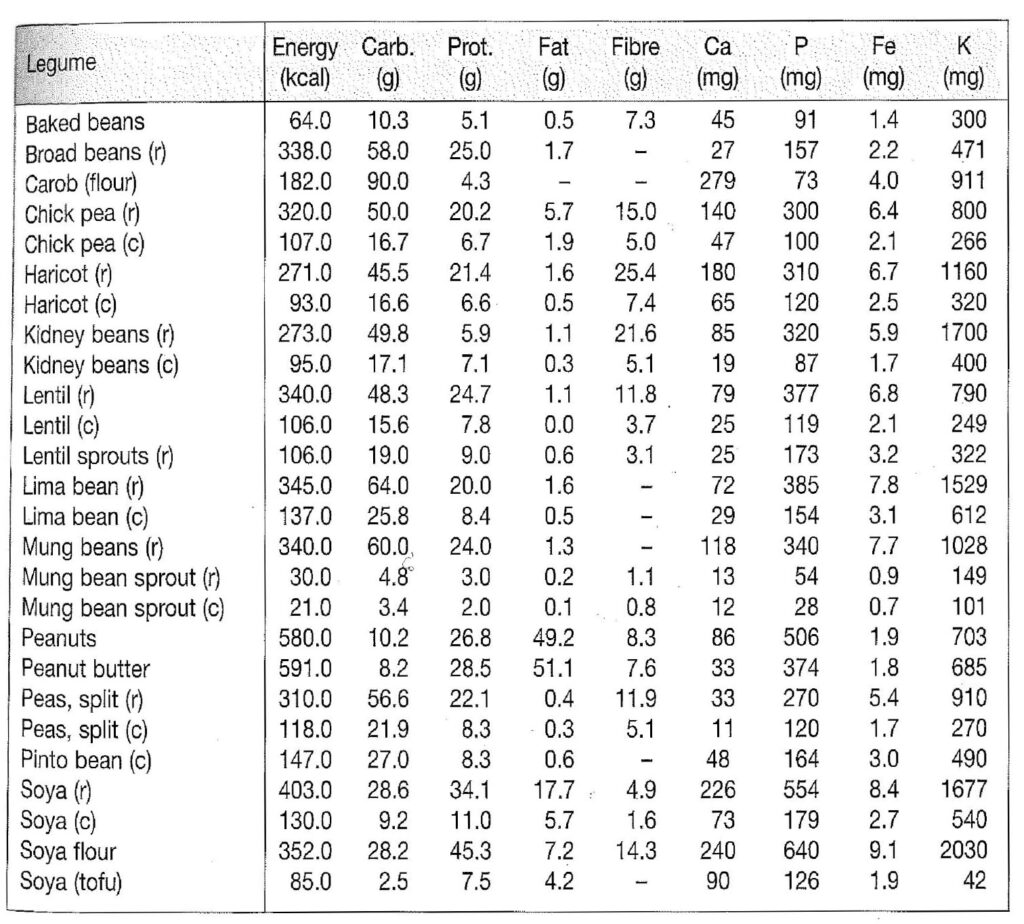
Table 7.13. The composition of selected legumes. The figures are for 100g portions. (From ref. 35,36,37)
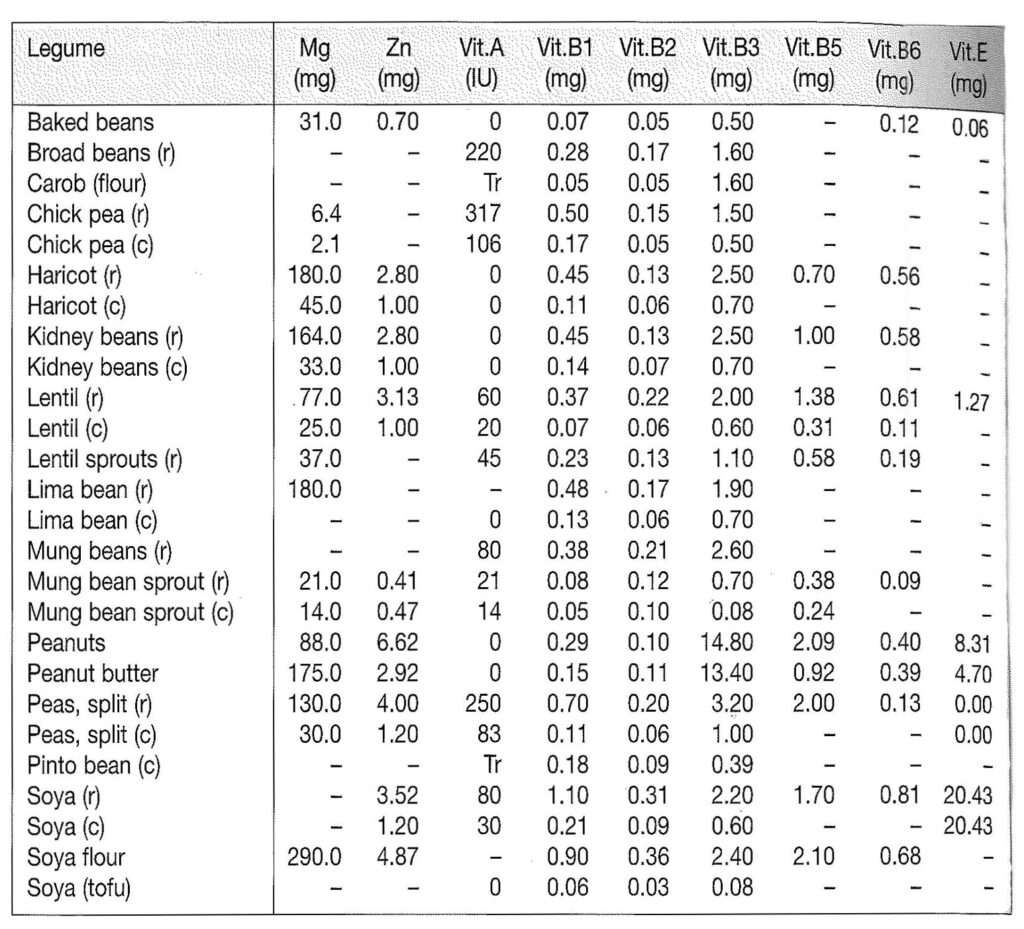
Table 7.13 (Part 2). The composition of selected legumes. The figures are for 100g portions. (From ref. 35,36,37)