
Diets high in meat are usually low in carbohydrates, particularly fibre. The levels of proteins are very high, and these high protein levels can cause numerous problems. Not all the protein ingested is completely digested, and approximately 2g of nitrogen in the form of undigested protein, peptides and amino acids (equivalent to 12g of protein) enter the large bowel daily. The bacteria in the large bowel will preferentially utilize carbohydrate residues to meet their energy needs, but when carbohydrate levels are low and protein levels high, then amino acids will be metabolised resulting in the release of ammonia and phenol, both of which are potentially harmful. Cooked and smoked meat products, in addition, also contain other potentially harmful substances such as polycyclic aromatic hydrocarbons, heterocyclic amines, and N-nitroso compounds, which have been linked to degenerative diseases.
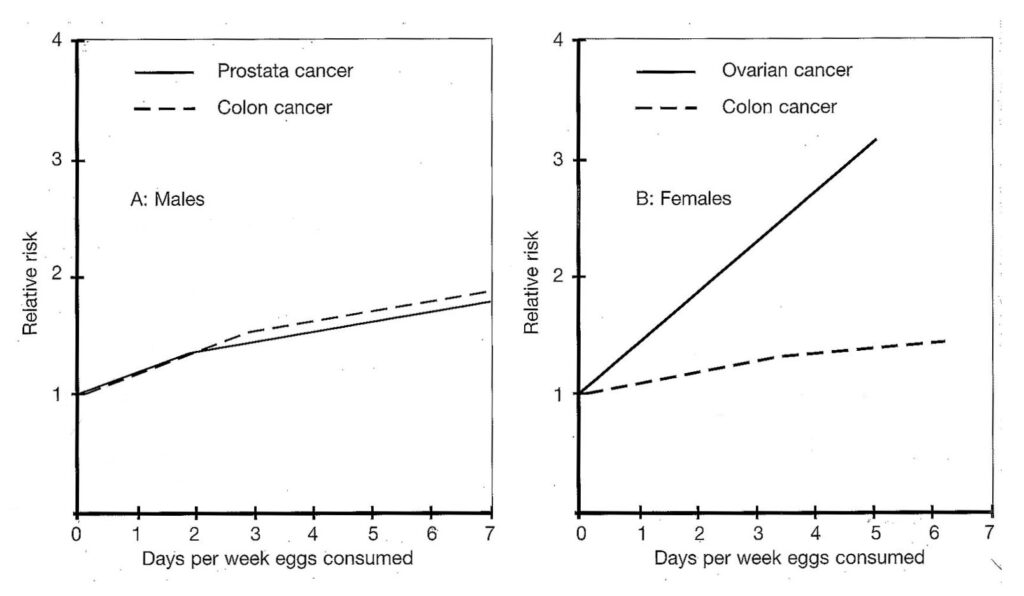
Figure 4.4 Egg consumption and age-adjusted relative risk of mortality. (Adapted from references 4 and 5)
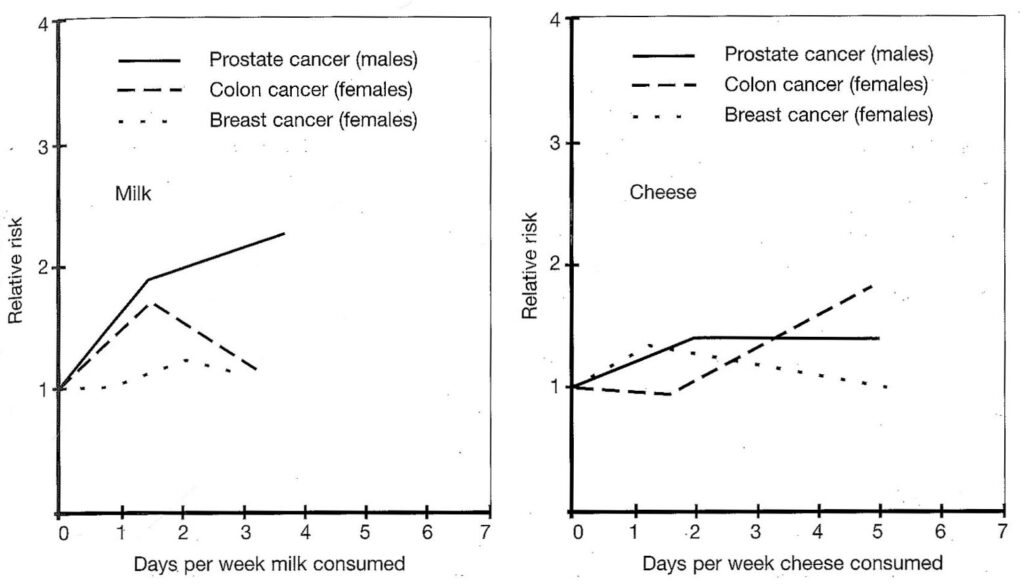
Figure 4.5. Dairy product consumption and age- adjusted relative risk of mortality. (Adapted from references 4 and 5)
These potentially harmful substances should be eliminated from the system as rapidly as possible, and if sufficient fibre were present in the diet, then the time that food is retained in the intestines would be considerably reduced. In the case of a relatively high intake of cereal fibre, the partly fermented residual polysaccharides, derived from these fibres, would absorb water, and this would lead to increased faecal mass and decreased transit time, thus reducing the time that potentially harmful substances such as carcinogens remain in large bowel.4,6 With a high meat consumption, however, the harmful substances can remain in the intestines for much longer periods, and this exposure has been linked to increased cancer rates. In this regard, the relationship between colorectal cancer and meat consumption is well established and is presented in figure 4.6.
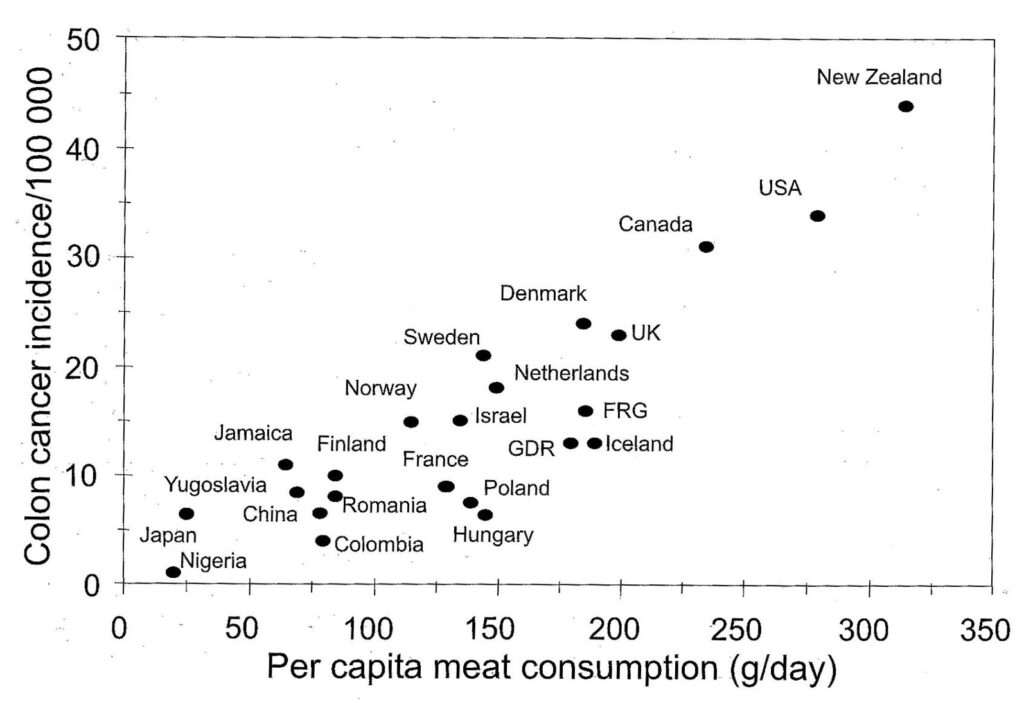
Figure 4.6. The relationship between meat consumption and colorectal cancer in various countries. (Adapted from references 2,7).
Colorectal cancer is the second most prevalent cancer in Western societies and affects up to 6% of men and women by the age of 75. Different factors seem to be responsible for colorectal cancer in the various countries, because the cancers manifest themselves differently, probably due to different induction modes. In high risk countries, the majority of colorectal cancers are located in the lower bowel, near the rectosigmoidal junction, whereas in low risk countries the majority of cancers are situated in the right side of the colon. Besides being low in fibre, the compounds in meat most commonly linked to the promotion of tumours are ammonia, phenols, polycyclic aromatic hydrocarbons, heterocyclic amines, and N-nitroso compounds.
Ammonia
Within the gut, the limited availability of carbohydrates in high-meat diets will lead to an increase in ammonia concentration in the colon because bacteria will metabolize the protein residues which enter the gut when carbohydrate levels are low. Ammonia, in turn, increases cell proliferation and alters DNA synthesis and has, therefore, been implicated in colon cancer.4 It is known that increased cell proliferation is associated with cancer in humans.8 Ammonia will not only be liberated from animal proteins, but from excessive intake of plant proteins as well. A high plant-protein intake is, however, usually associated with a high fibre intake and this would shorten the exposure time. This is particularly true in the case of whole foods with their high concentrations of fibre. High ammonia levels are not only a problem within the gut, but also effect the whole organism. As discussed in the chapter on proteins, the consumption of high levels of proteins will necessitate the deamination of amino acids in order to meet the body’s energy demands. This will require efficient detoxification of the produced ammonia, which in mammals is achieved via the urea cycle. As the amino acid arginine plays a principle role in this cycle, the higher levels of this amino acid in plant proteins than in animal proteins offers a possible protection against ammonia toxicity.
Phenols
A high-meat, low-carbohydrate diet will also allow more aromatic amino acids, such as phenylalanine and tyrosine to enter the colon. Gut bacteria produce cresol and phenol when they metabolize these amino acids. Both cresol and phenol have been associated with the promotion of skin and colon cancer9 and rapid elimination of these compounds seems advisable, even if their effect on the gut mucosa has not been fully resolved. A diet rich in fibre can once again assist in clearance of these compounds by decreasing the food transit time. Amino acid metabolism will also increase the concentration of these compounds in the blood, and elimination of these compounds is normally done by the kidneys. Nevertheless, consistently high levels of these compounds can be associated with diets rich in animal products, as it is known that urinary phenol levels increase when subjects are fed high-meat diets and to decrease with an increase in dietary fibre.10 Low phenol levels could thus limit the risk of cancer, and a whole-food diet is ideal to achieve both low levels of these compounds and high levels of fibre.
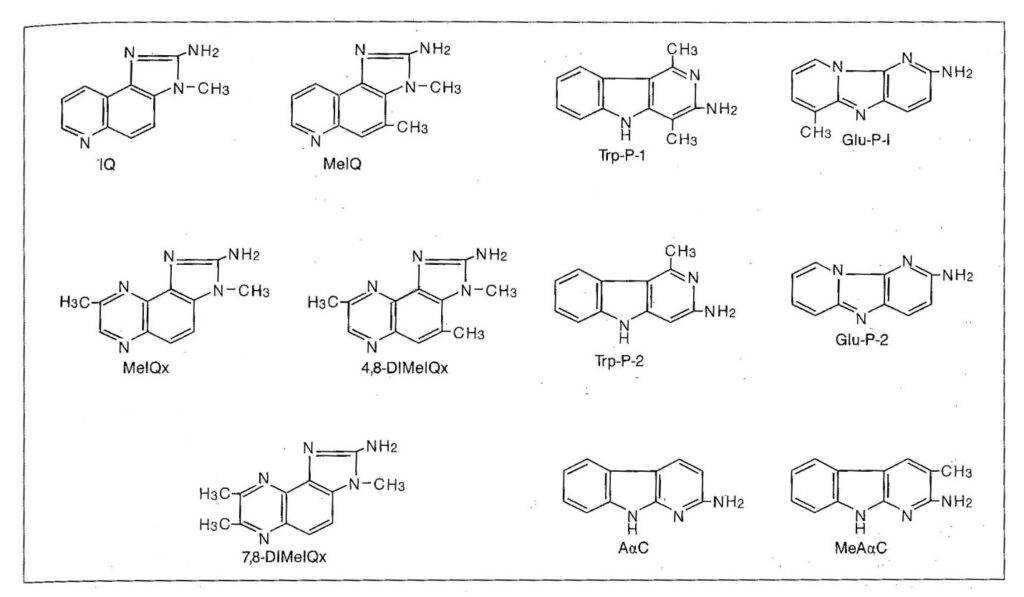
Figure 4.7. The chemical structure of heterocyclic amines. (Adapted from reference 14)
Polycyclic aromatic hydrocarbons (PAH)
Polycyclic aromatic hydrocarbons (PAH) result primarily from atmospheric deposition onto plants in smoky areas. One such hydrocarbon is Benzo(a)pyrene, a potent carcinogen, which is also formed in foodstuffs that are smoke-dried (such as tea) and also during the smoking and grilling of animal foods. PAH also occur in shell-fish that come from a polluted marine environment.11 Fats are once again a prime source of PAH and smoked and grilled food in particular are subject to contamination by these carcinogens.12 Avoidance of high risk foods seems desirable if the risk from these compounds is to be curtailed.
Heterocyclic amines
Heterocyclic amines are mutagenic and carcinogenic compounds that are formed in cooked and charred foods.12 They form particularly in meat and fish even if cooked at relatively low temperatures.13 In fact, it is estimated that the average consumption of these compounds is as high as 100µg per person per day,14 but other calculations place daily consumption in the range of 0.4 to 16 µg/day.2 Heterocyclic amines have been found to elicit carcinogenicity in the liver, lung, oral cavity, stomach and intestines of rats and mice, and have also been implicated in cancer of the lymphatic systems, blood vessels, skin and mammary glands. Over 20 mutagenic heterocyclic amines have been isolated from cooked animal products, and well done portions of meat contain higher concentrations than medium or rare portions. To obtain these compounds for experimental purposes, a standard protocol of grilling or frying for 6 min. at 200°C is used. Generally, frying, grilling and barbequing produce more of these compounds than does stewing, steaming, microwaving or poaching.2
The chemical structures of these compounds and the concentrations found in some foods are presented in figure 4.7 and table 4.2.
Heterocyclic amines are relevant carcinogens in humans, but in the case of colon cancer their relative contribution may be small (0.25% of all colon cancers).2 Food that will be particularly suspect in terms of heterocyclic amines will be cured and baked or fried meats. Even beer, soybeans, protein isolates and fried mushrooms were found to contribute significantly to the daily intake of these compounds. A study of heterocyclic amine formation in swine meat heated to 200°C showed that the main reactants of the mutagen-forming reactions are amino acids and creatine.15
N-Nitroso compounds
These compounds have been linked to human cancer of the oesophagus, stomach, bladder and possibly lung.16 Beer as well as nitrite-cured meat products, especially bacon after frying, and salt-dried or smoked fish, are major sources of these compounds. Incidentally, the mainstream smoke from one cigarette contains up to 65µg volatile nitroso amines and the side stream contains up to 1000µg,13 a healthy lifestyle thus constitutes more than just eating correctly. It is difficult to estimate what the level of exposure to these compounds is, particularly since it is known that nitroso amines are efficiently metabolized in the liver. Nevertheless, these compounds have induced liver and oesophagus cancer in experimental animals.12,13 Intestinal bacteria can also catalyse the formation of nitroso amines and this has been linked to gastric cancer. Nitrosated amides are direct acting carcinogens, and cause tumours near to the site they are produced, whereas nitrosated amines require hydroxylation and can initiate tumours at distal sites.2 In one study, increased consumption of red meat caused a 3-fold increase (from 40 to 113µ g/day) in N-Nitroso compounds in the faeces of eight volunteer males who were subjected to low and high meat diets, but white meats did not seem to induce similar effects. The increase is high, when one considers that smoking 40 cigarettes a day produces an exposure to approximately 30µ g/day of tobacco-specific carcinogenic N-Nitroso compounds.17
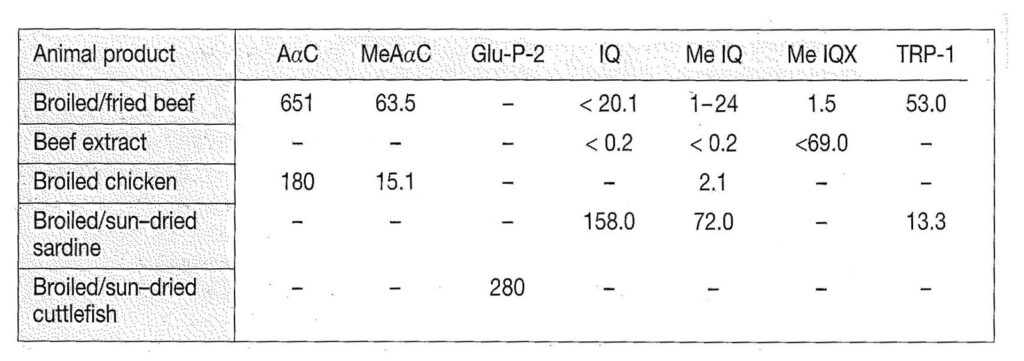
Table 4.2. The occurrence of heterocyclic amines in animal products. Concentrations are in µg/kg. (Adapted from reference 14)
Biological magnification
In addition to the aforementioned compounds, animals are also known to concentrate environmental pollutants such as heavy metals, pesticides, herbicides and industrial toxins. These toxins become concentrated in the tissues of organisms as they pass through the food chain. The concentrating process is called biological magnification and is responsible for widespread decimation of animal life on earth. Moreover, if species are harvested for human consumption from the top of the food chain (largely marine species), then these concentrated toxins are transferred to the human consumer. The extent of biological magnification of toxins such as DDT is well documented, and it has been shown that the concentrating potential can induce several million fold increases in the concentration of these substances in the tissues of animals. Concentrations of DDT in the water as low as 0.000005 parts per million can be concentrated to over 26 parts per million in top carnivores.
Animals accumulate toxins particularly in their fatty tissues, and when called upon to utilize their fat reserves, the release of these toxins into the bloodstream can lead to various diseases and death. In this regard, it has been established that the deaths of hundreds of thousands of marine mammals can largely be attributed to lowered immune capacity owing to the immune system being compromised by the presence of accumulated toxins. It has been found that even the paint used on the hulls of ships can add sufficient toxins to the oceans to cause widespread death of marine life. The paint contains tributyl tin (TBT) which prevents barnacles from sticking to the hull of vessels. The substance has been banned for use on small vessels but is still widely used on larger vessels. TBT is probably the most potent toxin deliberately introduced into the sea, as even a few nanograms in water can cause abnormal development such as female dog whelks developing male organs. However, the immunosuppression capabilities of the toxin could be one of the factors contributing to the widespread death of dolphins and other marine life. It was found, that marine mammals concentrate TBT in their tissues in concentrations of up to 10 parts per million.18
Marine pollution is a worldwide problem, particularly in industrialized or highly populated areas. In the Mediterranean, more than 500 million tonnes of sewage alone pours into the water every year. Sewage is not the only pollutant flowing into this sea, it is estimated that annually 120 000 tonnes of marine oils, 60 000 tonnes of detergents, 100 tonnes of mercury, 3 800 tonnes of lead, 1 million tonnes of crude oil and 3600 tonnes of phosphates enter this sea. In 1985 the Mediterranean nations set themselves cleanup goals which were to be achieved by 1995, but none of these goals have been achieved.19 If the wealthier nations of the world are struggling with clean up goals, one wonders how the less fortunate are faring.
It is known that fish and shell-fish in particular, concentrate heavy metals such as mercury in their tissues, and these compounds can also be carcinogens. Already in 1953, cats and birds on the island of Minamata in Japan got the ‘staggers’ and died. Then the humans developed headaches, ataxia, fatigue, foetal deformities and mental abnormalities. Some 15 000 people were affected and at least 3500 died. A government investigation showed that the culprit was mercury salts that had been dumped in the river and had accumulated in the sediment of Minimata Bay. There the salts had become methylated and converted to methyl mercury, a highly toxic organic compound. Once this compound had found its way into the food chain, it was accumulated in the tissues of marine organisms, and biological accumulation led to high concentrations in tuna which in turn was consumed by the human population. A more recent episode involving mercury pollution can be found in the pollution of the river Rhine in Germany in November 1986, when a blaze in the giant chemical company Sandoz caused some 30 tonnes of mercury and pesticides to be washed into the Rhine. Only direct and targeted intervention by the industrialized European nations prevented this disaster from permanently destroying the delicate ecosystem of this river.
The TBT example illustrates the fact, that very minor concentrations of toxins can attain catastrophic proportions due to biological accumulation, not to mention the very high levels of pollutants in some areas. Humans that rely largely on animal products for their sustenance, will experience similar accumulations of toxic compounds as do the top carnivores in nature, and a reduction, or even avoid