
Rice (Oryzia sativa)
The composition of rice is presented in table 7.9
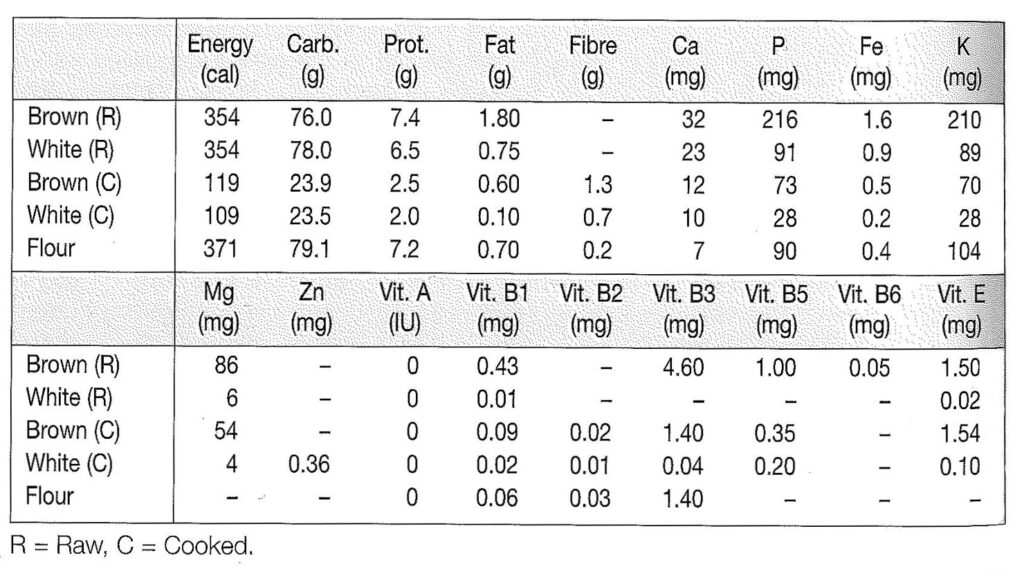
Table 7.9. The composition of rice. Figures are for 100g portions. (From ref. 35,36,37).
The commonest rice species is Oryzia sativa, and the different varieties of this rice can be divided into two main groups, the japonica and the indica types. The japonica types are the short-grained varieties, whereas the indica types are the long-grained varieties. Besides these, there are also many other varieties of rice, of which some grow on unflooded plains. Rice was first cultivated in India and today it is one of the most extensively used grains in the world, with China and India producing most of the world’s crop. Modern transport has, however, made rice available to virtually every country in the world. Like millet, rice belongs to that elite group of alkaline grains and should thus play an important part in our diet, as alkaline forming-foods should form the bulk of our daily nutrient intake.
Even a cursory glance at the composition-table of rice, will show that brown rice is far superior to white refined rice in terms of its nutrient content. It almost seems that, whenever nature provides something exceptionally good, then man must rob the product of its exceptional components. Refined rice should not form a regular component of the diet, as it will lead to all the pitfalls associated with a highly refined diet. Some complain, that brown rice is to chewy compared to refined rice. This problem can be lagely resolved by soaking the rice before cooking it, but it should also be remembered chewing is beneficial in terms of the digestive process.
The protein in rice is the perfect partner to the proteins in legumes and the combination of these two will provide a complete protein. Moreover, of all the grains, rice has the best percentage available protein. There are many varieties of rice on the market, so there is room for experimentation. Moreover, rice flour can be used for creating a variety of exciting dishes as well as cakes and puddings.