
Soya beans (Glycine max)
Soya beans have been a staple food throughout Asia for thousands of years, and according to tradition was one of five sacred crops named by Chinese emperor Sheng-nung. It is only recently that the soya bean has been introduced into Western society, and apparently it was first brought to the United States in 1804 as ballast on board a ship.64 It was not until 1890 that soya bean crops were being considered, and by 1917 only 50 000 acres were under cultivation in the United States. From this humble beginning, soya bean production in the United States has steadily increased, and today it is the second most important cash crop in that country, and produces about half of the total world crop. Sadly most of this is used for animal fodder, but the potential for human nutrition is being recognized more and more. Indeed, the consumption of whole and processed soya products has increased dramatically, though not always for the correct reasons.
Whole soya beans are an excellent source of protein, and after peanuts, is the legume which contains the most oil. In addition, soya beans are a good source of fibre, calcium, iron, zinc, phosphorous, magnesium, thiamin, riboflavin, niacin, and folacin. It is, therefore, not surprising that the greater stamina of northern Chinese over their rice-eating southern counterparts is associated with the consumption of soya beans. Today, whole soya beans and traditional soy products such as tofu, soy milk, miso, and tempeh are being consumed more frequently in the Western world, and in addition a new generation of soy products has been developed which tends to substitute for meat and dairy products. These second generation soy products tend to be low fibre, and are high-protein foods, which in the interest of healthful living should not form a regular component of the human diet. In the United States, 90% of soya beans consumed by humans is in the form of soy-protein products.64
The proteins in soya beans are of a very high quality, but as is the case with most legumes, the levels of sulphur amino acids can be limiting. Soy-protein isolates, however, contain sufficient quantities of all the essential amino acids, including the sulphur amino acids, to meet the needs of adults, and probably infants as well. In fact, isolated soy protein is the sole protein source for some infant formulas.65 Combinations of soya with grains will, however, definitely supply adequate quantities of essential amino acids for all age groups. The fibre found in soya beans is also very beneficial as it not only facilitates the movement of food through the intestines, but also has a considerable cholesterol-lowering effect.65
Whole soya, and products made from whole soya, will certainly benefit the consumer, and can more than adequately replace animal products. It is important, however, to follow the general procedures of preparation for legumes, as soya beans also contain the enzyme suppressants and indigestible carbohydrate components common to the legume family. The concentrations of these compounds are considerably reduced through soaking and heat treatment, thus largely eliminating their adverse effect on digestion and bio-availability of nutrients. The small concentrations of suppressants which remain, are insufficient to hamper nutrient availability, and can play an important role in disease prevention, as many of these compounds have been recognized as anticarcinogens.
Compounds in soya beans which act as anticarcinogens are the isoflavins, protease inhibitors, phytic acid, saponins, phytosterols (eg. phytoestrogen) and phenolic acid.64 Isoflavins in soya beans are present in fairly high concentrations and seem to offer protection against mammary cancer, and may even protect against endometrial and ovarian cancer.64 It has been suggested that the low incidence of breast and colon cancer in countries such as Japan and China is diet-related, and may be linked to the high consumption of soya beans in these countries. In 1990 the National Cancer Institute held a workshop to examine this relationship.66 The protease inhibitors in soya beans are largely destroyed by heating, but not all activity is destroyed.64 Raw soya beans do have high concentrations of these protease inhibitors and these could adversely affect protein utilization and have been known to cause pancreatic hypertrophy in rats. However, in populations that consume cooked soya bean products no such adverse effects have been noted. The principle protease inhibitors in soya beans are the kunitz trypsin inhibitor and the Bowman-Birk trypsin and chymotrypsin inhibitor, but these compounds also inhibit colon, lung and oral cancer. In addition, the protease inhibitors also suppress the transformation of cells into malignant cells, and they suppress the production of other carcinogenic compounds such as hydrogen peroxide.64 The small quantities of inhibitors consumed will thus, on balance, be beneficial to the consumer.
Cooked whole beans and soya products such as tempeh, natto and miso still contain most of the nutrients present in the unprocessed beans, but in the case of soy milk and products prepared from this milk, some of these nutrients are lost. Soy milk and soy milk products such as tofu and soy cheeses will be low in calcium, and this should be borne in mind when planning to substitute soy milk for cow’s milk in the diet of children. Table 7.14 gives the nutrient composition of some common soy foods.
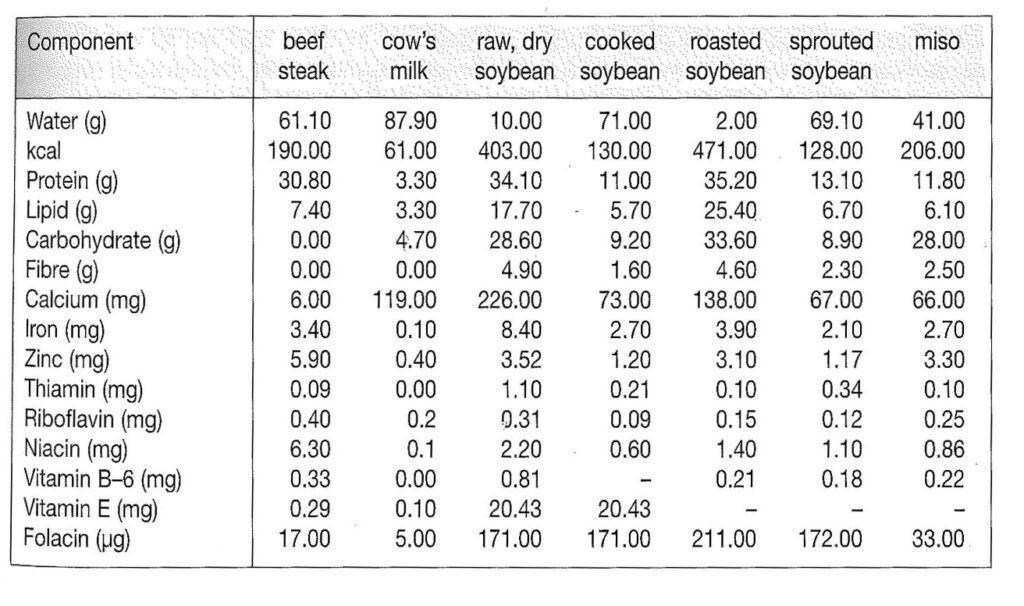
Table 7.14. Composition of selected soyfoods per 100g portions. Values for steak and cow’s milk are given for comparison. (Adapted from ref. 37, 64)
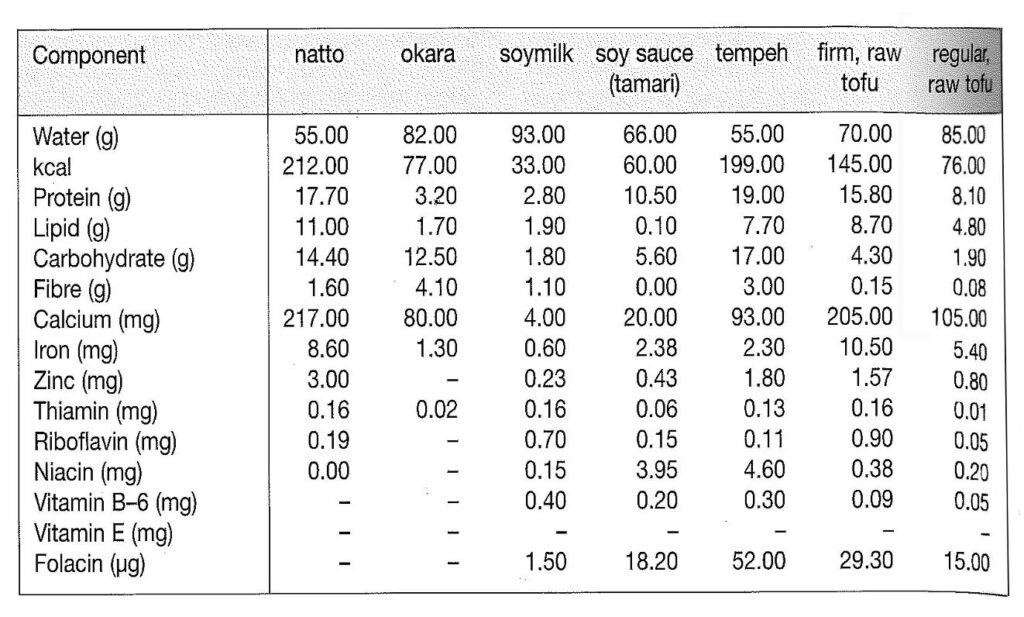
Table 7.14 (Part 2). Composition of selected soyfoods per 100g portions. Values for steak and cow’s milk are given for comparison. (Adapted from ref. 37, 64)
Miso = Cooked soybeans inoculated with the bacterium Aspergillus oryzae, fermented and pressed into a paste. Natto = Cooked soybeans innoculated with the bacterium Bacillo natto, fermented, and commonly wrapped in straw.
Okara = The pulp remaining after the extraction of soymilk from the beans. Roasted soybeans = Whole soybeans that are dry or oil roasted until crunchy.
Soymilk = Soaked soybeans are heated in hot water, liquidised, squeezed through a cheesecloth to obtain the soymilk.
Soy sauce = Cooked soybeans innoculated with the bacterium Aspergillus oryzae, shaped into nuggets, incubated, mixed with salt and the mash (called moromi) aged. It is then pressed to yield Soy sauce (tamari).
Tempeh = Cooked soybeans innoculated with Rhizopus oligosporus, producing a chunky cake.
Tofu = Soymilk is coagulated with either calcium or magnesium salt (nigari), and the curd pressed. The degree of pressing produces hard or soft tofu.