
The vegetable kingdom supplies an abundance of vital nutrients, and is an essential contributor to human health. Vegetables do not only provide primary nutrients, but they contain an abundance of vitamins and minerals. Moreover, vegetables help to rid the body of toxins, and they contain disease-preventive components, which include anti-cancer phytochemicals. In the United States, cancer is the second leading cause of mortality, and it has been estimated that 35% of cancer deaths are diet related. Estimates for diet related diseases range from 10-70%.87 Statistics like these, and the fact that the consumption of fruits and vegetables has been linked to a reduced cancer risk, has led the National Cancer Institute (NCI) to recommend increased consumption of fruits and vegetables.14 Not only are vegetables good for the prevention of cancer, but they are also beneficial for the cardiovascular system, and it has been shown that leafy green vegetables and root vegetables reduce cholesterol levels.88,89
Vegetables are living food packed with enzymes, vitamins and minerals, and the consumption of raw vegetables or vegetable juices would ensure an abundant supply of these essential
nutrients. The introduction of raw vegetables into the diet would thus be most beneficial, and if prepared as crisp salads together with a tasty sauce, they can be very palatable. Another way to ensure a healthy intake of raw food, is by developing a taste for fresh sprouts which are easy to prepare and also supply an abundance of nutrients and enzymes. Raw vegetables also contain greater concentrations of cancer-preventing phytochemicals than cooked vegetables, as many of these compounds are destroyed by heat. The fact that raw vegetables should form a healthy component of the diet, does not, however, mean that one should go overboard and exclude all cooked vegetables from the diet. Neither should one assume that cooked vegetables are unhealthy and unfit for human consumption. The watchword is variety, and cooked vegetables certainly have their place, particularly in winter, when a plate of warm food is positively essential.
When preparing cooked vegetables, care should be taken not to overcook them, as this would lead to a loss of nutrients. Vegetables should still be crisp when cooked, and cooking them in large quantities of water is also not a good idea, as the vitamins and minerals will merely leach into the water and be discarded. A look at the composition tables will show that cooked vegetables contain lower concentrations of nutrients than do raw vegetables, and this is due to leaching. Baked vegetables, on the other hand, contain higher concentrations of nutrients, because baking is a dry process, and the evaporation of water from the vegetables will concentrate the nutrients. Preparing vegetables in waterless cookware, or through steaming will ensure minimal loss of nutrients.
Vegetables are easy to cultivate, and a home vegetable patch should be a priority for all who are in a position to possess one. Organically-grown vegetables will provide a better mix of essential nutrients than conventional vegetables that are cultivated with inorganic fertilizers. It is not always possible to obtain organically-grown vegetables, and they can also cost more than conventional ones. In a recent study it was found that organically-grown fruits and vegetables differ significantly from conventionally grown ones.90 The nutrient levels were also affected differently in different fruits and vegetables. In potatoes it was found, for example, that the vitamin C content and that of various other nutrients was higher in conventional than in organically grown potatoes, whereas the reverse was true in the case of tomatoes, where the levels of vitamin C and that of other vitamins and minerals were higher in the organically grown varieties than conventional ones.90 The levels of trace minerals, particularly zinc, would be higher in organically grown vegetables than in conventional kinds, but if a varied diet is followed, sufficient nutrients can be obtained from either conventional or organically grown vegetables, and there is therefore no need for advocating extreme viewpoints on the issue. The composition of some of the more common vegetables is presented in table 7.21.
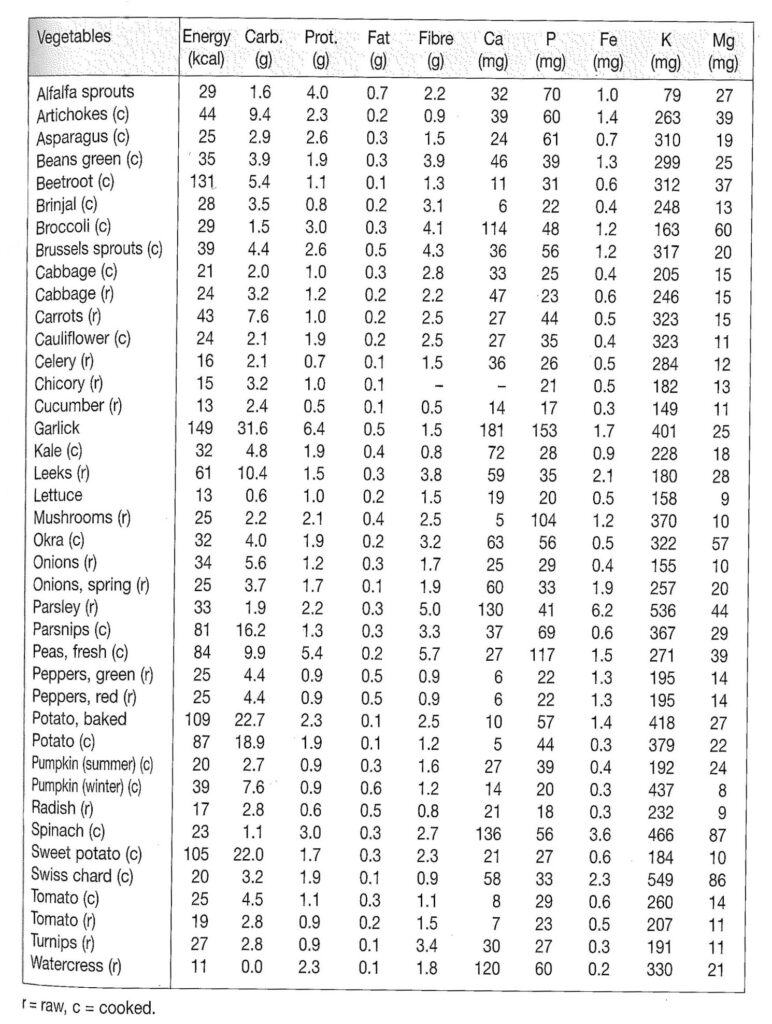
Table 7.21. The composition of selected vegetables. The figures are for 100g portions. (Adapted from ref. 37)
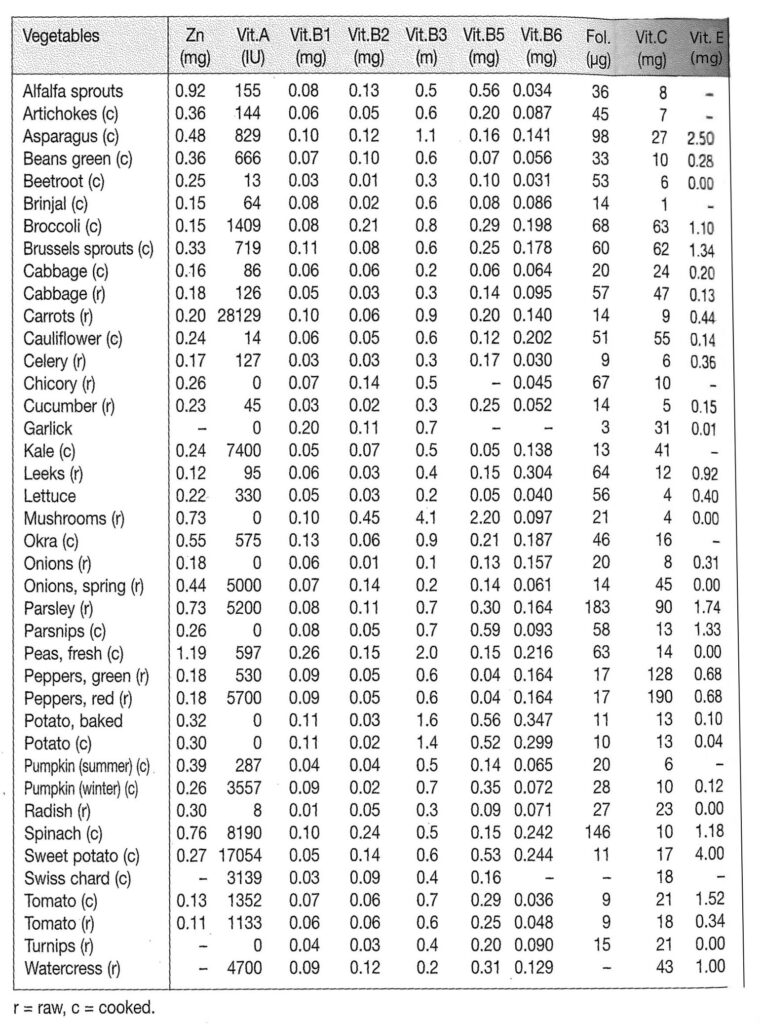
Table 7.21 (Part 2). The composition of selected vegetables. The figures are for 100g portions. (Adapted from ref. 37)
Types of vegetables
Vegetables are derived from most of the families of flowering plants and also from some algae and fungi. Many different parts of the plants are used as vegetables, and these include the roots, stems, leaves, buds, flowers, fruits, and in the case of sprouts, the whole plant. As definitions for vegetables are mostly based on usage and not scientific principles, it is very difficult to define a vegetable, particularly where vegetable fruits are concerned and there is no hard and fast rule for placing some of the seed-bearing fruits in either the fruit or vegetable category. In the case of the family Curcurbitaceae, for example, melons are considered to be fruits because they are sweet and similar in composition to fruits, whereas cucumbers, pumpkins and squashes are considered to be vegetables, but the final placing in one category or another remains arbitrary.
As the various plant families which contribute to the vegetable kingdom often share common features, the vegetables will be discussed by family, and as the listing could constitute a book of its own, only some of the more common vegetables will be discussed in order to highlight the diversity of qualities inherent in these foods. Hopefully the list will encourage variety on the table.
CHENOPODIACEAE (the goosefoot family)
The goosefoot family comprises numerous genera of herbs, shrubs and vegetables, of which some are medicinal. The main vegetables in this family are: beetroot, sugarbeet, Swiss chard and spinach. These vegetables supply an abundance of vitamins and minerals, but they also contain oxalic acid, and much of the calcium is bound in the form of calcium oxalate, which is associated with the formation of kidney stones. It has, however, been found that a vegetarian diet enables the body to cope with this situation,27 and it is not necessary for the vegetarian to eliminate these vegetables from the diet. Should there, however, be a record of kidney stones, then it would be wise to limit the use of vegetables belonging to this family.
Beetroot and Swiss chard (Beta vulgaris)
Beetroot is native to Europe, Africa and Asia and was used as a vegetable from as early as 300 BC. The crimson root of the beetroot owes its colour to the presence of a glucoside called betanin, which belongs to a group of chemicals known as betacyanins. Because of its red colour, many people are mistakenly under the impression that beetroot is a cure for iron deficiency, but beetroot contains only an average amount of iron. Beetroot contains large amounts of sugar, and some varieties are cultivated solely for sugar production. The high sugar content ( up to 8%) accounts for the high energy content of beetroot, but beetroot is also a rich source of the minerals magnesium and manganese, and it also contains a fair amount of vitamin
C. Beetroot can be grated and eaten raw in a salad or it can be cooked and served with a little lemon juice rather than vinegar. In Russia, beetroot forms the basis of the popular soup called borsch.
Another variety of Beta vulgaris produces Swiss chard, which is cultivated for its leaves and is easy to digest. Swiss chard is very nutritious and supplies good quantities of potassium, calcium, phosphorous and iron. It is one of the richest sources of magnesium. Moreover, this vegetable is very rich in vitamin A, supplying in excess of 3 000 IU per 100g.
Spinach (Spinacia oleracea)
Spinach is native to Asia and was introduced into Europe in the late Middle Ages. Like Swiss chard, it is rich in magnesium, calcium, potassium, phosphorous, iron, copper and manganese. The vitamin A-content is exceptionally high (8 190 IU). Spinach is also a good source of vitamins B6 and C. Spinach can be eaten cooked, and creamed with a little nut sauce it is particularly delicious. Raw spinach can be eaten in salads without fear of oxalic acid build-up,
as the blend of nutrients in spinach will prevent oxalic acid accumulation, particularly in the vegetarian. People already suffering from gall and kidney stones, should, however, avoid all foods rich in oxalic acid.
COMPOSITAE (Sunflower family)
The family compositae is a huge family of plants, better known for the flowers and oilseeds which are derived from it. One important vegetable from this family is chicory, and what would our salad bars look like without the all important lettuce, which is also a member of this family.
Chicory (Cichorium intybus)
Chicory is native to Europe and Asia, but has only been used as a vegetable since the thirteenth century. Chicory is cultivated mainly for its large taproot which is used as a coffee substitute, but its leaves are also used as a vegetable. The leaves of chicory have a bitter taste and Pliny, in fact, mentions chicory as one of the bitter herbs used by the Jews during the Passover. Chicory is cultivated from harvested roots which are replanted in spring and covered with soil or sawdust. This blanches the leaves and reduces the bitter taste. Chicory is a good source of folic acid and it can be eaten like lettuce in a salad.
Lettuce (Lactuca sativa)
The leaves of lettuce can be cooked, but they are most commonly used for salads, and have been used in this way for thousands of years. Wild species have a bitter taste because they have higher concentrations of the triterpenoid alcohols sesquiterpene, lactone, lactucin and lactupicrin than do cultivated varieties. These compounds occur in the white milky fluid, latex, and are also known to have sedative properties, and are frequently used as a remedy for coughs. Varieties of lettuce which are characterized by overlapping leaves are known as cabbage or head lettuce, and these are the most popular varieties. Lettuce with oblong leaves are known as cos lettuce and others do not form a head, but merely a loose rosette of leaves. Lettuce contains only 1% protein, very little complex carbohydrate and consists mainly of water, which is why it is compatible with fruits. Lettuce also contain reasonable quantities of minerals and vitamins, particularly silicon, vitamin A and folic acid.
CONVOLVULACEAE (Morning glory family)
The family consists mainly of twining herbs that are often classed as weeds. Some members of this family are used medicinally or as hallucinogens but one species, the sweet potato is an important food source.
Sweet potato (Ipomoea batatas)
Sweet potatoes are not related to potatoes, and they are cultivated for their root tubers. The tubers of sweet potatoes contain free sugar as well as starch, and this gives them their sweet
taste. The plant is native to tropical America and was introduced to Europe by Columbus. Sweet potatoes can be eaten boiled or baked, and they are a very nutritious food, very rich in vitamin A (17 054 IU per 100g). Vitamin C is also well supplied.
CURCURBITACEAE (Gourd family)
The gourd family includes plants that are utilized as a source of fruits such as the melons and watermelons, but also includes varieties such as pumpkins, squashes, gherkins and cucumbers that are regarded as vegetables. Gourds, on the other hand, are mainly ornamental.
Pumpkins and Squashes (Curcurbita)
Pumpkins and squashes are of American origin, and there are a number of species. In America, the terms winter and summer squash are used to differentiate between different varieties. The summer squash (C. pepo) is eaten in the immature stage whilst the other varieties of the same species, such as pumpkins and winter squash, are harvested when fully mature. These can be stored for use during winter, and are thus also known as winter squash. In Britain, summer squashes are called marrows and the term winter squash is not used.
Pumpkins and squashes are good sources of vitamin A, and the yellow varieties supply in excess of 3 500 IU of this vitamin per 100g. Pumpkins are also a good source of the minerals calcium, potassium and silicon. Pumpkins can be eaten raw if grated into a salad, or they can be steamed or baked. Baked winter pumpkin is very nutritious and satisfying and supplies a high nutrient density.
Cucumber (Cucumis sativa)
Cucumbers have been used for thousands of years, and they were known to the ancient Egyptians. Today there are many different varieties that are cultivated for human consumption. They consist largely of water, minerals and vitamins, and are thus compatible with either fruits or vegetables, and can be used as a refreshing addition to salads or snacks. Cucumbers are mainly eaten raw, but they are also delicious when briefly cooked and prepared in a sweet and sour sauce. Some cultivars are pickled and preserved in vinegar, but it would be better to use brands that are preserved in brine, or to prepare one’s own preserve substituting lemon juice for vinegar. Gherkins are also used for pickling, but they are derived from another species of Cucumis.
CRUCIFERAE (BRASSICACEAE) (Mustard family)
This family includes some 350 genera and well over a thousand species, of which a number are utilized as vegetables. Cruciferous vegetables are rich in essential nutrients. They are known to reduce the risk of cancer,81,82 and should therefore fill a prominent position in the diet. Because vegetables in general, and cruciferous vegetables in particular, contain substantial quantities of sulphur, the vitamin C-concentration does not decline as readily as it does in the case of fruits
or vegetables with a lower sulphur content,91 and this means that more of this vitamin is retained after storage and cooking.
Some of the common vegetables in this family are those which belong to genus Brassica, which includes broccoli, brussels sprouts, cabbage, Chinese cabbage, cauliflower, kale, kohlrabi, rutabaga and turnips. Some other important foods from this family include cress, watercress, and radish, which are eaten in salads, and Japanese horseradish and mustard which are used as condiments. The chemical components of the mustard family, to which its anti-cancer properties are attributed, are listed in table 7.18. One of these substances is mustard oil which also is responsible for the characteristic taste of the cabbage group, and the compounds attributed with anti-cancer activity are isothiocyanytes, thiocyanates and dithiolthiones.
Broccoli (Brassica oleracea)
Broccoli was developed in Italy and is well established as one of the major anti-cancer foods. It also stimulates the production of enzymes which rid the body of potentially harmful metabolites.81 Broccoli contains some 3% of protein and is one of the richest vegetable sources of calcium, iron and magnesium. Moreover, broccoli is very rich in vitamins A and C, exceeding even oranges in the concentration of the latter. Broccoli can be eaten raw in salads or with dips, or it can be steamed and eaten as is, or served with a light nut, or similar sauce.
Brussels sprouts (Brassica oleracea)
Brussels sprouts was first developed in Belgium from where it also gets its name. Brussels sprouts is quite popular in Europe and its nutrient composition is similar to that of broccoli, except that the concentrations of vitamins and minerals tend to be lower. Use brussels sprouts as an alternative to provide variety, but try to use fresh or frozen sprouts as they lose their flavour and texture when canned.
Cabbage (Brassica oleracea)
Cabbage is yet another variety of the species Brassica oleracea which is rich in cleansing minerals such as sulphur. It is native to the Mediterranean region, England and France, but the cultivated form was introduced to Britain by the Romans. Cabbage can be eaten raw, pickled or cooked and is used in a great variety of ways. There are many varieties of cabbages but the Savoy cabbage is considered to be the best in terms of its nutrient content. Savoy cabbage contains some 157mg of vitamin C per 100g and is rich in sulphur, a cleansing mineral, which helps to retain this vitamin.
Cabbage can be fermented to produce Sauerkraut, a process whereby the bacterium Lactobacillus converts the sugars into lactic acid, which accounts for the sour taste of Sauerkraut. Lactic acid is a weak acid, and in spite of its presence, Sauerkraut still remains an extremely alkaline-forming food which supplies an abundance of vitamins and minerals. The body copes well with lactic acid, and Sauerkraut can be eaten without fear of acid build up. Red cabbage is another variety of cabbage which can also be eaten raw in salads, or it can be cooked with a little lemon juice, rather than vinegar, to give it a sour flavour. Another popular cabbage variety, that can be used to provide variety, is the Chinese cabbage which is good for making salads or cooked as a green vegetable.
Cauliflower (Brassica oleracea)
Cauliflower is probably native to Asia Minor but was known in Europe by the sixteenth century. Its nutrient composition does not compare with that of broccoli, but it is an excellent source of biotin, and other vitamins and minerals are in good supply. Cauliflower provides that necessary variety on the table and it can be eaten raw, cooked and served with a sauce or as a soup, and it lends itself to being crumbed.
Kale and collard (Brassica oleracea)
Kale is similar to cabbage, but the leaves, which are green, silver-green or purple, do not form a head. The varieties that are used for human consumption are usually those with the curled leaves, and in the USA there is a variety that also forms a rosette of leaves similar to cabbage, but not compact. This variety is known as collard. Kale is the oldest variety of Brassica and it is very rich in nutrients. Kale is rich in calcium, magnesium, vitamin B6, and it contains over 7 400 IU of vitamin A per 100g.
Kohl-rabi (Brassica oleracea)
The name Kohl-rabi is a German name which means ‘cabbage turnip,’ and it is the swollen turnip-like stem which is used as a vegetable. The leaves are not usually eaten, but they are edible and do have considerable nutritive value. Kohl-rabi is normally cooked and can be served with a white nut, or similar sauce, and it is excellent in soups.
Turnip (Brassica rapa)
The turnip has been used for thousands of years, and is native to temperate parts of Europe and Asia. The swollen base can be cooked and eaten sliced and the leaves can be used like spinach. Turnips are not used extensively except in poorer areas, and they do not excel in any particular nutritional component, although they do contain reasonable amounts of calcium and vitamin C.
Radish (Raphanus sativus)
Radishes were used by the ancient Egyptians and they are probably native to Asia. Their pungent taste is due to the mustard oil. Radishes are eaten raw, and when they are peeled, most of the enzyme responsible for the production of mustard oil is removed, and they have a milder taste. The leaves of the radish should not be thrown away, as they can be used in salads, but as they are slightly prickly, they are best used in soups to create a pleasant, spicy taste. Radish-leaf soup is pleasant as a starter to meals, and is prepared by cooking the leaves and creaming them in a blender. Radishes contain fair amounts of vitamin C, and the mineral silicon is also in good supply.
Cress (Lepidium sativum)
Both garden cress and watercress (Nasturtium officinale) are members of the cruciferous family and their taste is due to mustard oil. They are used raw in salads or in soups and stews, and have a fresh spicy taste. Watercress was originally used as a medicine, and in view of its superb composition, it should become a part of every household’s menu. Watercress is an excellent source of calcium (120mg per 100g), magnesium and phosphorous, and it contains 4 700 IU of vitamin A per 100g. The B-group vitamins are well supplied and the concentrations of vitamins C and E are also above average.
LEGUMINOSAE (FABACEAE) (Pea or Pulse family)
The family Leguminosae is a large family which also includes some varieties that are used as spices or that can be eaten fresh as sprouts. The legumes can all be sprouted and eaten raw or cooked, and fenugreek can in addition be used as a spice. Another important plant belonging to this family is liquorice (Glycyrrhiza glabra), of which the underground portions are used as a flavouring agent in confectionery. Liquorice is recognized as having anti-cancer properties subscribed to the flavonoids, coumarins, tri-terpenes and phenolic acids which the roots contain. Most of the pea and bean varieties are discussed in the section on legumes, and the only ones that will be discussed here are those varieties that are eaten fresh as vegetables, namely the green or French beans and the fresh garden peas.
French beans (Phaseolus vulgaris)
There are two varieties of French beans that are eaten in the immature stage, and a further one where the beans are eaten in the dry form. Only those that are eaten in the immature stages will be discussed here. Cultivars where the entire pod is consumed, are normally called snap beans, and there are stringed and stringless varieties. In the other group the pods are not eaten, but the seeds are eaten in the immature stage. This last group is not of great commercial significance. Green beans contain good quantities of calcium, iron, magnesium, and the levels of vitamins A and C are also high.
Peas (Pisum sativum)
Garden peas probably originate from Asia, and they reached significance in Europe during the Middle Ages. Unripe peas can be served as a vegetable, and in the case of sugar peas, the whole pod can be consumed. Sugar peas are particularly attractive and tasty in Chinese dishes. Peas contain good quantities of phosphorous, but the other minerals are also present in adequate amounts. The vitamins A and C are also well supplied. Fresh garden peas are always an attractive addition to the menu.
LILIACEAE (Lily family)
The Liliaceae include a wide variety of edible, as well as medicinal and ornamental plants. From the genus Allium we obtain the onion, garlic, leeks, shallots and chives, and from the genus Asparagus we obtain, of course, asparagus. Besides their tremendous
flavour-enhancing capabilities, these foods have been categorized as having exceptional anti-cancer properties,82 and they also have cleansing and disinfectant qualities. The pungent smell of garlic, onions and the other members of the Allium genus is due to disulphide compounds known as allicins. The enzyme allinase starts to work on odourless compounds known as alliins when the plant is cut or damaged, and this produces the allicins. Allicins are powerful irritants, and that is why one tends to cry when one peals onions or other members of the Allium genus. Although garlic and chives are flavourants and are not strictly vegetables, they will be discussed here in view of their significance as disease preventers and flavour enhancers.
Chive (Allium schoenoprasum)
Chive is a herb native to Eurasia and is very popular in Europe, where it is finely chopped and eaten raw in salads, on boiled potatoes, as a garnish or as a flavourant for soups and stews. Chives have a fresh, mild onion flavour and are relatively easy to cultivate, even as a pot plant, so that no household need be without it.
Garlic (Allium sativum)
Garlic was already used by the ancient Egyptians and perhaps even contributed to the health of those individuals who helped to construct the pyramids. Garlic is rated as the number one anti-cancer food, and the sulphides, phenolic acids, and mono- and tri-terpenes present in garlic are attributed with this protective capacity. Moreover, garlic is much used as a medicine, as it also has bactericidal properties. Garlic can be added to many foods to enhance their flavour, and besides these virtues, garlic is one of the best sources of primary and secondary nutrients. Garlic contains over 6% high quality protein, is rich in carbohydrates and contains exceptional amounts of calcium, phosphorous, iron, magnesium, niacin and vitamin C. Prolonged slow cooking removes the pungency of garlic, but some nations find this quality of garlic endearing. To the novice, the taste of garlic may seem somewhat overwhelming, but once a palate for this flavourant has been developed, there will be no holding back, except perhaps in the romantic sphere.
Leeks (Allium ampeloprasum)
Leeks are native to the Mediterranean region and have been used as a vegetable since ancient times. Leeks can be eaten raw in salads, or they can be eaten cooked, and young leeks can substitute for asparagus. The green leaves at the top should not be discarded, as they contain most of the nutrients. If served with a nut sauce, tomato an olive oil dressing, or similar, it can provide a tasty variety to meals. Like all green vegetables, leeks are a good source of calcium, and the minerals iron and magnesium are also well supplied. Leeks are rich in folic acid and vitamin B6, and also contain a fair amount of vitamin C.
Onions (Allium cepa)
Onions have been used since ancient times, and their use is recorded by the Egyptians. Strictly speaking, the onion is a condiment but it is used so extensively that it will here be treated as a vegetable. The edible bulb of the onion is really the thickened stem, and the fleshy leaves are
the bases of normal leaves from the previous season. Onions are one of the plants listed by the NCI (National Cancer Institute) as having anti-cancer properties. Raw onions contain up to 2% protein, and useful amounts of calcium, vitamin B6 and folic acid. Spring onions are even more nutritious than mature onions, and they should be incorporated into the diet whenever possible. Make them a part of crisp green salads and use them in Chinese dishes. Spring onions contain twice as much calcium as mature onions (up to 60mg per 100g) and they are rich in vitamin C and contain up to 5 000 IU of vitamin A, whereas mature onions contain virtually no vitamin A. Onions can be used raw, cooked or fried, and the taste of virtually all vegetable meals can be improved by the addition of onions. Onions need not be fried in oil to obtain that rich fried onion taste, but they can be simmered over low heat in waterless cookware or in a little soy sauce or yeast extract together with a small quantity of water until they become golden brown. This enhances their taste and lends a rich flavour to stews and sauces.
Asparagus (Asparagus officinalis)
Asparagus is native to Eurasia and it was regarded as a delicacy by the Romans. The most renowned type of asparagus is the Argenteuil asparagus which is cultivated in France. The part used as a vegetable is the young shoot, and if white, blanched asparagus is required, then the earth must be mounded up around the young plant so that the stem is not exposed to the sunlight. The plant is harvested when the tip of the asparagus appears above the mound. Fresh asparagus can be peeled and cooked, and served together with a creamy mayonnaise-type sauce (see recipes), or it can be used on Pizzas. Asparagus contains useful amounts of calcium, magnesium and iodine and is an excellent source of folic acid. Moreover, vitamins A, C and E are also well supplied.
MALVACEAE (Mallow family)
The mallow family furnishes many ornamental plants as well as fibre, medicinal and food plants, but the family is most important as the source of cotton. Two frequently used food plants are okra and roselle, the latter being mainly used as a condiment. The edible calyces of the Roselle fruits are used to make jellies or a drink known as sorrel, or they are used as a flavourant in sauces.
Okra (Abelmoschus esculentus)
Okra is the large, green erect pod of Abelmoschus (Hibiscus) also known as gumbo or lady’s-fingers. The pods are used in the green state for stews, or they are dried for winter and they contribute substantially to human nutritional needs in some areas. The capsules can be sliced and fried, but because they are highly mucilaginous, they are also used to thicken and flavour soups. In the Southern United States, they are used to make the well known gumbo soup. Okra is rich in calcium and phosphorous, and is also an excellent source of magnesium. The vitamins A, B6, C and folic acid are also well supplied.
SOLANACEAE (Nightshade family)
This family abounds in ornamentals, plants with medicinal properties and a number of important food plants such as the potato, tomato, egg-plant (aubergine or brinjal) and red pepper (capsicum). The vegetables belonging to this family have also been recognized by the NCI as having anti-cancer properties.
Capsicum (capsicum annuum)
Green and red peppers, also known by their Hungarian name Paprika or the Spanish name Pimento, are native to South America from where they were introduced to most countries of the world. There are different varieties of peppers, ranging from the mild sweet pepper (C. annuum variety grossum) to the somewhat hotter Hungarian Paprika which was introduced to Hungary by the Turks. In Turkey, the pepper is a very important component of the everyday diet, and some of the best recipes for its use hail from that country. The fruits of this genus are not only used as vegetables, but are also used as condiments. Paprika powder is obtained by grinding the large, dried European variety of capsicum, and it is a tremendous flavour enhancer. The red pepper, known as chilli, is derived from another species (Capsicum frutescens) and the fruits of this species are more pungent than sweet peppers. The fruits of chillies can be ground after thorough drying, to produce cayenne or red pepper, and Tabasco sauce is obtained by pickling the pulp of chillies in vinegar or brine. The hot taste of these condiments is due to a compound known as capsaicin.
Red and green peppers are very nutritious and they are very rich in vitamin C. The composition of the unripe green pepper is very similar to that of the ripe red pepper, but the levels of vitamins A and C are far higher in the red than in the green pepper. Green peppers contain 530 IU of vitamin A per 100g as opposed to 5 700 IU in red peppers and the levels of vitamin C in the red pepper exceeds that in the green pepper by more than 60mg per 100g. Peppers can be eaten raw, stuffed, or as garnish and flavourant in a host of dishes. They are also used as stuffing for green olives.
Egg plant (Solanum melongena)
The egg plant, also known as aubergine or brinjal, probably originated in tropical Asia and is extensively used in India and the Far East. The edible part is the egg-shaped fruit, which is a berry. Different cultivars have different colours ranging from white to yellow, dark purple and black. The most common variety, however, is purple. The fruit is eaten boiled, stuffed or baked, and it can be used in stews or sauces. In Turkey, brinjals are roasted directly on a hot stove plate until the outer skin is burnt black. The fruit is frequently turned during this process to prevent too much burning, and the inner flesh is then scooped out and added to dishes such as rice salads. It imparts a unique, smoked flavour to the dish. Brinjals do not excel in any particular nutrient, but they do add variety to the table, and contain compounds that act as cleansers and prevents disease such as cancer.
Potato (Solanum tuberosum)
The potato is native to tropical America and it was the staple food of the Incas. When potatoes were first introduced to Europe, they were only used as ornaments, but today they are one of the most important vegetables which are used in virtually all the countries of the world. The
potato plant produces white, yellow or purple flowers, and the fruits, which are small berries, are very poisonous as they contain solanine, which is an alkaloidal sapotoxin. The edible part of the potato is the underground stem tuber which can have a whitish, yellow, brown or red skin, depending on the variety. Because the potato grows in the dark, it is not green, and it should be kept in the dark after harvesting to prevent it from going green. Green potatoes should never be eaten, as they also synthesize the toxin solanine.
Potatoes are rich in starch and contain some 2% protein. They contain fair amounts of potassium, B-group vitamins and vitamin C. Baked potatoes are more energy rich than boiled potatoes because of the lower water content. Potatoes can be prepared in so many different ways that one could fill a book just listing the recipes, but some dishes, such as French fries, have become international favourites. French fries are probably the unhealthiest way of consuming potatoes, as the impregnation with oil makes the potato very difficult to digest, and deep frying in oils, rich in polyunsaturated fats, has been linked to cancer. The use of free fats and oils should be avoided altogether, but if on occasion french fries are desired, then they can be prepared by giving the sliced potatoes a light coating of cold pressed olive oil (a monounsaturated oil) and baking them in the oven at 200°C (400°F) rather than deep frying them. The taste of this variety of fries is also superior to that of deep-fried French fries and will be less detrimental to health.
Tomatoes (Lycopersicon esculentum)
The tomato is also native to South America where it grows wild on the slopes of the Andes. Tomatoes were only brought to Europe in 1523 after the conquest of Mexico, and did not really become a part of the diet until the nineteenth century. The fruits of the tomato are used primarily as a vegetable, and they can be eaten raw or cooked. Like most vegetables, tomatoes contain a fair amount of sulphur compounds which act as cleansers, and the red colour of the tomato is due to the presence of the tetra-terpene lycopene.
Today, there are many varieties of tomatoes on the market and they are processed into pastes and sauces. Canned tomatoes and purees are also readily available. Tomatoes have become essential ingredients of salads, stews and sauces, and have a tremendous potential for enhancing the flavour of virtually any dish. Italians have become past masters in utilizing the tomato, and much can be learnt from their approach. Tomatoes contain about 1% protein and are a good source of vitamin A and C.
UMBELLIFERAE (APIACEAE), (parsley or carrot family)
The umbelliferae are an important family, comprising some 250 genera and 2 800 species, the flowers of which look like small umbrellas or umbels. The plants often have a pungent odour and they are used as food source, flavourants, scent or for their medicinal value, but some of them are poisonous. Depending on the type of plant, the roots, leaves or seeds can be utilized as foods and flavourants. The plants of this family are recognized by the NCI as having cancer-preventive properties as they produce anti-cancer phytochemicals such as flavonoids, carotenoids, coumarins, mono- and tri-terpens, phenolic acids, phathalides and polyacetylenes. Many members of this family are used as herbs to improve the flavour of foods, and, in the interest of good health, this practice can only be encouraged.
Some of the more common herbs and foods belonging to this family are: angelica, aniseed,
caraway, carrots, celery, chervil, coriander, cumin, dill, fennel, lovage, parsley and parsnip. Many of these are only used as flavourants, but carrots and parsnips are used as vegetables. As some of the flavourants, however, also enjoy extensive use, and in some cases are also consumed as vegetables, they will be briefly discussed here.
Angeliica (Angelica archangelica)
Angeliica is believed to be a good antidote for poison. Today it is used as a condiment and is often candied. In some areas it is, however, used as a vegetable.
Aniseed (Pimpinella anisum)
Aniseed is a fruit and is used as a spice in cakes and pastries.
Caraway (Carum carvi)
Caraway is not a seed, but a fruit, and is used as a spice in bread or to add flavour to vegetables such as potatoes and cabbage.
Carrots (Daucus carota)
Carrots are an important vegetable, and although they were known to the ancient Greeks and Romans, they were not introduced to Europe until the Middle Ages. The orange-coloured taproot of the carrot contains a high concentration of β-carotene, which is the precursor to vitamin A. carrots can be eaten raw or cooked, but to obtain maximum benefit it is best to eat them raw. Carrots contain cleansing sulphur compounds and the main minerals and vitamins are well supplied. However, in its potential to supply vitamin A, the carrot is unbeatable, supplying in excess of 28 000 IU of this important component. Different cultivars, as well as older and younger plants, vary in the amount of β-carotene which they contain, and the younger roots are also sweeter than the older ones.
Celery (Apium graveolens)
Celery is one of the most alkaline-forming foods as it is rich in alkaline minerals. Celery has remedial qualities, and extracts of celery are even used to combat arthritis. The variety of Apium graveolens known as celeriac is cultured mainly for its turnip-like swelling, which is fried or cooked as a vegetable and is very popular in Europe, where it also used to liven up potato salads. Celery is, however, grown mainly for its stalks and leaves. Blanched celery is formed by earthing up the stems, and is more delicate in its flavour and also has a higher nutritional value in that it contains more vitamin A than the green stalks. Celery can be used raw as a salad or together with dips, but it also imparts a unique flavour to stews and soups.
Chervil (Anththriscus cerefolium)
Chervil is similar to parsley and is used as garnish or flavourant.
Coriander (Coriandrum sativum)
Coriander, which is a fruit, is used whole or ground in pickles and other foods as a flavourant.
Cumin (Cuminum cymicum)
Cumin also produces a fruit that is used as a spice and its use is similar to that of caraway.
Dill (Anethum graveolens)
In the case of dill, either the leaves or the fruits can be used as a flavourant in pickles, sauces and green salads to impart a pleasant, refreshing flavour.
Fennel (Foeniculum vulgare)
Fennel is used to flavour sweets, sauces and soups. In some areas it is used as a vegetable. However, as a vegetable, it has a somewhat overpowering taste for which one must develop a palate.
Lovage (Levistium officinale)
Lovage is native to Southern Europe and is used as a spice to enhance the flavour of soups and stews. In Germany it is known as Maggi-Wurzel.
Parsley (Petroselinum crispum)
The ancient Greeks used parsley as medicine, but today it is extensively used as a condiment. Its distinctive flavour is due to apiol. Parsley should become a regular household commodity, as it is exceptionally rich in calcium (130mg per 100g), iron, potassium, magnesium and trace elements, although the other minerals are also present in useful amounts. Parsley is also an excellent source of vitamins, particularly vitamin A, vitamin B2, folic acid and vitamin C. Parsley can be included soups and stews, and finely chopped parsley on savoury sandwiches and in salads adds flavour and essential minerals..
Parsnip (Pastinaca sativa)
Parsnips are native to Eurasia, and the edible portion is the swollen taproot which is used as a vegetable or flavourant. Parsnips contain reasonable amounts of calcium, phosphorous, folic acid and vitamin C, and before the introduction of the potato to Europe it was quite an important vegetable.
There are many other varieties of vegetables that could be included here, but it is not the purpose of this book to supply an exhaustive list of edible vegetables. It is rather envisaged that the list supplied should encourage the readers to include a variety of foods in their diet and to point out why this variety is so essential to a healthy lifestyle.